
Learn 7 proven ways to garden without chemicals. Improve soil health, control pests naturally, and grow safe food for your family.
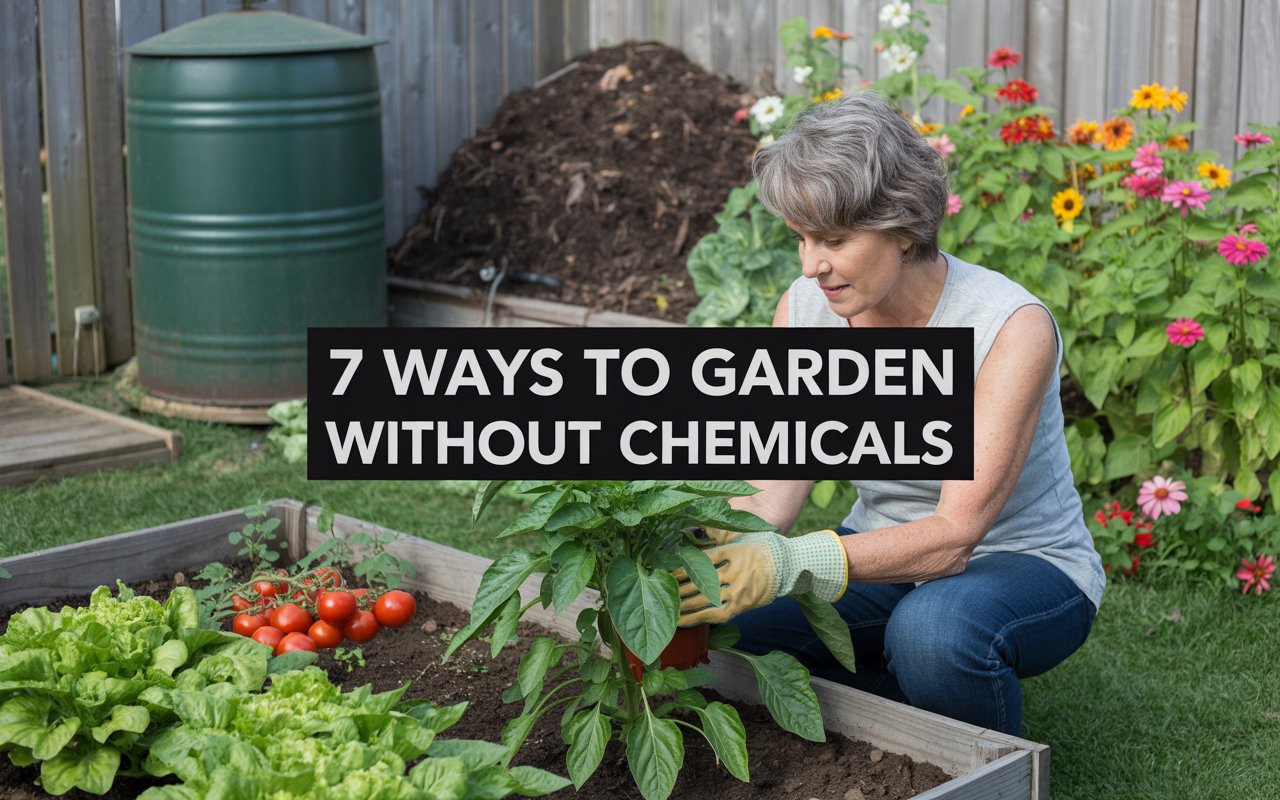
I am Ashley Scott. I have been gardening for 10 years. I stopped using chemicals early in my gardening journey. My plants grow better now. The soil feels alive. Bees, butterflies, and earthworms visit my garden more often.
Here are 7 ways you can keep your garden healthy without using synthetic fertilizers or pesticides.
1. Improve Soil with Compost
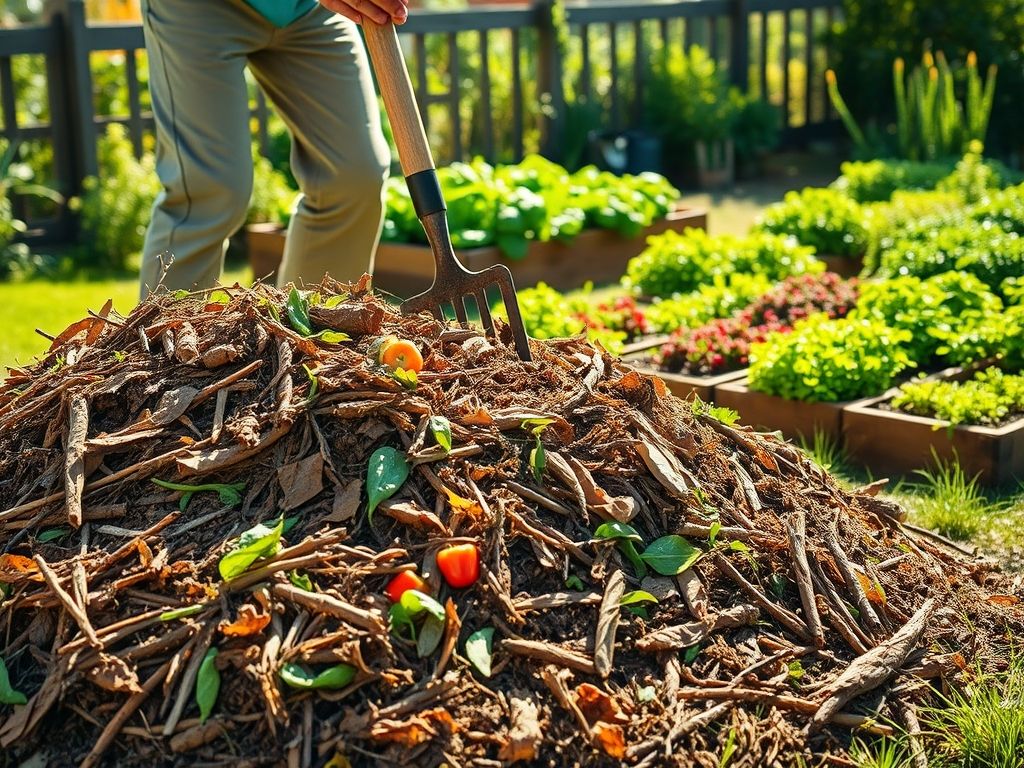
Compost feeds your plants and keeps the soil alive. I make mine from kitchen scraps, dry leaves, and grass clippings.
- Add 2–3 inches to your beds each season.
- Turn your compost pile often to speed up the process.
- Keep it moist but not soggy.
US Composting Council has tips for home composting.
2. Use Mulch to Protect Soil
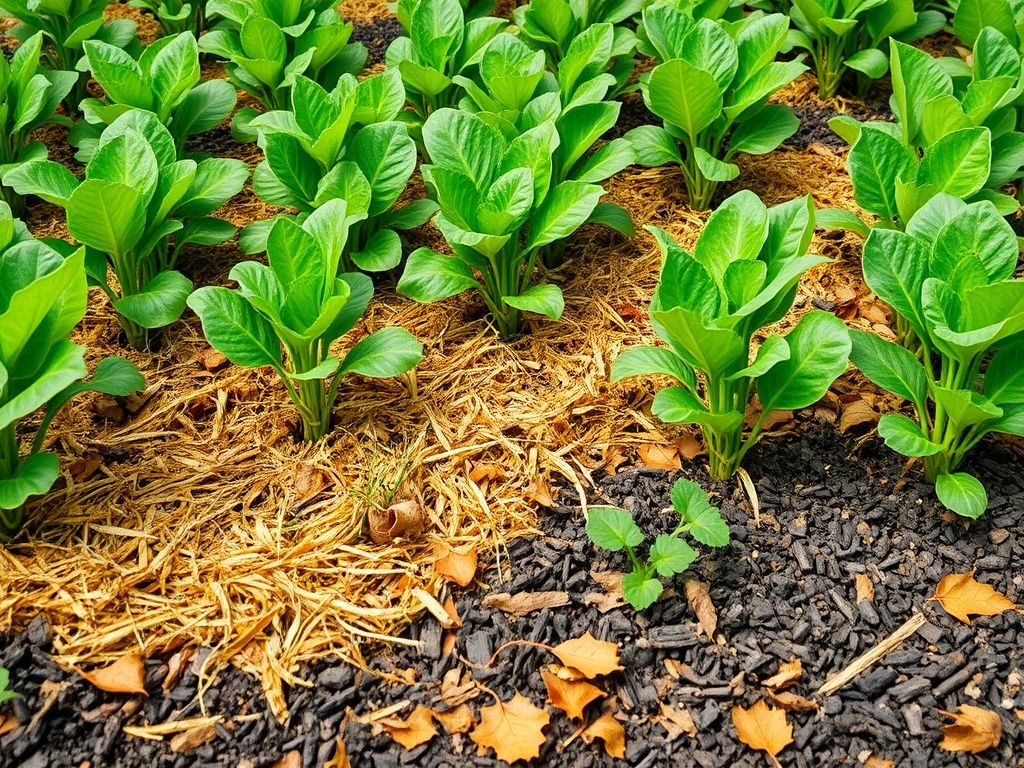
Mulch keeps weeds down, saves water, and prevents soil erosion.
- Straw, shredded leaves, and wood chips work well.
- Keep mulch a few inches away from plant stems.
More about mulch at the USDA Natural Resources Conservation Service.
3. Plant for Diversity
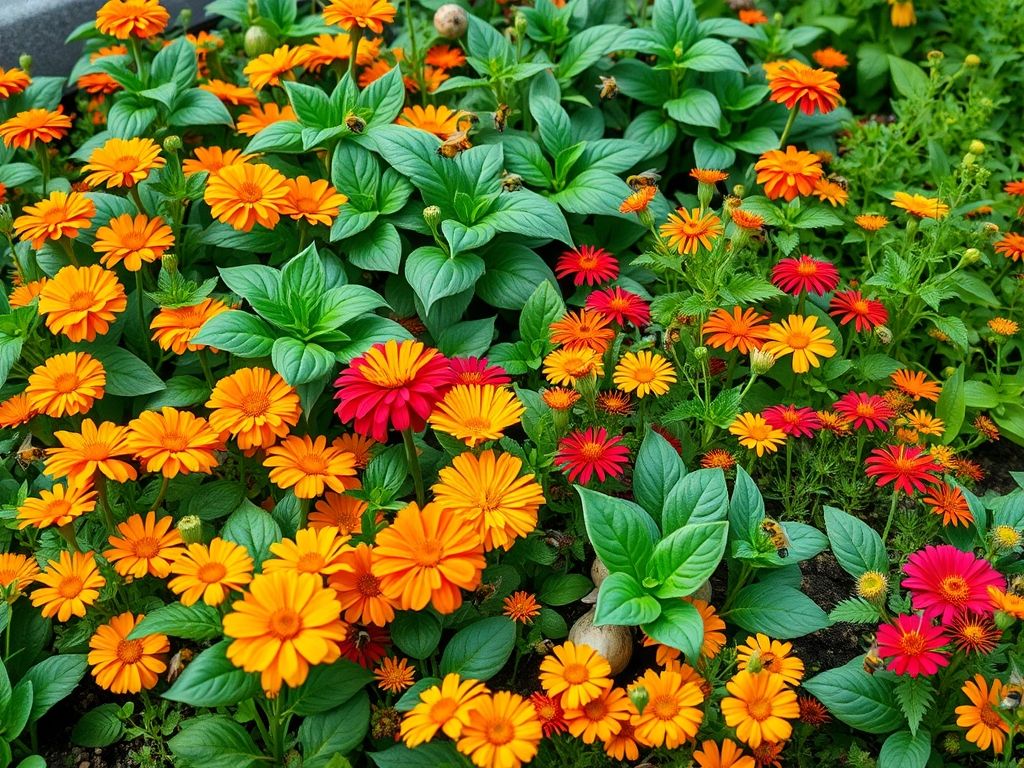
A mix of flowers, herbs, and vegetables helps prevent pest outbreaks. Some plants repel certain insects.
- Marigolds deter nematodes.
- Basil helps keep mosquitoes and flies away.
- Nasturtiums attract pests away from vegetables.
4. Use Natural Pest Control
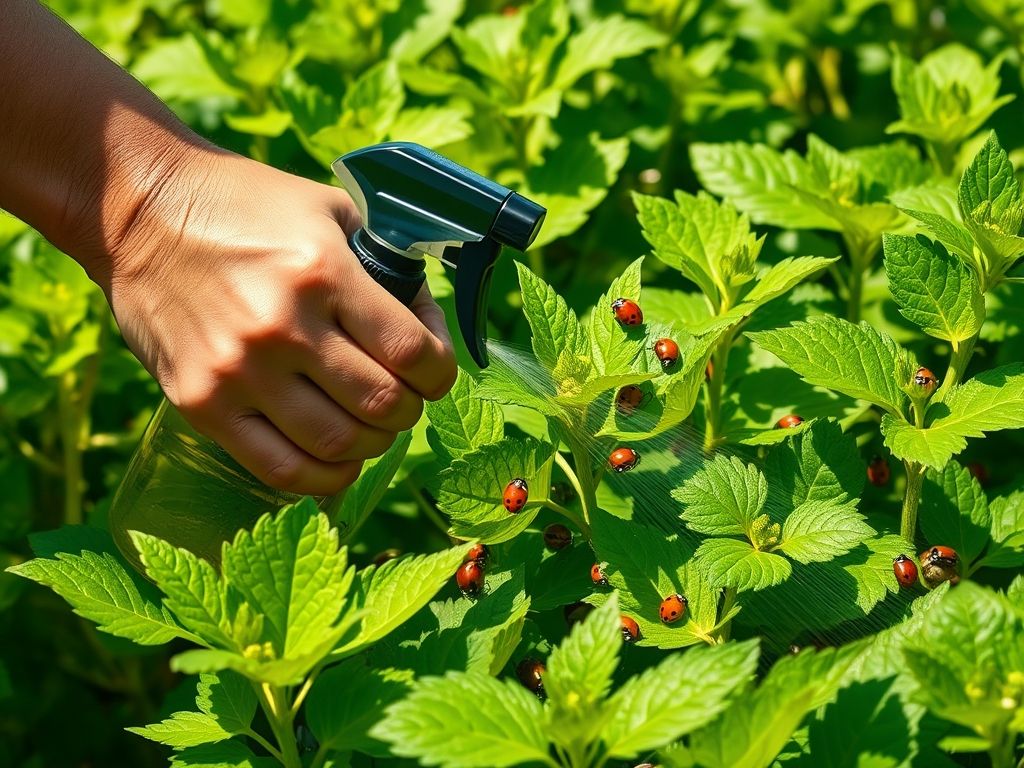
You do not need chemicals to control pests.
- Spray neem oil or insecticidal soap for soft-bodied insects.
- Handpick beetles and caterpillars.
- Attract beneficial insects like ladybugs and lacewings.
See University of California IPM Program for more natural pest control ideas.
5. Rotate Crops
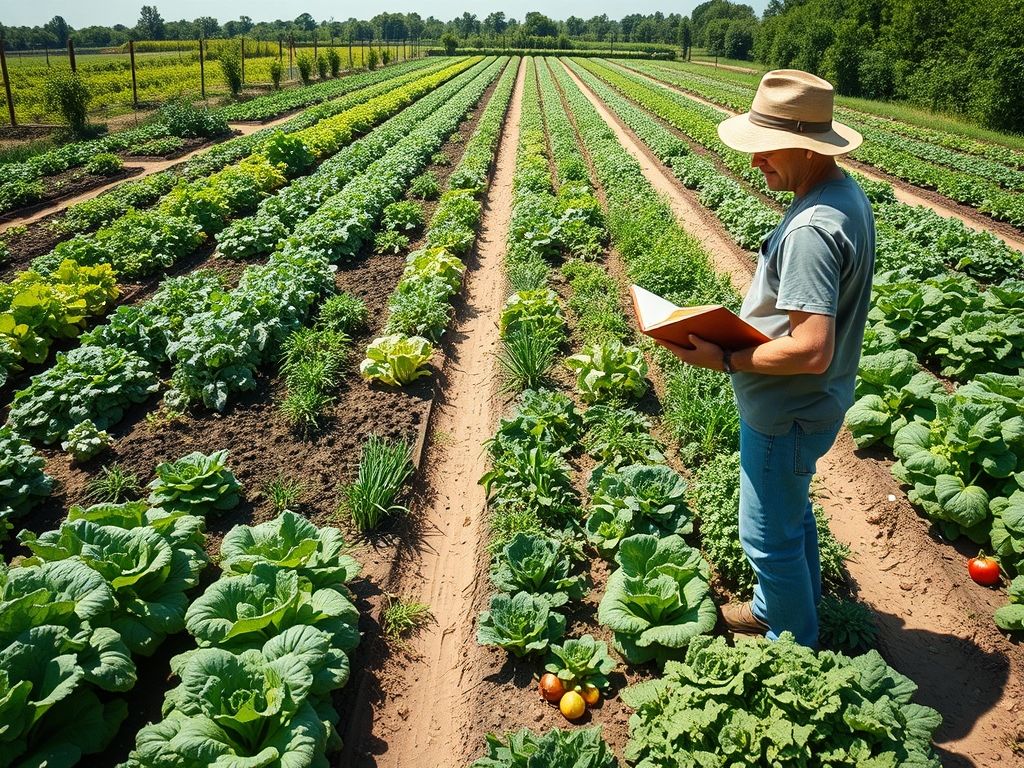
Growing the same plant in the same spot every year builds up pests and disease. Rotate your crops to break this cycle.
- Change plant families each season.
- Keep a garden map or notes to track rotation.
6. Make Your Own Fertilizers
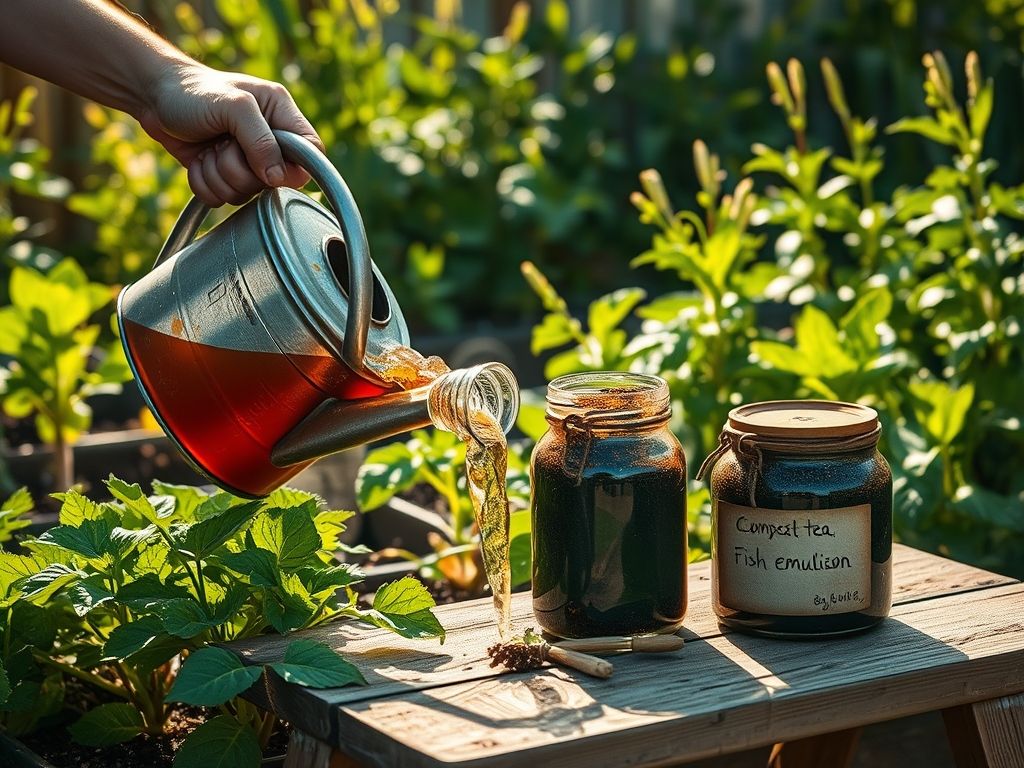
You can feed plants with homemade options.
- Compost tea
- Seaweed extract
- Fish emulsion
They are rich in nutrients and safe for the soil.
7. Collect Rainwater
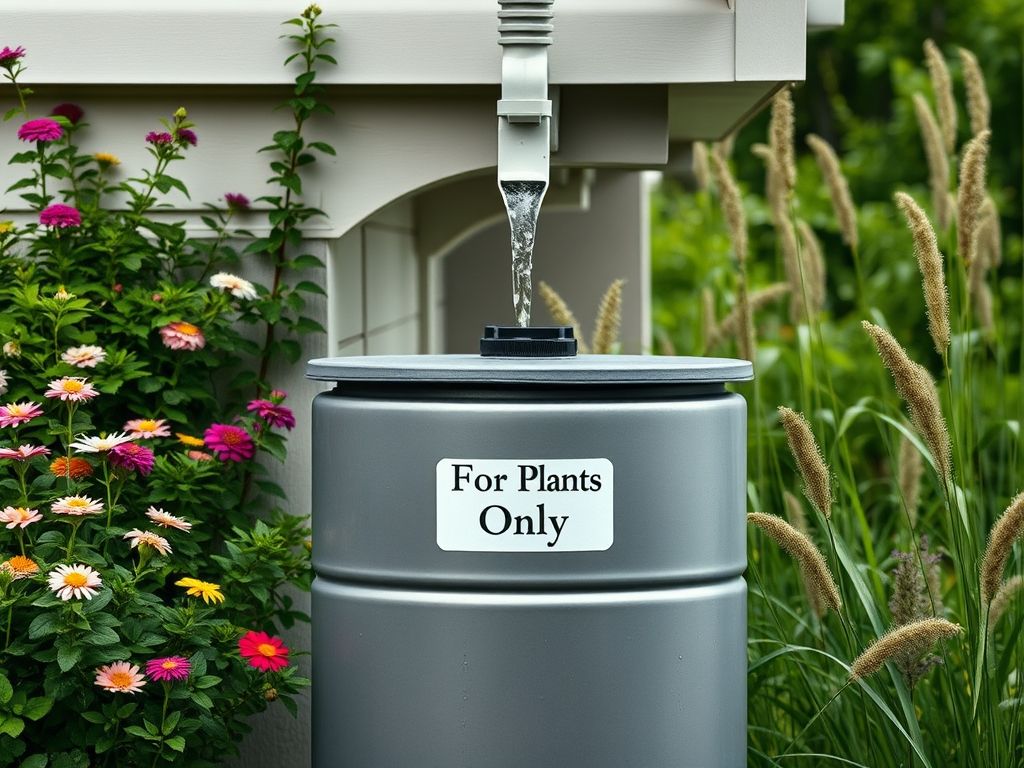
Rainwater is better for plants than tap water in most areas. It is soft and free from added salts.
- Use a covered rain barrel.
- Filter it before use.
Learn more at the EPA rainwater harvesting page.
My Chemical-Free Gardening Routine
I add compost twice a year. I mulch all my beds. I check my plants weekly for pests. I rotate crops and plant flowers among vegetables. I store rainwater for dry spells. My garden grows well without chemicals.
For more practical guides, read my post on year-round vegetable gardening and terrace gardening for beginners.
FAQ – Gardening Without Chemicals
Q1: Is it possible to grow vegetables without chemicals? Yes. Use compost, mulch, crop rotation, and natural pest control methods.
Q2: How do I stop pests without pesticides? Use neem oil, insecticidal soap, handpicking, and beneficial insects.
Q3: Does chemical-free gardening take more time? It takes more observation, but less long-term damage to soil and plants.
Q4: Can compost replace chemical fertilizers? Yes. Compost improves soil structure, holds water, and releases nutrients slowly.