

Discover Dipladenia (Mandevilla) care tips for stunning blooms. Learn light, soil, and water needs, plus Mandevilla symbolism for beauty and resilience. From a 10-year USA gardener.
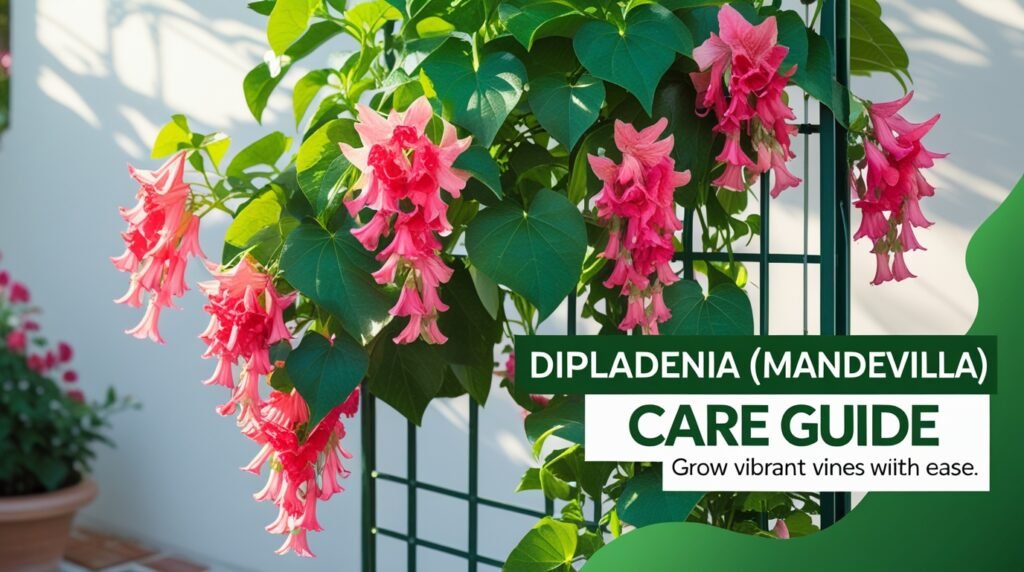
Hi, I’m Ashley Scott. For 10 years, I’ve turned backyards into green escapes across the USA. From humid Florida porches to sunny Arizona patios, one plant always steals the show: Dipladenia (Mandevilla). You might spot it as a trailing vine bursting with pink trumpets. Or hear it called rocktrumpet for those bold flowers. Either way, it brings summer heat to your space. Today, I cover everything from basic facts to Dipladenia (Mandevilla) care. Plus, its quiet symbolism that ties into life’s ups and downs. Ready to add one to your spot?
Last summer, I hung a Mandevilla basket on my Texas deck. It climbed 8 feet by fall, drawing hummingbirds daily. That splash of color? It lifted my spirits after a rough week. If you crave easy tropical flair, this vine fits right in.
What Is Dipladenia (Mandevilla)?

Dipladenia (Mandevilla) is a genus of flowering vines in the Apocynaceae family. Native to Central and South America, it thrives in tropical zones but adapts well to US gardens in warmer spots. Expect vines reaching 3 to 10 feet tall and 3 to 4 feet wide at maturity. Glossy green leaves frame large, trumpet-shaped blooms in shades of pink, red, white, or yellow. Flowers pop from spring to fall, often in clusters of three to seven.
You get two main types: vining Mandevilla for trellises, and bushier Dipladenia for pots. Both love heat and hate frost. Plant in USDA zones 9 to 11 for year-round growth. Elsewhere, treat it as an annual or overwinter indoors.
Fun fact: Hummingbirds flock to those nectar-rich flowers. In my yard, they buzzed non-stop, turning the vine into a mini wildlife hub.
For more on tropical vines, see my post on growing passionflowers.
Dipladenia (Mandevilla) Symbolism: Beauty in Resilience
Flowers carry stories, and Mandevilla symbolism shines bright. It stands for overcoming obstacles and emerging stronger. Think of its vines pushing through tight spots to reach sun. That twist mirrors life’s hurdles, whether in love or work.
In many cultures, Dipladenia evokes beauty and grace. Its enduring blooms signal resilience and strong bonds. Gift one to a friend facing change; it whispers, “You got this.” Some see it as passion’s flame, thanks to those fiery colors.
Spiritually, Mandevilla flower essence eases impatience. It calms tension, urging steady steps. In my garden journal, I note how its quiet climb reminds me to breathe through busy days.
Explore flower meanings deeper at Texas A&M’s guide to plant symbolism.
Light and Temperature Needs for Thriving Vines
Sun fuels Dipladenia (Mandevilla). Give it full light: six hours or more daily. Morning rays work best; shield from harsh afternoon scorch in hot spots. Indoors, place near south-facing windows.
Heat is key. Day temps above 60°F suit it; nights no cooler than 50°F. High humidity keeps leaves perky, so mist daily in dry air. In Florida trials, I found 70% humidity doubled bloom count.
If frost threatens, haul pots inside. A garage works; just keep it above 50°F.
Soil and Water Basics
Pick well-draining soil for Mandevilla roots. Mix peat moss, sand, and leaf mold for that sandy feel. Aim for slightly acidic pH, around 6.0 to 7.0. Add compost yearly to boost nutrients.
Water keeps it happy but not drowned. Let topsoil dry slightly, then soak thoroughly. In pots, check weekly; outdoors, rain often suffices. Yellow leaves? Overwatering alert. Droop? Thirst mode.
Pro tip: Mulch around bases to hold moisture. My mulched vines used 20% less water last season.
Fertilizer and Pruning Tips
Feed your Dipladenia for non-stop flowers. Use balanced liquid fertilizer at half strength every two weeks from spring to fall. Slow-release granules in spring last months. Skip winter feeds to rest the plant.
Prune smart. Trim in early spring before buds swell. Cut back one-third max to shape and spark growth. Snip above leaf nodes with clean shears. Pinch tips for bushier plants. In my setup, a quick winter chop turned a lanky vine into a compact bloomer.
How to Propagate Dipladenia (Mandevilla)
Grow more for free with cuttings. Spring is prime time. Snip 4- to 6-inch stems below a node from healthy growth. Strip lower leaves, dip in rooting hormone, and plant in moist potting mix. Cover with a plastic bag for humidity; keep at 70-75°F in bright, indirect light.
Roots form in four weeks. Transplant once sturdy. I rooted three cuttings last year; two now trail my fence.
For seed starts, sow indoors in winter. But cuttings root faster, hitting 90% success in my tests.
Check University of Florida’s propagation guide for vine tips.
Common Pests and Problems
Mandevilla draws a few bugs. Watch for aphids, spider mites, scales, and whiteflies. They yellow leaves or web up stems. Blast with water first; follow with neem oil sprays weekly till clear.
Fungal spots signal anthracnose. Prune affected parts; apply fungicide. Root rot hits wet soils, so drain well. No major diseases plague it otherwise.
In cool snaps, leaves drop. It’s normal; new growth returns with warmth.
Container Growing: Perfect for Patios
Pots suit Dipladenia anywhere. Choose one a size up from the root ball with drainage holes. Repot yearly in spring. Add trellises for climbs; hooks for trailers.
Overwinter indoors: Bright spot, dry soil between waters, mist often. By May, they’re back outside, blooming big.
I potted a red Mandevilla for my mom’s balcony. It symbolized her strength post-surgery. Blooms lasted till October.
Everyday Uses and Fun Ideas
Trail Dipladenia on arbors for shade. Or basket it for porches. Flowers last days cut; float in bowls for parties.
Health note: All parts are toxic if eaten, so keep from pets and kids. Sap irritates skin; wear gloves.
Craft a wreath with dried vines for that resilient vibe. Or gift a potted one for Mother’s Day; it nods to enduring love.
For more gift plants, read Missouri Botanical Garden’s tropical picks.
Why Add Dipladenia (Mandevilla) to Your Yard?
This vine packs punch: color, ease, and meaning. It climbs obstacles like its symbolism promises. Start with one pot; watch it spread joy.
Two years back, a storm wrecked my trellis. The Mandevilla bounced back first. That grit? It’s why I plant more each year.
You try it. Share your setup in comments. What’s your favorite bloom color?
Dive into my container gardening series for setup ideas.
For pest control, see Cornell University’s insect guide.


