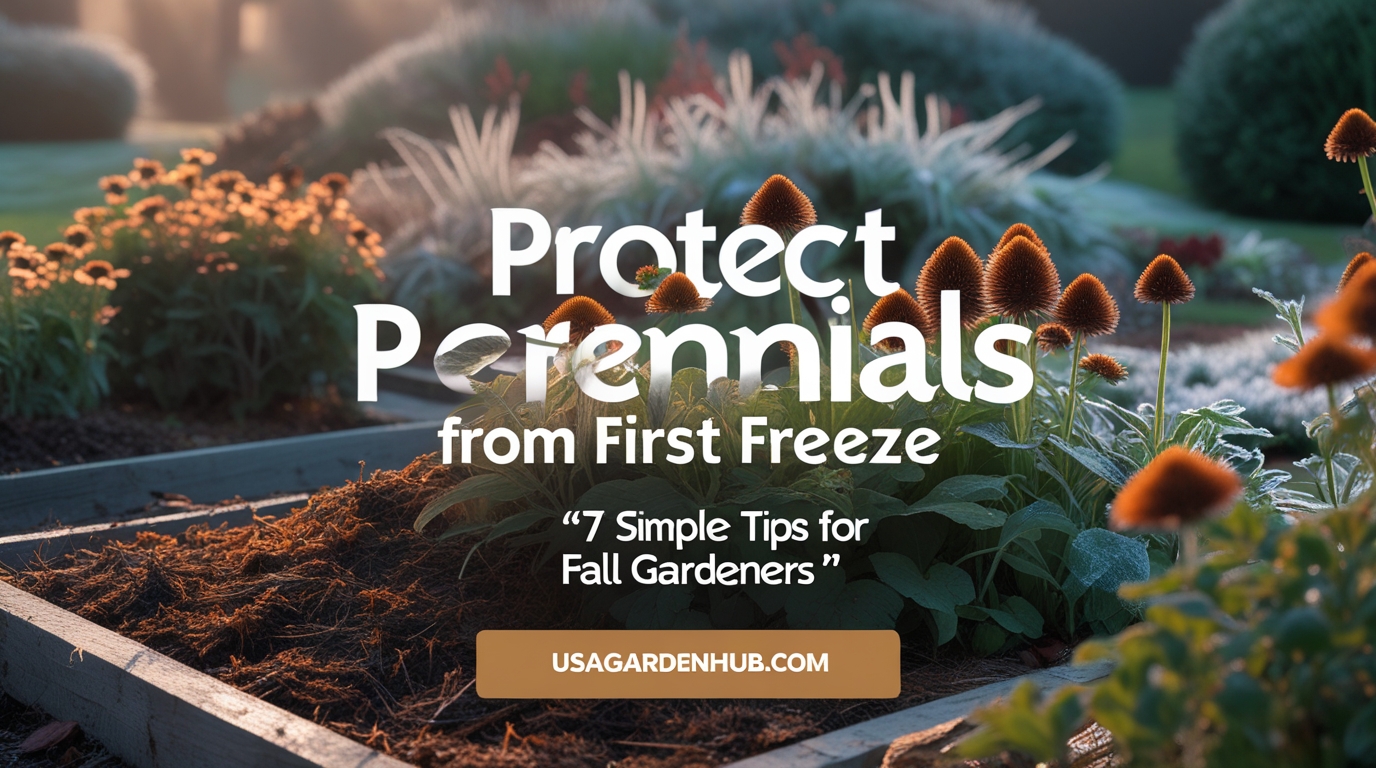
Discover how to protect perennials from the first freeze with easy steps like covering and watering. As a 10-year gardener, I share real tips to save your plants this fall on USA Garden Hub.

I remember my first fall in Iowa, about eight years ago. I had just planted a row of hostas and peonies, full of excitement for their return next spring. Then the forecast hit: a surprise dip to 30 degrees overnight. I scrambled, throwing old bedsheets over them at midnight. The next morning, those perennials bounced back without a hitch. That panic taught me everything about protecting perennials from first freeze. Now, with 10 years under my belt at USA Garden Hub, I help gardeners like you avoid that stress.
Most perennials handle cold well; they go dormant naturally. But tender new shoots or potted ones need your help when temps drop. In this guide, I’ll cover when to act, cheap methods that work, and tips from my garden trials. You’ll find answers to questions like “at what temperature should you cover your plants at night” and “will cardboard boxes protect plants from frost.” Let’s keep your garden thriving through fall.
What Is the First Freeze, and Why Do Perennials Need Protection?
The first freeze marks the shift from crisp fall days to true winter chill. It happens when air temps hit 32 degrees Fahrenheit or below, freezing plant cells and causing wilting or blackening. Frost, on the other hand, forms ice crystals on leaves at 33 to 36 degrees, even if the air stays warmer. Perennials like coneflowers or salvia tolerate this down to the upper 20s, but early growth from bleeding hearts or daylilies can suffer.
In my yard, I see it yearly around mid-October here in zone 5. Without protection, you lose blooms and weaken roots. But good news: simple steps prevent 90 percent of damage, based on extension service data. Focus on your local frost date. check USA Garden Hub’s fall planting calendar for yours.
At What Temperature Should You Cover Your Plants at Night?
You should cover plants when overnight lows forecast below 36 degrees Fahrenheit. That’s the frost threshold where ice starts forming on leaves. For a true freeze, act at 32 degrees or lower. In my experience, waiting until 28 degrees risks too much; coverings lose effectiveness there after four to five hours.
Last fall, I covered my asters at 34 degrees. They stayed green; the ones I skipped turned brown. Use apps like Weather Underground for alerts. If winds pick up an advection freeze cover earlier, as it chills faster than calm radiation frosts. Pro tip: In zones 6 and warmer, you might skip mild dips, but always check perennials’ hardiness ratings on Missouri Botanical Garden’s plant finder.
How to Protect Perennials from First Freeze in Winter
Winter protection builds on fall prep. Mulch after the ground freezes to lock in roots aim for 2 to 4 inches of shredded leaves or straw. I do this in late November; it saved my sedum during a -5 degree snap two winters back.
For protecting perennials from first freeze in winter, focus on evergreens or marginals like lavender. Wrap trunks with burlap if deer browse, but let air circulate. In pots, group them near your house wall for reflected heat. Read more on USA Garden Hub’s winter perennial care guide.
Water deeply a day before cold hits; moist soil holds 4 degrees more heat than dry. I hose my beds every evening in October, it’s free insurance.
Protecting Perennials from First Freeze in Pots
Potted perennials face double trouble: exposed roots freeze faster. Move them to a garage or porch if temps drop below 28 degrees. In my setup, I cluster pots on the south side of my shed; it buys them 5 extra degrees.
If relocation isn’t possible, insulate with bubble wrap or old towels around the pot, then cover the top with frost cloth. This method protected my potted coreopsis through three 25-degree nights last year. For more, see USA Garden Hub’s container gardening tips.
Avoid plastic pots; they conduct cold. Switch to terracotta or wrap foam around sides. According to NC State Extension, this raises soil temps by 8 to 10 degrees.
Will Cardboard Boxes Protect Plants from Frost?
Yes, cardboard boxes protect plants from frost effectively overnight. They trap ground heat like a mini greenhouse, raising temps inside by 5 to 8 degrees. I use recycled shipping boxes for my small perennials; they’re free from grocery runs and better than sheets because no wet contact.
Cut the bottom off for larger plants, or stack for height. Place over individual clumps after sunset. In a test run, my columbine under a medium box sailed through a 30-degree night unscathed, while uncovered ones frosted. Just vent in the morning to avoid mold. Learn box hacks on USA Garden Hub’s DIY garden tools.
Cheap Ways to Cover Plants from Frost Overnight
Budget matters in gardening, so here are seven cheap ways I’ve used to protect plants from frost overnight:
- Old bedsheets or towels: Drape loose; elevate on stakes. Costs nothing from your linen closet. Raises temps 4 degrees.
- Cardboard boxes: As above, zero cost if you save them.
- Plastic buckets or trash cans: Invert over small plants; add straw inside for extra insulation.
- Burlap sacks: Fill with leaves for a quick mulch cover. I grab these from feed stores for pennies.
- Newspaper layers: Crumple around stems; good for pots. Biodegradable and free.
- Row cover fabric: Buy once for $10 a roll at farm stores; reuse seasons. Traps heat best.
- Cloches from milk jugs: Cut bottoms, place over seedlings. Free from recycling.
These saved my fall mums last year during a 28-degree dip all under $5 total. For full lists, check Homes & Gardens cheap frost tips.
How Long Will Cardboard Boxes Protect Plants from Frost?
Cardboard boxes protect plants from frost for 8 to 12 hours, enough for most overnights. They hold steady down to 28 degrees but falter in high winds or below that. I leave mine on until sunrise, then remove to let plants breathe.
In windy spots, tape sides or weight with bricks. One box shielded my phlox for a full 10-hour 30-degree freeze; no damage. Beyond 12 hours, swap to thicker covers. Pair with University of Florida’s freeze prep guide for longer events.
What Temperature to Cover Plants for Frost: Quick Reference
To snag that featured snippet, here’s your cheat sheet:
| Temperature | Action Needed | Example Perennials |
|---|---|---|
| 36°F and above | Monitor only | All hardy ones like hostas |
| 32-36°F | Cover lightly | New shoots on daylilies |
| 28-32°F | Insulate pots, full cover | Potted lavender |
| Below 28°F | Move indoors or use frames | Tropical perennials |
Data from Iowa State Extension. I print this for my garden shed.
Extra Tips from My Garden Journal
Harden off perennials in fall by exposing them gradually to cooler nights. I start two weeks before my frost date. Avoid fertilizing late; it spurs soft growth that’s frost-prone.
For voice search fans: “How do I protect my perennials from frost?” Answer: Water soil deeply, cover with sheets or boxes at 36 degrees, and remove covers by morning.
Share your wins on social: “Just saved my peonies from a 30-degree night with cardboard boxes! What’s your go-to frost hack? “
Explore USA Garden Hub’s best perennials for beginners for tough picks. And for pots, try our fall container ideas.
Your perennials thank you for the prep. They’ll reward you with stronger blooms come spring. Drop a comment—what freeze story do you have?