
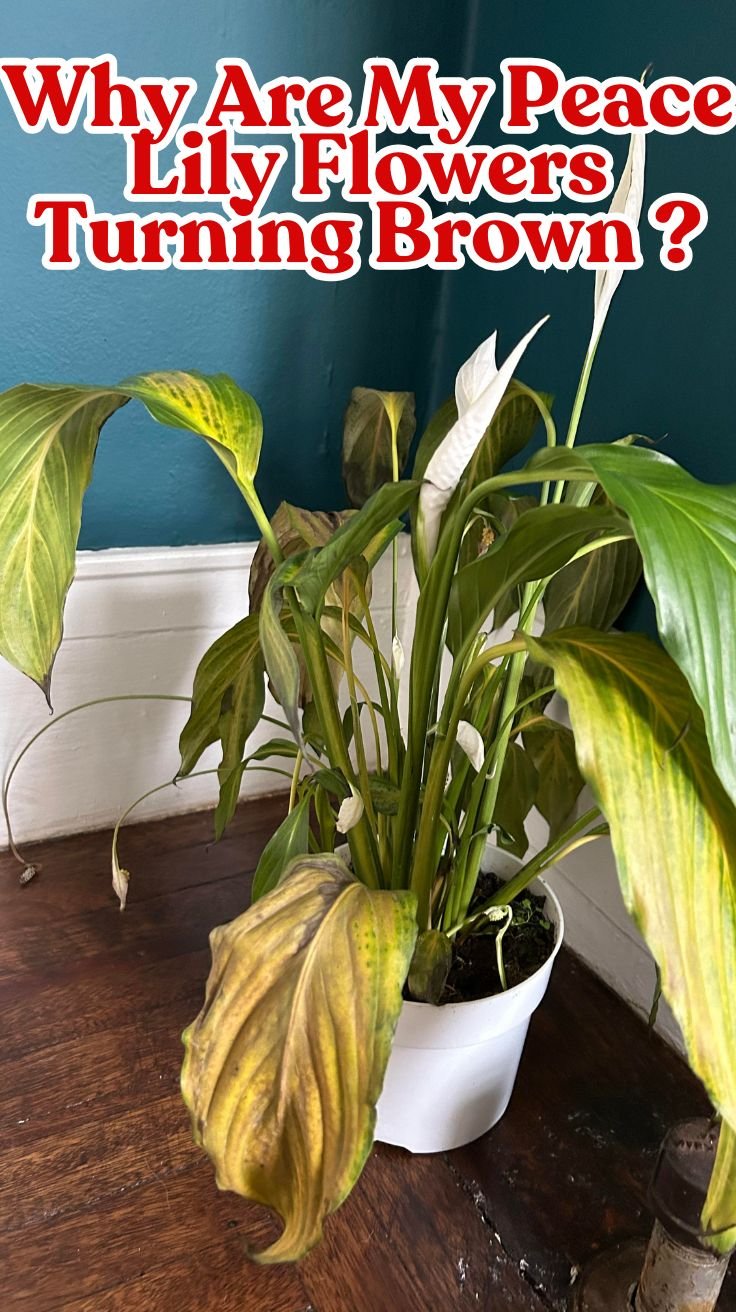
Struggling with peace lily flowers turning brown? Ashley Scott, a 10-year gardening pro, shares why it happens and how to fix it—perfect for beginners and plant lovers!
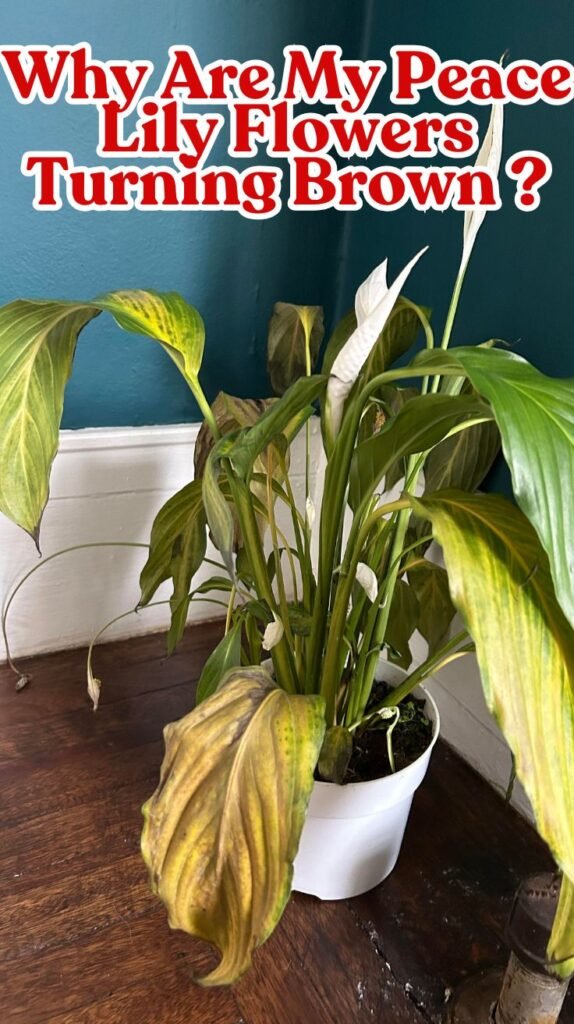
Seeing those beautiful white peace lily flowers turn an unsightly brown is frustrating. I’ve been there with my own plant, “Snowball.” The good news is that this is usually a fixable problem. Understanding why it happens is the first step to restoring your plant’s beauty.
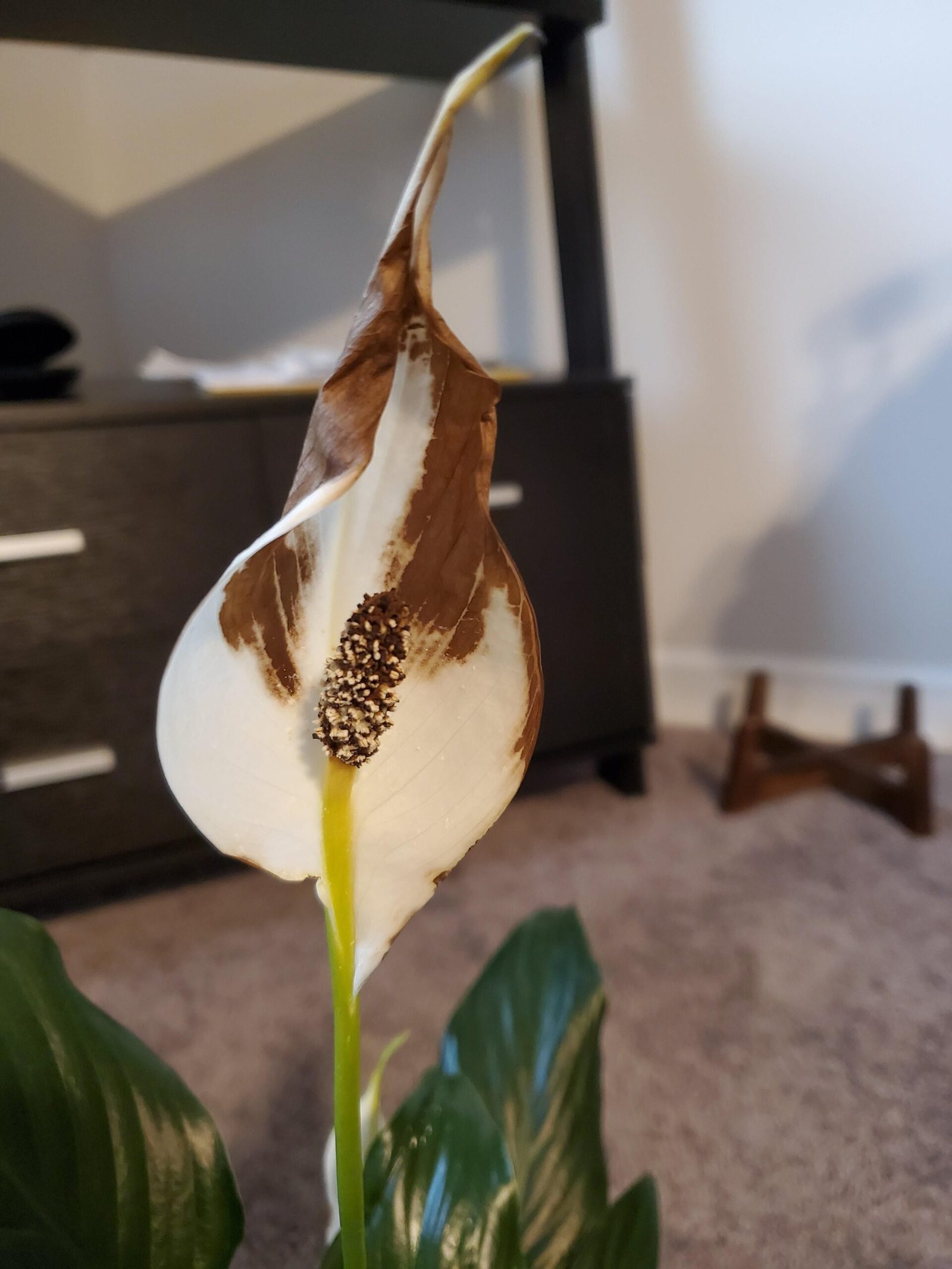
A peace lily’s flower is actually a specialized leaf called a spathe. The tiny true flowers are on the central spike. Browning can be a natural part of the lifecycle or a sign that the plant’s needs aren’t being met.
The Quick Fix Guide
Before we dive deep, here are the most common reasons and their immediate solutions:
- If the browning starts at the tips: You are likely using tap water. Switch to distilled, rainwater, or filtered water.
- If the entire flower is browning uniformly: It is probably just the natural aging process. Simply snip it off.
- If the flower is fading to green, then brown: Your plant is likely getting too much direct sunlight. Move it to a spot with bright, indirect light.
- If the flower and leaves are drooping and browning: Your watering routine is off—either too much or too little. Check the soil moisture.
Detailed Causes and Their Solutions
Here is a closer look at what causes brown peace lily flowers and exactly what you can do about it.
1. Natural Aging
This is the most common and completely normal reason. Each flower has a lifespan of about a month or two. As it ages, it will naturally senesce, often starting by turning a pale green before progressing to brown.
How to Fix It:
There is no fix needed, only maintenance. Use clean, sharp scissors or pruners to cut off the brown flower stalk. Follow the stalk all the way down to the base of the plant and make a clean cut there. This encourages the plant to put its energy into new growth. You can learn more about this in our guide on basic plant care.
2. Water Quality (The Usual Suspect)
Peace lilies are sensitive to the chemicals found in tap water, especially chlorine, fluoride, and soluble salts. These chemicals build up in the plant tissue, typically causing the tips of the flowers and leaves to turn brown.
How to Fix It:
Stop using tap water immediately. Water your peace lily with distilled water, filtered water, or collected rainwater. If you must use tap water, let it sit out in an open container for 24 hours to allow some of the chlorine to dissipate.
3. Improper Watering Habits
While they are dramatic when thirsty, both overwatering and underwatering can cause stress that leads to browning flowers. Overwatering suffocates roots, preventing them from taking up water and nutrients. Underwatering causes straightforward drought stress.
How to Fix It:
Develop a consistent watering routine. Don’t water on a strict schedule. Instead, check the soil. Water your peace lily thoroughly when the top inch or two of soil feels dry to the touch. The plant will often droop noticeably when it’s thirsty. Always ensure your pot has drainage holes to prevent soggy soil.
4. Too Much Direct Sunlight
The pure white spathe of a peace lily is easily scorched by intense, direct sunlight. Think of it like a piece of paper left in the sun; it will fade and burn. Too much light will cause the flower to turn brown, often in patches.
How to Fix It:
Move your plant to a location with bright, indirect light. An east-facing window is ideal, as it provides gentle morning sun. A spot a few feet away from a south or west window also works well. The Missouri Botanical Garden notes that peace lilies are excellent low-light plants, but they bloom best with moderate indirect light.
5. Low Humidity
Native to tropical rainforests, peace lilies thrive in humid air. Dry air, common in homes especially during winter, can pull moisture from the flowers and leaves, causing the tips to turn brown and crispy.
How to Fix It:
Increase the humidity around your plant. You can:
- Group it with other plants.
- Place it on a pebble tray filled with water (ensure the pot is not sitting in the water).
- Mist the leaves lightly every few days.
- Run a humidifier nearby.
A Summary of Causes and Solutions
| Cause | Symptom | Solution |
|---|---|---|
| Natural Aging | Entire flower slowly turns brown after several weeks. | Snip the flower stalk at the base. |
| Water Quality | Brown tips on flowers and leaves. | Switch to distilled or filtered water. |
| Over/Underwatering | Flowers and leaves droop and brown. | Water only when top inch of soil is dry. |
| Too Much Sun | Flowers fade to green, then develop brown, scorched patches. | Move to bright, indirect light. |
| Low Humidity | Crispy brown tips on flowers and leaves. | Increase humidity with a pebble tray or humidifier. |
How to Prevent Brown Flowers in the Future
The best cure is always prevention. To keep your peace lily healthy and blooming, stick to a simple routine.
- Water Wisely: Use the right water and the right technique. Consistency is key.
- Find the Sweet Spot for Light: Bright, indirect light will encourage blooms without the burn.
- Feed Gently: During the growing season (spring and summer), fertilize monthly with a balanced, diluted houseplant fertilizer. Over-fertilizing can cause chemical burn, so less is more. The University of Florida IFAS Extension provides excellent guidance on fertilizing foliage plants.
- Maintain Humidity: Keep your tropical plant happy by mimicking its native environment.
With these adjustments, your peace lily should reward you with long-lasting, pristine white flowers. For more help with troubleshooting other common plant problems, have a look at our page on solving plant problems.
Has this guide helped you diagnose your peace lily? I’d love to hear what worked for you. Share your experience in the comments below





2 Comments on “Peace Lily Flowers Turning Brown: Why It Happens and How to Fix It”