

Learn how to care for a String of Pearls plant. This guide covers light, water, soil, and propagation for this unique trailing succulent.

I’ll never forget the first time I saw a String of Pearls plant in a local nursery. Its cascading tendrils covered in perfect, pea-shaped leaves looked almost too unique to be real. I brought one home, and after a few learning experiences (including some overwatering mishaps), I’ve found it to be one of the most rewarding and conversation-starting plants in my collection.
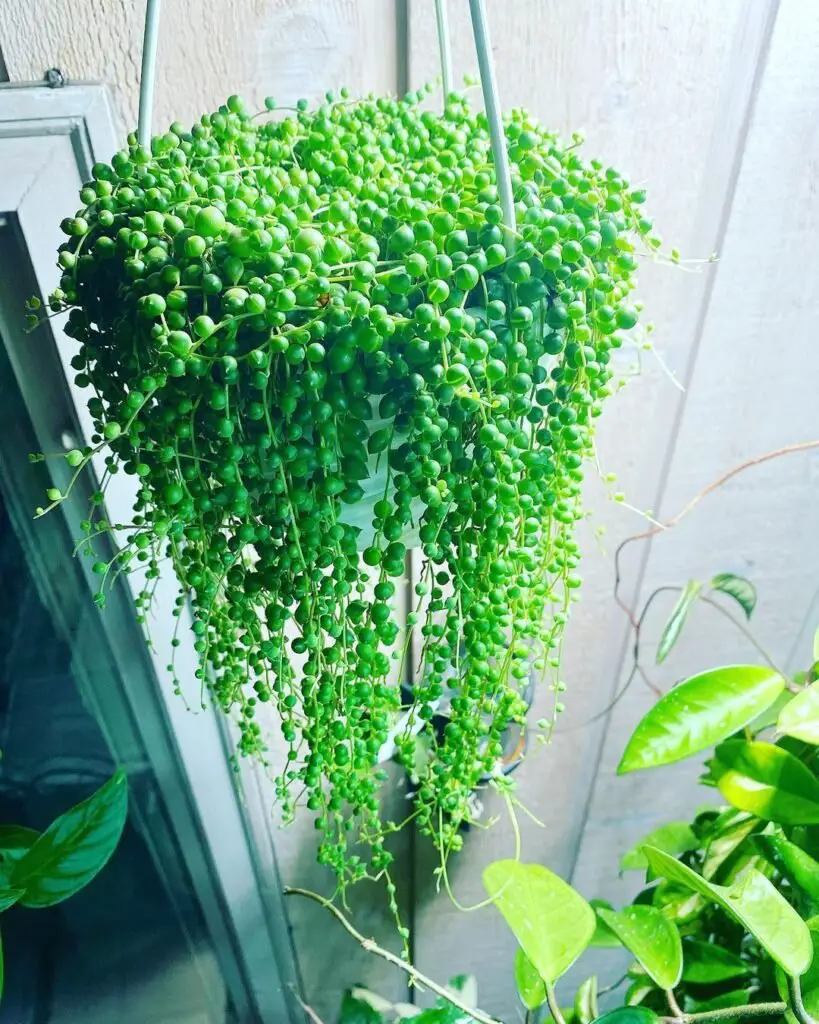
The String of Pearls (Senecio rowleyanus) is a trailing succulent native to South Africa. It’s known for its distinctive foliage—spherical leaves that store water, allowing it to thrive in dry conditions. When happy, it can produce small, cinnamon-scented white flowers.
Why Grow a String of Pearls?
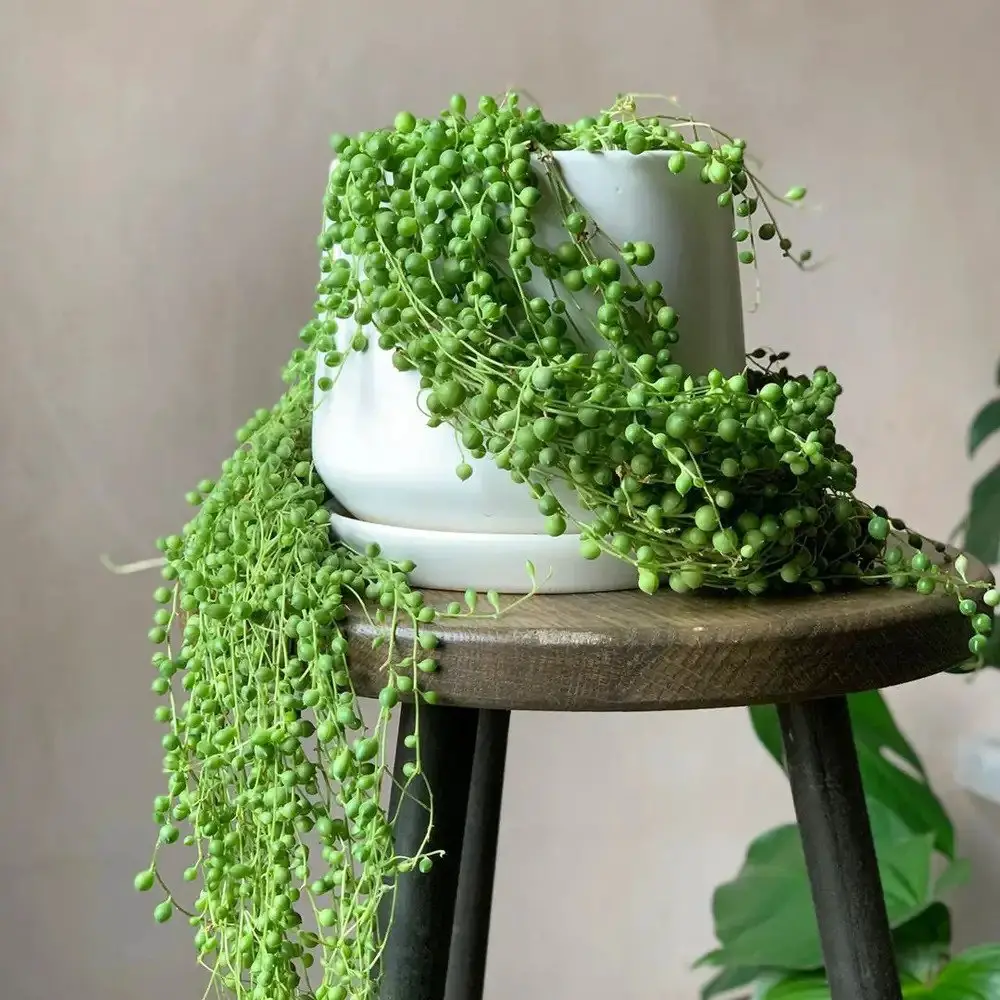
You should grow this plant for its truly unique appearance. No other houseplant offers the same textural, beaded effect. It’s an excellent choice for hanging baskets or high shelves where its trails can cascade several feet. It’s also a fantastic, low-maintenance plant for busy gardeners who might forget to water now and then.
String of Pearls Care at a Glance
| Care Aspect | Requirement |
|---|---|
| Common Name | String of Pearls, String of Beads |
| Botanical Name | Senecio rowleyanus |
| Plant Type | Trailing succulent |
| Light | Bright, indirect light; tolerates some direct sun |
| Soil | Very well-draining cactus/succulent mix |
| Water | Let soil dry out between waterings; water deeply |
| Temperature | 70-80°F (21-27°C) |
| Humidity | Average household humidity |
| Toxicity | Toxic to humans and pets if ingested |
Detailed Care Instructions
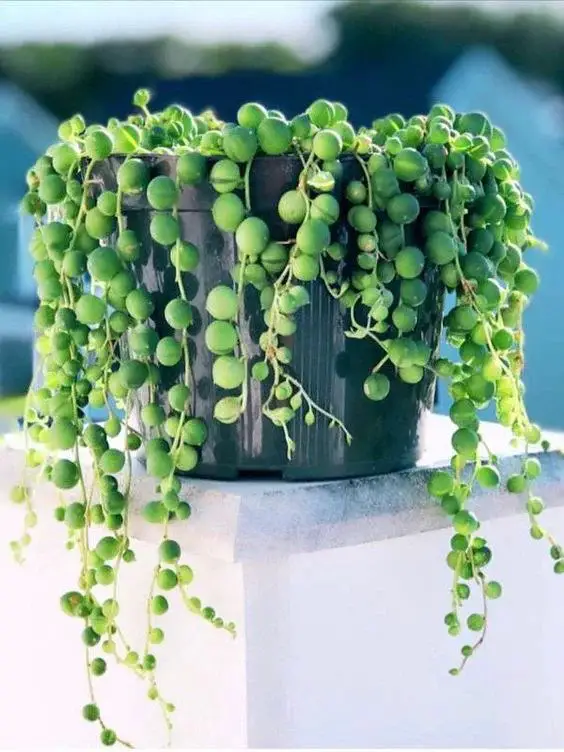
Yes, these plants can bloom! The fragrant, cinnamon-scented white flowers appear in summer but are rare indoors. To boost your chances:
- Maximize light: 6+ hours of bright, indirect light daily.
- Mimic dormancy: Reduce watering and keep temps cooler (50–60°F) in winter.
- Avoid stress: Stable conditions = happy plants.
My plant bloomed after I moved it outdoors to a shaded patio for the summer—try it !
Common Problems (& Solutions!)
| Issue | Symptoms | Fix |
|---|---|---|
| Overwatering | Mushy pearls, yellow stems | Let soil dry, repot in fresh mix, trim rot. |
| Underwatering | Shriveled pearls | Soak the soil, then adjust schedule. |
| Leggy Growth | Sparse stems | Move to brighter light, prune tips for bushiness. |
| Pests | Mealybugs, spider mites | Wipe with alcohol, spray neem oil, improve airflow. |
| Leaf Drop | Pearls falling off | Check for drafts, overwatering, or sudden temp changes. |
Detailed Care Instructions
Getting the basics right is key to a thriving plant. Here’s what I’ve learned through experience.
Light
Your String of Pearls needs bright, indirect light for at least 4-6 hours per day. An east or west-facing window is ideal. It can tolerate some direct morning sun, but intense afternoon light can scorch the pearls. If the trails are looking leggy and the pearls are spaced far apart, it’s a clear sign it needs more light.
Soil and Potting
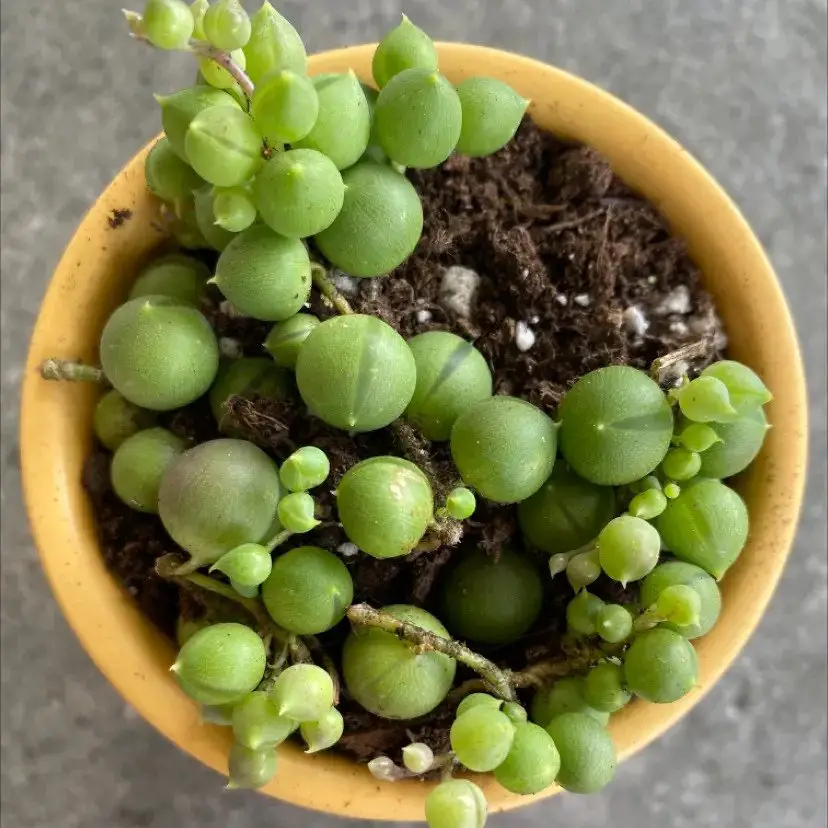
Well-draining soil is non-negotiable. Use a specialized cactus and succulent potting mix. I often make my own by mixing two parts potting soil with one part perlite and one part coarse sand. Always choose a pot with a drainage hole. A shallow, wide pot often works better than a deep one, as the roots are relatively shallow.
Watering
This is where most people go wrong. Water only when the soil is completely dry. To check, stick your finger an inch into the soil or feel the weight of the pot—a dry pot feels much lighter. When you water, do so thoroughly until water runs out the drainage hole, then let it fully drain. In winter, you may only need to water once a month. The pearls will start to look shriveled and puckered when they’re thirsty.
Temperature and Humidity
Average household temperatures are perfect. Keep it away from cold drafts and heating vents. It prefers dry air, so no need for misting. In fact, high humidity can increase the risk of rot.
How to Propagate String of Pearls
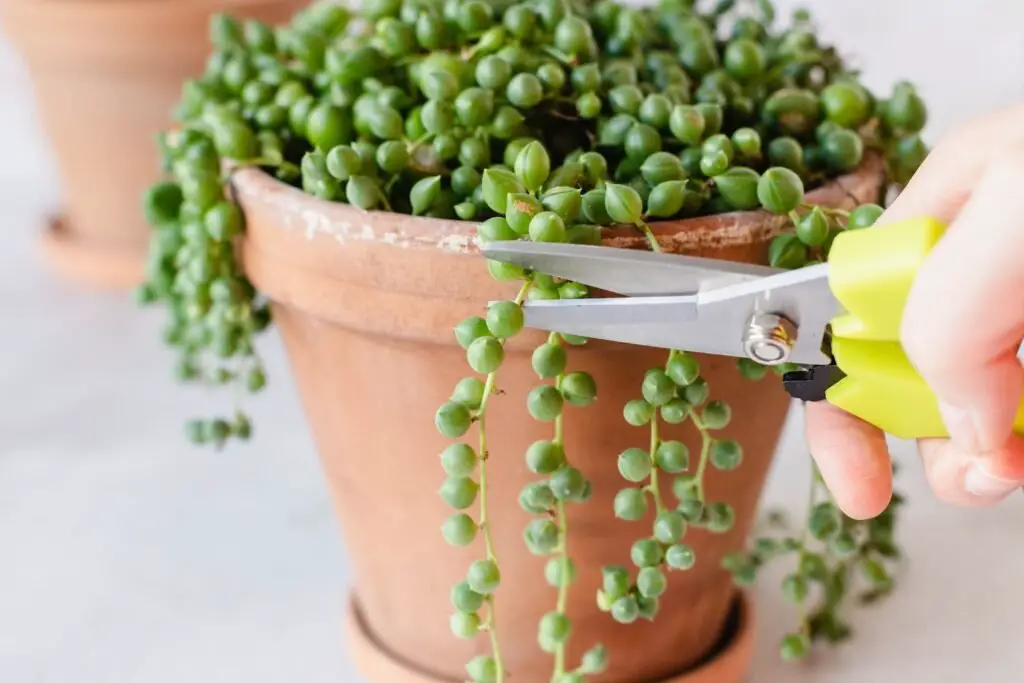
Propagating this plant is simple and rewarding. The easiest method is by stem cuttings.
- Take a Cutting: Snip a healthy trail that is at least a few inches long.
- Plant the Cutting: Coil the cutting on top of moist succulent soil, pressing the stem lightly into the surface so it makes contact. You can also remove a few pearls from the end of the cutting and bury that bare stem node in the soil.
- Rooting Care: Place the pot in bright, indirect light and keep the soil lightly moist (not wet) until you see new growth, which indicates roots have formed. After that, switch to a normal succulent watering routine.
For more detailed steps, you can check out our guide on propagating succulents.
Common Problems and Solutions
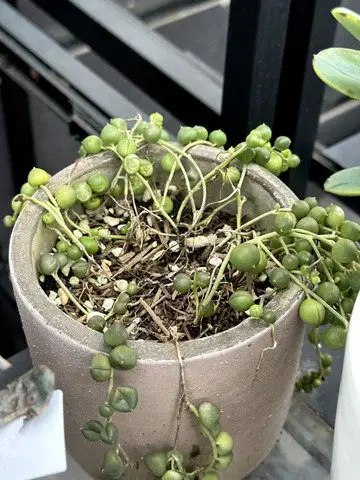
Even with good care, you might encounter an issue. Here’s how to solve them.
- Shriveling Pearls: This is usually caused by underwatering. Give the plant a deep drink, and the pearls should plump up again within a day or two.
- Yellow, Mushy Pearls or Rotting Stems: This is a classic sign of overwatering. You may need to take the plant out of its pot, remove any rotten (black/mushy) roots and stems, and repot it in fresh, dry soil.
- Leggy Growth (Large Gaps Between Pearls): The plant is not getting enough light. Move it to a brighter location.
- Pests: Keep an eye out for mealybugs and aphids. They look like small, white, cottony spots or tiny green insects. Wipe them off with a cotton swab dipped in rubbing alcohol or treat the plant with insecticidal soap.
The University of California Statewide Integrated Pest Management Program is a valuable resource for dealing with houseplant pests.
A Final Tip for Success
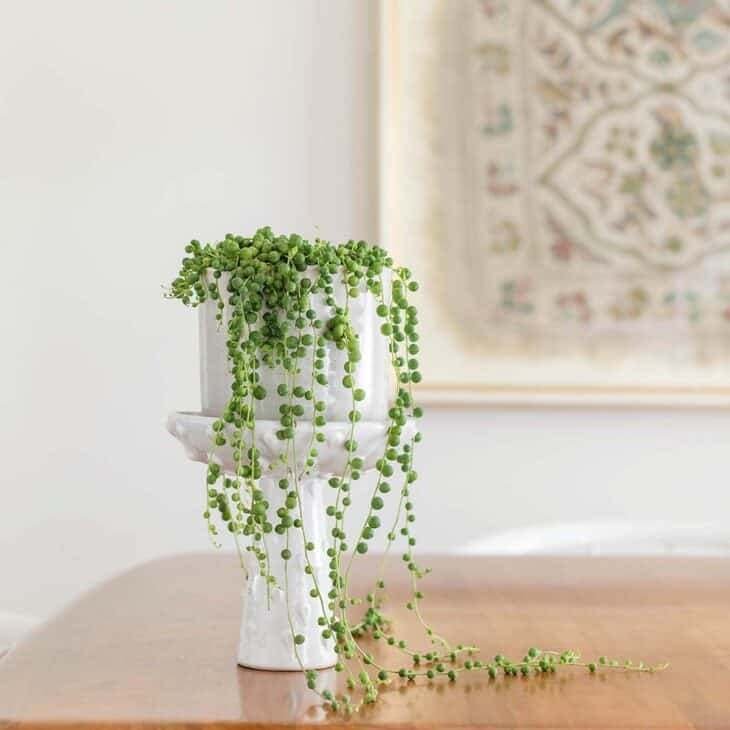
The String of Pearls is a stunning plant that teaches you to be a more observant gardener. Its watering needs are specific, but once you learn to read its signals—plump pearls mean it’s happy, shriveled pearls mean it’s thirsty—you’ll find it to be a resilient and delightful houseplant.
If you’re looking for other unique trailing plants, consider exploring our list of vining houseplants to create your own indoor jungle. Have you had success with a String of Pearls? Share your own care tips in the comments below



2 Comments on “String of Pearls Plant Care: How to Grow Senecio Rowleyanus”