Holes in leaves? Find out what’s eating your plants. This guide helps you identify common garden pests like caterpillars, slugs, and beetles, with effective organic solutions.
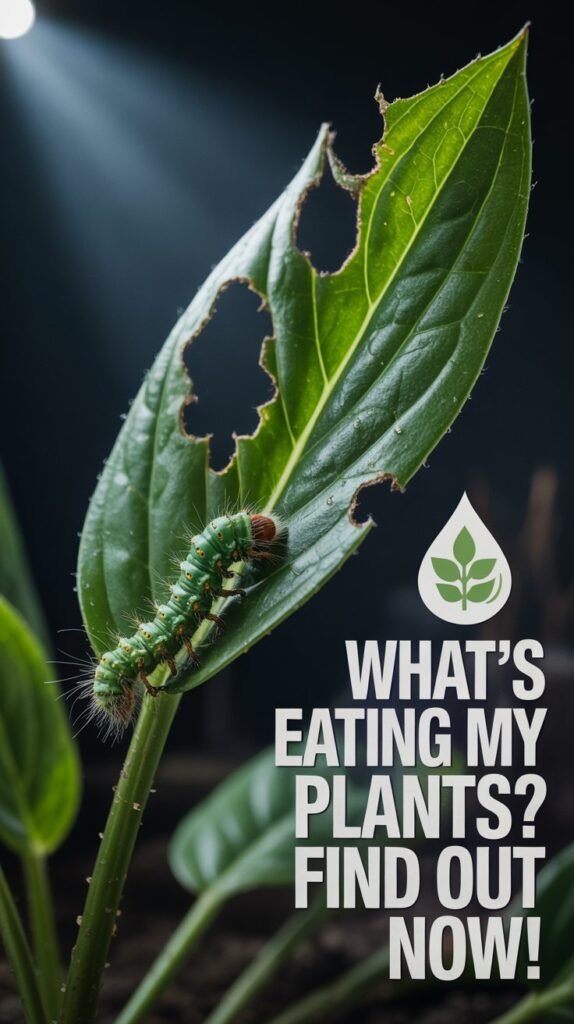
There’s nothing more frustrating than walking into your garden and finding your plants full of holes or completely missing. I’ve been there many times over my 10 years of gardening. The key to fighting back is to become a garden detective. By learning to identify the culprit based on the damage, you can choose the right solution and save your plants.

Most garden pests leave behind distinct clues. You need to look at the type of damage, the time of day it happens, and any physical evidence left on the plant or soil.
How to Identify the Culprit by the Damage
Here is a breakdown of the most common garden pests and the specific clues they leave.
Chewing Pests: Holes in Leaves and Stems
These pests physically eat parts of your plants.
1. Caterpillars & Tomato Hornworms
- Signs: Large, irregular holes in leaves. Some caterpillars will skeletonize leaves, eating the green tissue and leaving the veins behind. Tomato hornworms can strip a plant overnight and leave behind dark green droppings.
- Common Targets: Cabbage, broccoli, tomatoes, peppers, and many ornamental plants.
- Solution: Hand-pick them off plants in the early morning or evening. For larger infestations, use an organic pesticide containing Bacillus thuringiensis (Bt), which specifically targets caterpillars.
2. Slugs and Snails
- Signs: Irregular, ragged holes in leaves, often with a smooth edge. They leave behind a tell-tale silvery, slimy trail on leaves and soil. They feed at night and on cloudy days.
- Common Targets: Hostas, lettuce, basil, and seedlings.
- Solution: Set out a shallow dish of beer at soil level to attract and drown them. You can also create a barrier of diatomaceous earth or crushed eggshells around plants, which deters them with its sharp texture.
3. Japanese Beetles & Other Chewing Beetles
- Signs: Skeletonized leaves, where only the lace-like network of veins remains. Japanese beetles feed in groups, so you will often see a cluster of them on a plant.
- Common Targets: Roses, grapes, raspberries, and many other ornamentals and edibles.
- Solution: Hand-pick beetles early in the morning when they are sluggish and drop them into a bucket of soapy water. For grub control in your lawn, you can use beneficial nematodes. The University of Minnesota Extension offers excellent management strategies.
4. Earwigs
- Signs: Irregular holes in leaves and petals. They are especially fond of young, tender growth. You might find them hiding in damp, dark places during the day.
- Common Targets: Dahlias, marigolds, zinnias, and lettuce.
- Solution: Set a trap by rolling up a damp newspaper and placing it near the damaged plants. Overnight, earwigs will hide inside, and you can dispose of it in the morning.
Sucking Pests: Discolored and Distorted Growth
These pests pierce plants and suck out the sap, weakening them.
5. Aphids
- Signs: Clusters of tiny, pear-shaped insects on new growth and undersides of leaves. They cause leaves to curl, pucker, and turn yellow. They also excrete a sticky substance called honeydew, which can lead to sooty mold.
- Common Targets: Nearly every plant in the garden.
- Solution: A strong blast of water from a hose can knock them off plants. For stubborn infestations, use insecticidal soap or a neem oil solution.
6. Squash Bugs
- Signs: Yellow spots on leaves that eventually turn brown and crisp. The leaves will look wilted and may die. You will see clusters of bronze-colored eggs on the undersides of leaves and the adult bugs themselves, which are grayish-black and slow-moving.
- Common Targets: Squash, pumpkins, and cucumbers.
- Solution: Check leaves daily and scrape off egg clusters. Place a board on the ground near plants; the bugs will congregate under it at night, and you can destroy them in the morning.
7. Spider Mites
- Signs: Tiny yellow stippling on leaves. Leaves may look dusty or bronzed and will eventually dry out. A fine, silky webbing on the undersides of leaves is a sure sign.
- Common Targets: Plants under heat and drought stress, like beans, tomatoes, and many houseplants.
- Solution: Increase humidity and spray plants forcefully with water. Insecticidal soap or horticultural oil is effective. You can learn more about managing these tiny pests in our guide on garden pest control.
8. Flea Beetles
- Signs: Numerous tiny, shothole-sized holes in leaves, giving them a peppered appearance. The small, dark beetles will jump like fleas when disturbed.
- Common Targets: Eggplant, radishes, arugula, and young seedlings.
- Solution: Use floating row covers to protect young plants. Sticky traps can also help reduce their numbers.
A Quick Guide to Pest Identification
| Pest | Type of Damage | Key Clues |
|---|---|---|
| Caterpillars | Large, irregular holes in leaves. | Dark droppings (frass) on leaves; the pest is often visible. |
| Slugs/Snails | Ragged holes; entire seedlings eaten. | Silvery slime trails on leaves and soil. |
| Japanese Beetles | Skeletonized leaves, only veins remain. | Groups of metallic green-and-copper beetles on plants. |
| Aphids | Curled, yellowing leaves; stunted growth. | Clusters of tiny insects on new growth; sticky honeydew. |
| Squash Bugs | Yellow spots that turn brown; wilting. | Bronze egg clusters and gray adults on squash plants. |
| Spider Mites | Fine yellow stippling; dusty look. | Fine webbing on the undersides of leaves. |
5 Effective Ways to Stop Pests for Good
A reactive approach is tiring. The goal is to create a garden that is naturally resilient.
- Inspect Your Plants Regularly: Make it a habit to walk through your garden every few days. Look under leaves, along stems, and at the base of plants. Early detection makes control much easier. This is a core practice in organic gardening.
- Encourage Beneficial Insects: Not all bugs are bad. Plant flowers like dill, fennel, and yarrow to attract ladybugs, lacewings, and parasitic wasps, which are natural predators of common pests.
- Use Physical Barriers: Floating row covers are one of the most effective ways to protect crops like cabbage and squash from flying pests. Just ensure to remove them when plants need to be pollinated.
- Practice Crop Rotation: Avoid planting the same family of vegetables in the same spot year after year. This disrupts the life cycle of pests that overwinter in the soil.
- Start with Healthy Soil: Strong, vigorously growing plants are better able to withstand pest pressure. Amend your soil with compost to give your plants the best possible foundation. The NRDC explains the long-term benefits of compost for plant health.
Final Thoughts
Finding pests in your garden can feel like a battle, but with a little knowledge, you can fight back effectively. Remember, the goal isn’t always total annihilation; it’s about managing pest levels so your plants can thrive. Pay close attention to the clues, start with the gentlest solution first, and focus on building a healthy garden ecosystem that can handle a few intruders.
Have you discovered a pest in your garden recently? Tell me what you found and how you dealt with it in the comments below.