
Dive into stunning croton plant varieties with names and pictures. From Petra to Mammy, learn top croton varieties in USA for indoor or outdoor use, plus benefits and easy care tips from gardener Ashley Scott.
Hello, friends! I’m Ashley Scott, and after 10 years of digging in the dirt and watching plants thrive, nothing excites me more than sharing the joy of colorful foliage. Picture this: It’s my first backyard garden in sunny Florida, and I planted a single croton cutting from a neighbor. That little shoot exploded into a rainbow of reds, yellows, and greens, turning my plain patio into a tropical paradise. If you’ve ever wondered about croton plant varieties, you’re in the right spot. These bold beauties, from the Codiaeum variegatum family, bring vibrant energy to any space. In this guide, we’ll explore popular croton plant varieties with names, their looks (imagine those pictures!), suitability for USA homes, and simple tips to keep them happy. Let’s get growing!
What Are Croton Plant Varieties?
Croton plant varieties are tropical shrubs known for their eye-catching leaves. Native to places like Indonesia and Malaysia, they feature thick, leathery foliage in wild mixes of color—think fiery oranges, sunny yellows, deep reds, and lush greens. Each variety has unique patterns, shapes, and sizes, making them perfect for adding punch to gardens or rooms.
Why do they vary so much? It’s all about selective breeding. Over 100 types exist, but we’ll focus on the best ones for beginners. According to the University of Florida’s IFAS Extension, crotons thrive in USDA zones 9-11 but can be houseplants anywhere with the right care. They’re not just pretty—they purify air and boost moods, as I’ve seen in my own sunroom setup.
For more on starting your tropical collection, check out my guide on tropical plants for beginners at USA Garden Hub.
12 Types of Croton Plant Varieties with Names and Pictures
If you’re searching for croton plant varieties pictures, imagine broad leaves splashed like abstract art. Here are 12 standout croton varieties with names and pictures—described so you can visualize them. I’ve grown many of these over the years, and each has a story.
1. Petra Croton
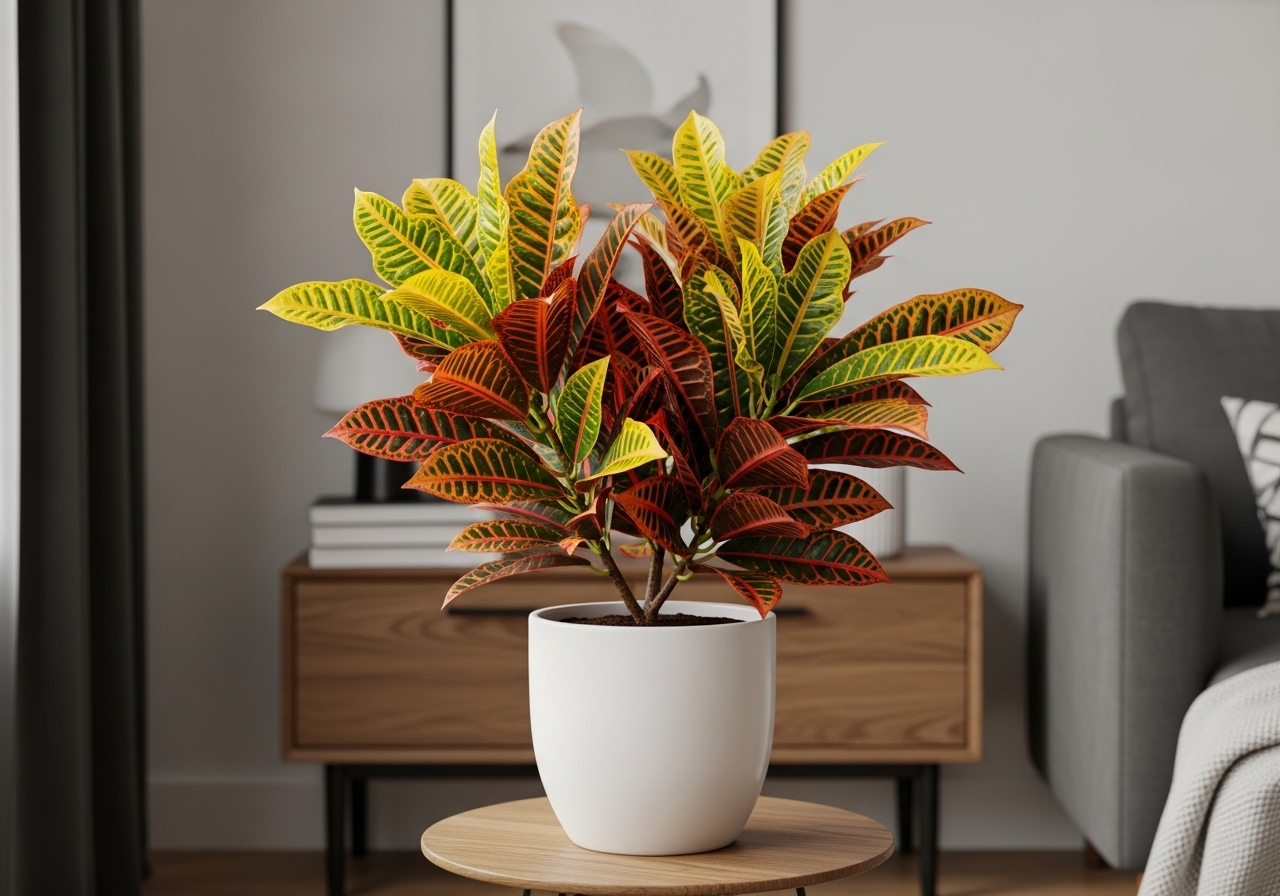
This classic tops the list for its large, oval leaves in green with bold yellow veins and orange-red edges. Picture a leaf the size of your hand, glowing like sunset. It grows 4-6 feet tall outdoors. In my Florida yard, Petra was my “starter croton”—easy and forgiving.
2. Mammy Croton
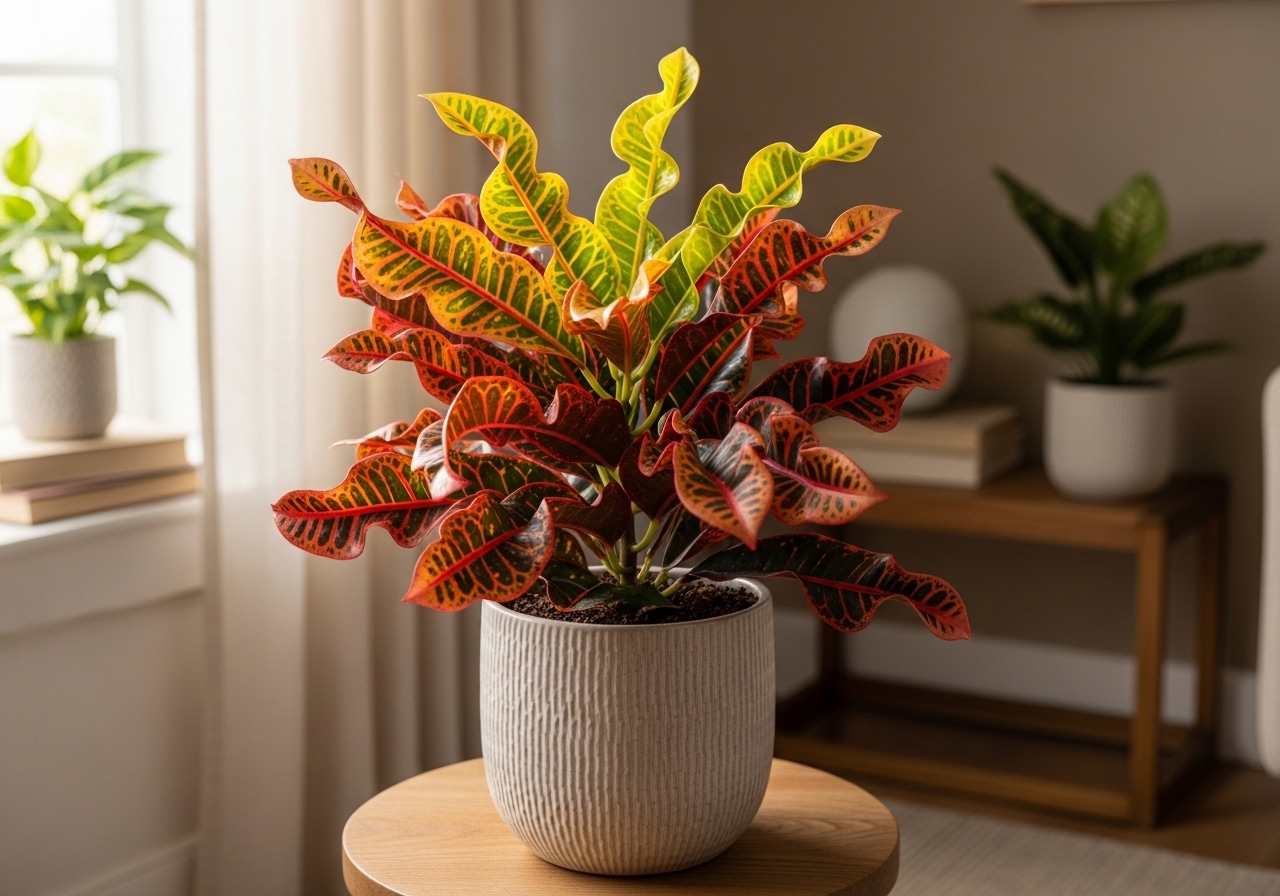
Twisted, curly leaves in red, green, purple, and yellow make Mammy look like a wild party. Up to 4 feet tall, it’s great for pots. I once used one to edge my walkway; the curls caught the breeze like dancing flames.
3. Gold Dust Croton
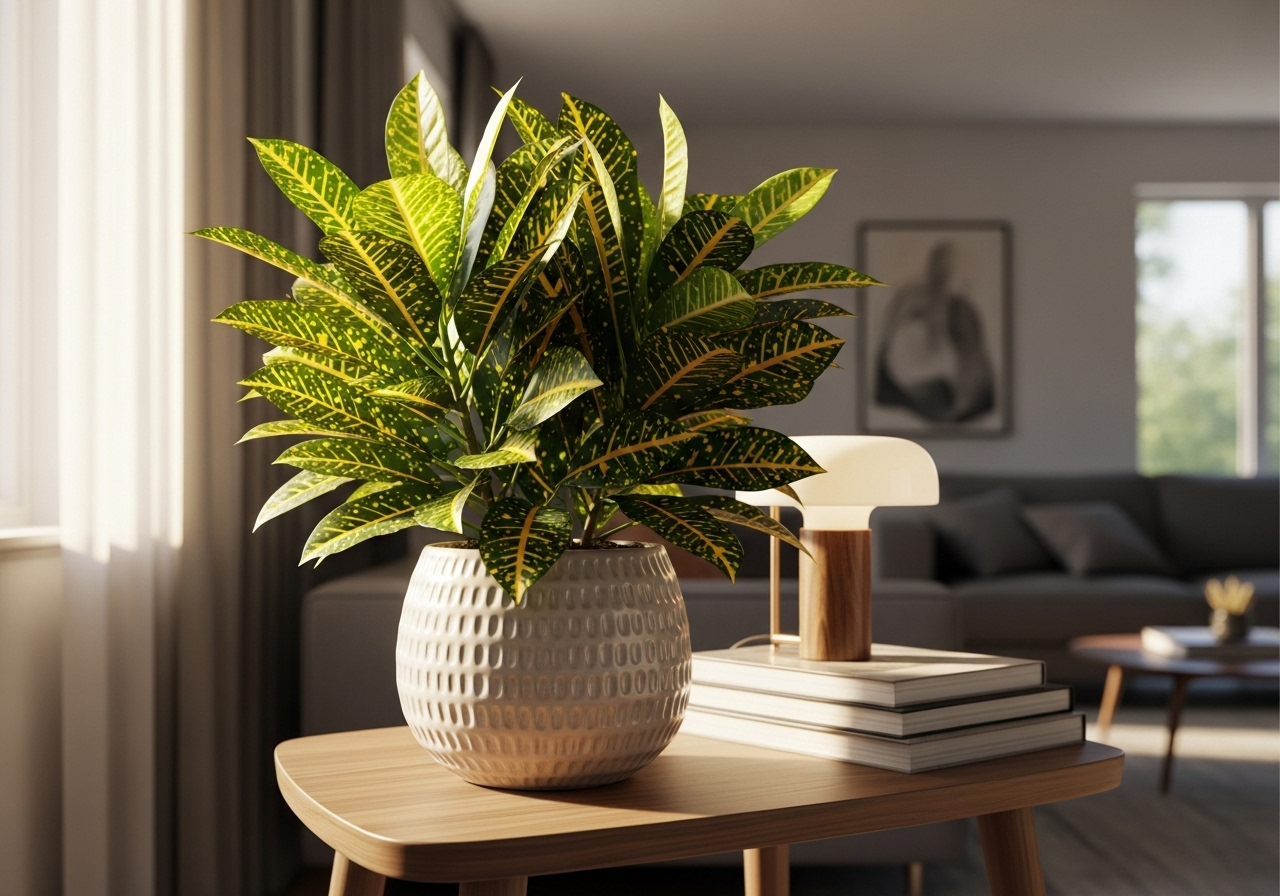
Small, oval green leaves dotted with golden yellow spots—like fairy dust on foliage. Compact at 2-3 feet, it’s ideal for shelves. The Wisconsin Horticulture Extension calls it a low-maintenance gem. Mine brightens my kitchen windowsill year-round.
Natural light from nearby windows highlights the vibrant gold speckles against the dark green foliage, showcasing why this plant is such a popular decorative houseplant. The surrounding interior features complementary decor elements that create a warm, inviting atmosphere while allowing the Gold Dust Croton to serve as an attractive focal point.
This variety of croton adds a touch of color and texture to indoor spaces and thrives in bright, indirect light with consistent moisture and humidity - making it a beautiful addition to home decor.
4. Zanzibar Croton
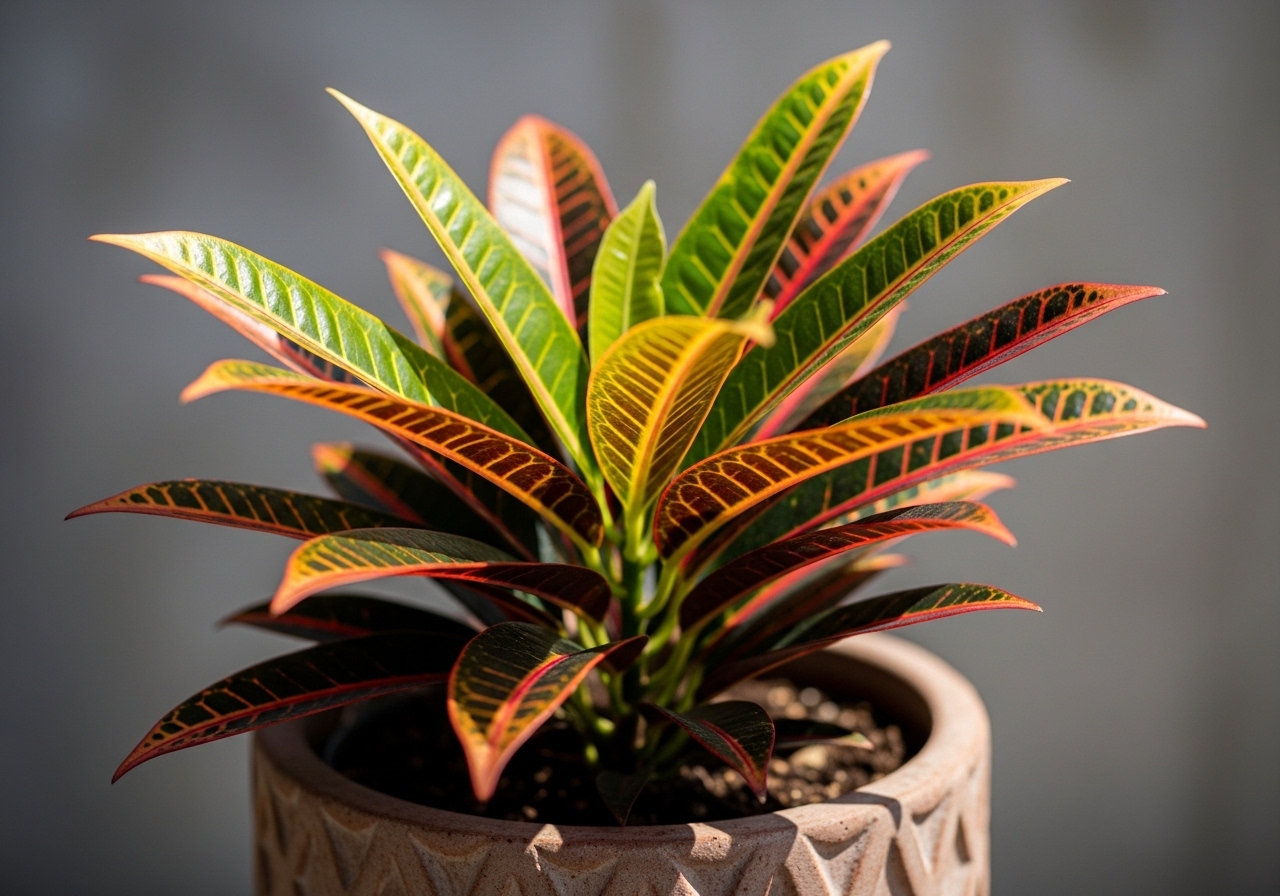
Narrow, sword-like leaves in green, red, purple, orange, and yellow stripes. Grows 3-4 feet tall. Visualize tall blades waving in the wind. I planted Zanzibar along my fence for privacy—it feels like a Hawaiian getaway.
The Zanzibar Croton is characterized by its long, narrow, lance-shaped leaves with pointed tips. As you can see in the image, this variety displays vibrant, multi-colored foliage with striking patterns. The leaves feature a beautiful blend of green, yellow, orange, and red tones that create dramatic color transitions along each leaf.
This particular croton variety is prized for its:
- Elongated, narrow leaf shape
- Vibrant color palette with multiple hues on each leaf
- Upright growth habit
- Glossy leaf texture that enhances the visual impact of the colors
Like other croton varieties, the Zanzibar Croton makes an excellent houseplant and adds a tropical flair to indoor spaces. The plant’s colorful foliage provides a striking visual accent against neutral home decor.
5. Oakleaf Croton
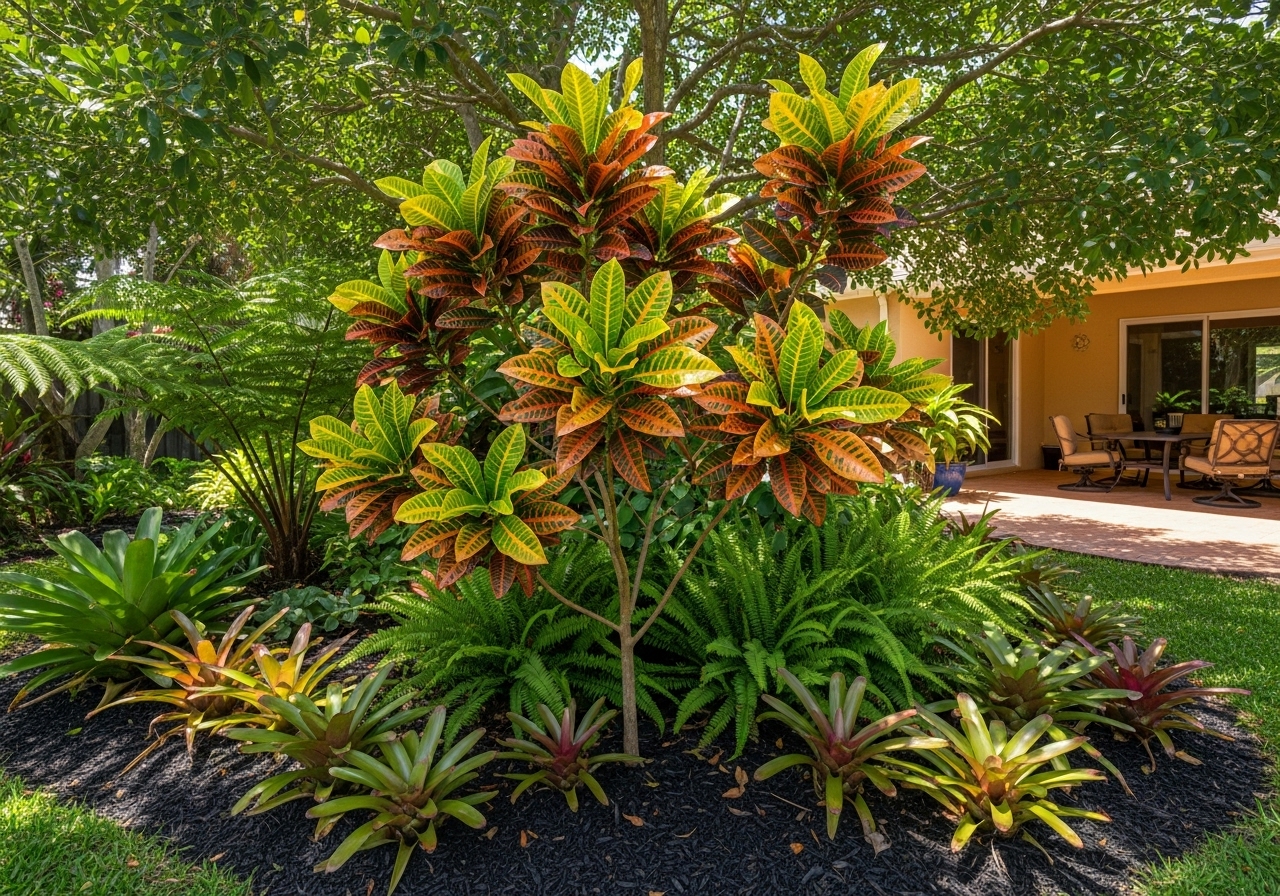
Lobed leaves like mini oak trees in burgundy, red, green, orange, and yellow. About 3 feet tall, it’s shade-tolerant. The Mississippi State University Extension highlights its fall-like colors. In my shaded backyard corner, it stole the show.
The image showcases this distinctive croton variety with its unique oak-leaf shaped foliage that has characteristic lobed edges, similar to those of an oak tree. You can see the vibrant coloration typical of Oakleaf Crotons, with leaves displaying a beautiful mix of green, yellow, orange, and red hues.
In this backyard setting, the Oakleaf Croton serves as a colorful focal point within a tropical-style garden bed. It’s surrounded by complementary plants that create a lush, layered landscape. The dappled sunlight filtering through overhead greenery highlights the croton’s vibrant colors and interesting leaf shapes.
6. Red Iceton Croton
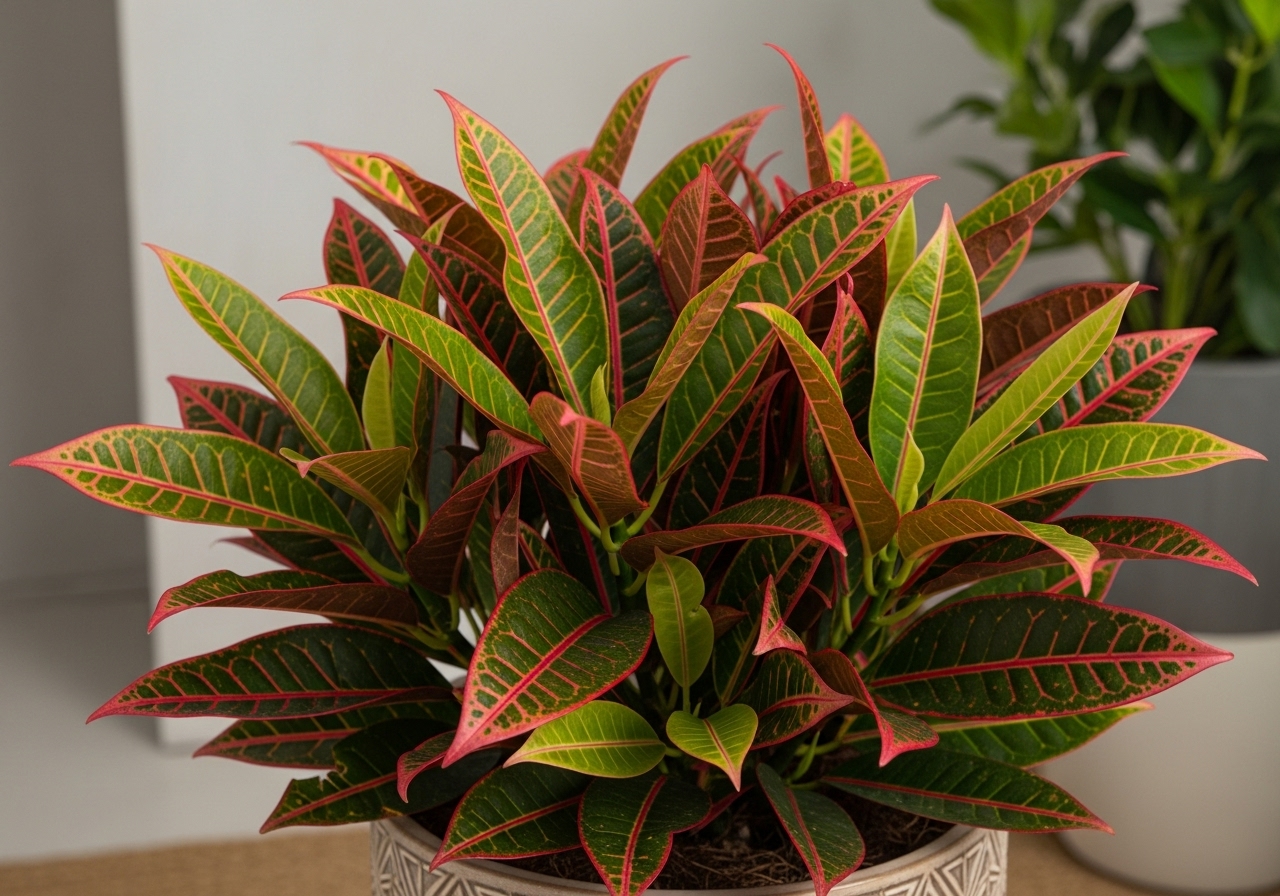
Yellow leaves that turn red and pink with age, veined in bright hues. Reaches 7-8 feet outdoors. Picture a bush blushing deeper each week. This one’s a favorite for bold statements, I gifted cuttings to friends last summer.
The Red Iceton Croton is characterized by its elongated, narrow leaves with striking color patterns. As you can see in the image, this variety displays vibrant coloration featuring bright red veins and midribs that create dramatic contrast against green leaf surfaces. Many of the leaves develop rich reddish-pink hues, especially along the edges and tips, giving this variety its “Red Iceton” name.
This particular croton variety is prized for:
- Its lance-shaped, elongated leaves
- The dramatic red veining against green backgrounds
- The overall reddish-pink flush that develops on mature leaves
- Its upright growth habit with densely arranged foliage
Like other croton varieties, the Red Iceton makes an excellent houseplant and adds a tropical accent to indoor spaces. The plant’s vibrant red coloration provides a bold visual statement that stands out among other houseplants.
7. Sunny Star Croton
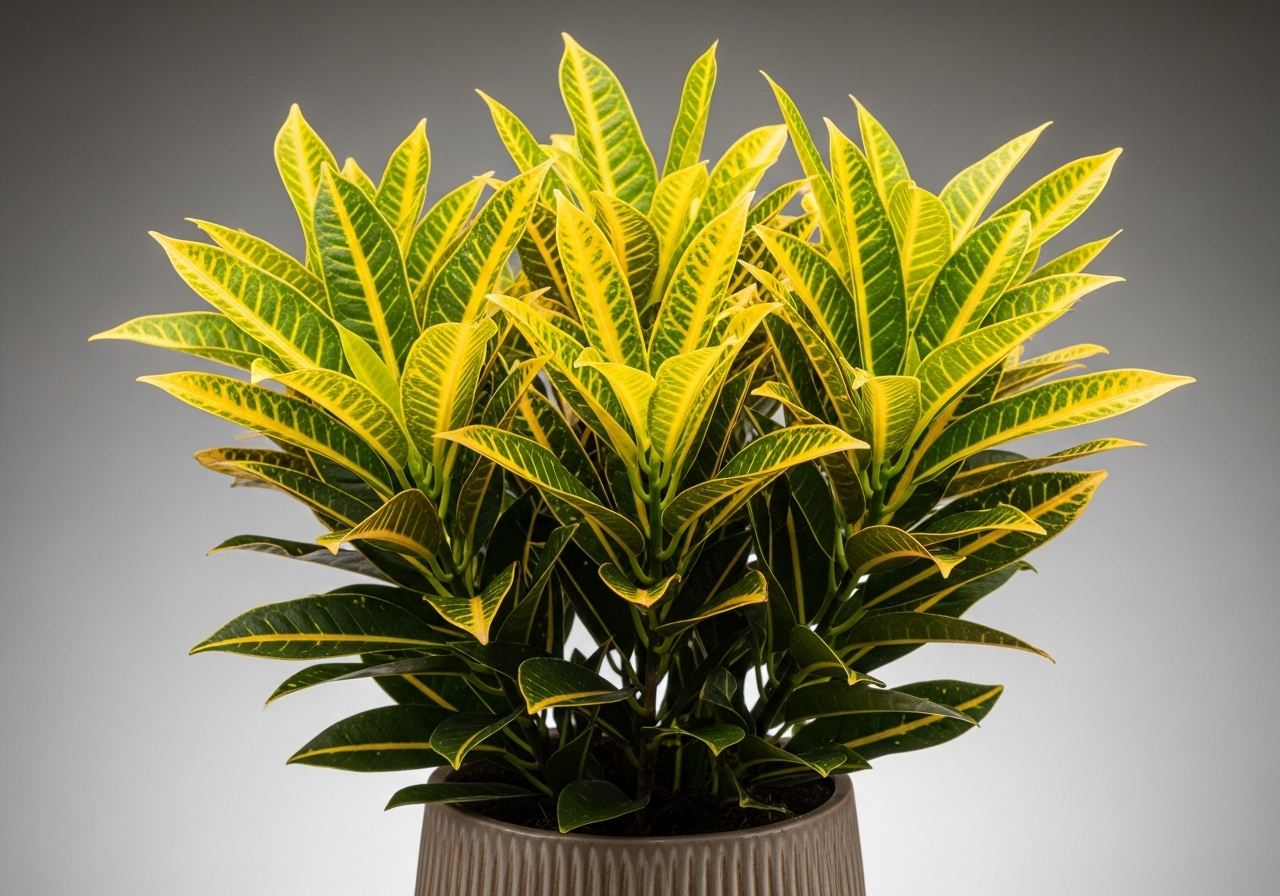
Large, elliptical light green leaves with gold dashes at the base. 4-6 feet tall. Imagine stars twinkling on green velvet. The University of Georgia’s CAES praises its cheer. Mine perks up my reading nook.
The Sunny Star Croton is characterized by its elongated leaves with a striking color pattern that lives up to its name. As you can see in the image, this variety displays vibrant yellow or golden centers with green edges and veining, creating a star-like or sunburst pattern that radiates from the center of each leaf. This dramatic color contrast gives the plant its “Sunny Star” name and makes it one of the brightest and most cheerful croton varieties.
This particular croton variety is prized for:
- Its lance-shaped, elongated leaves
- The bright yellow to gold coloration at the center of each leaf
- The contrasting green edges and veining that create a sunburst effect
- Its upright growth habit with densely arranged foliage
Like other croton varieties, the Sunny Star makes an excellent houseplant and adds a tropical accent to indoor spaces. The plant’s bright yellow coloration provides a sunny, cheerful visual statement that brightens any room or plant collection.
8. Magnificent Croton
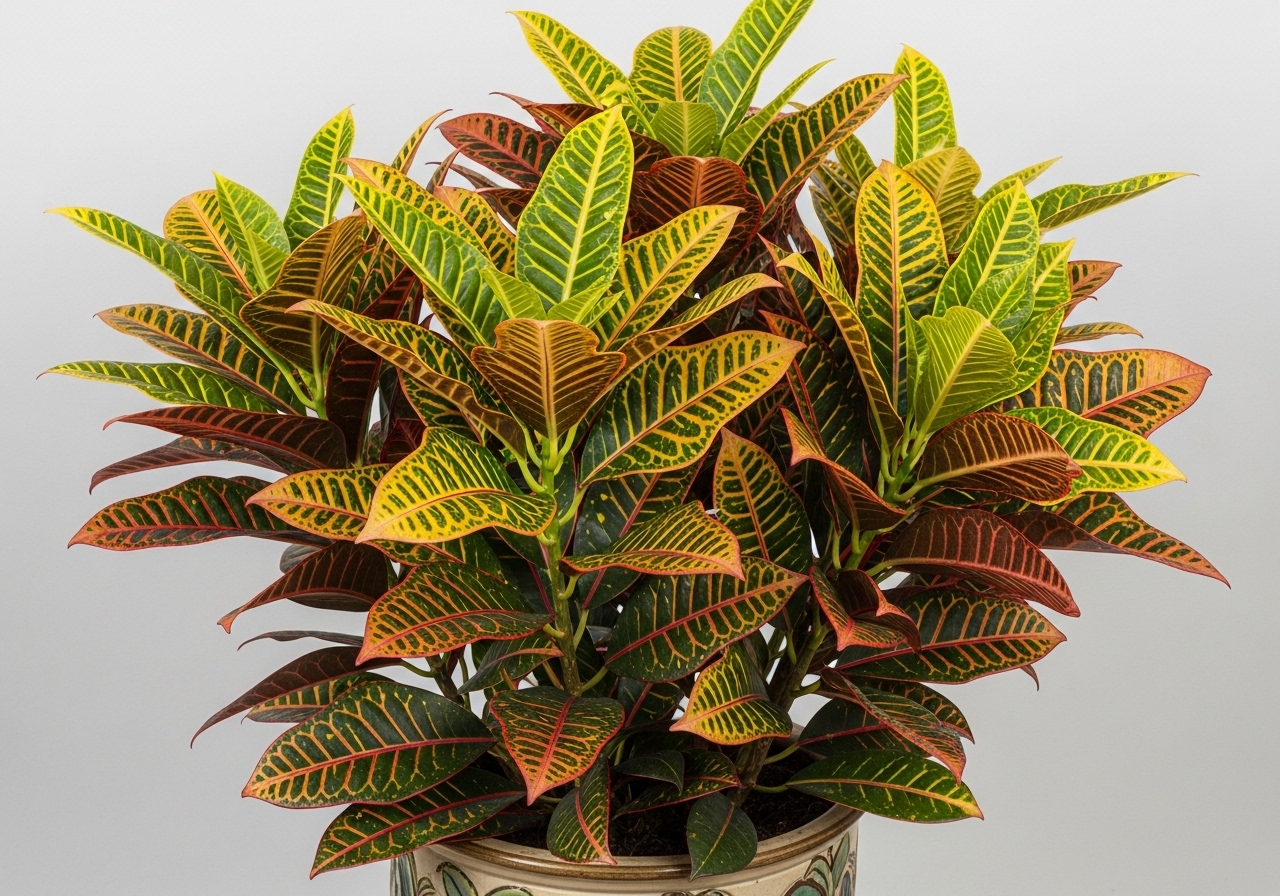
Huge dark green leaves spotted in pink, red, orange, yellow, and purple. 3-7 feet tall, shade-friendly. Visualize a canvas of jewels. After a rainy spell in my garden, its colors popped like magic.
The Magnificent Croton lives up to its name with its impressive, large, broad leaves that display a stunning array of colors. As you can see in the image, this variety features substantial foliage with spectacular coloration including deep greens, bright yellows, vibrant oranges, and rich reds. The leaves have bold color patterns and striking veining that create a dramatic multi-colored effect.
This particular croton variety is prized for:
- Its large, broad leaf shape that’s wider than many other croton varieties
- The spectacular multi-colored patterns with vibrant yellows, oranges, and reds
- The dramatic veining and color transitions across each leaf
- Its full, bushy growth habit with impressive visual impact
Like other croton varieties, the Magnificent Croton makes an excellent houseplant and adds a tropical statement to indoor spaces. The plant’s large, colorful leaves provide a bold visual impact that makes it a true standout in any plant collection.
9. Bush on Fire Croton
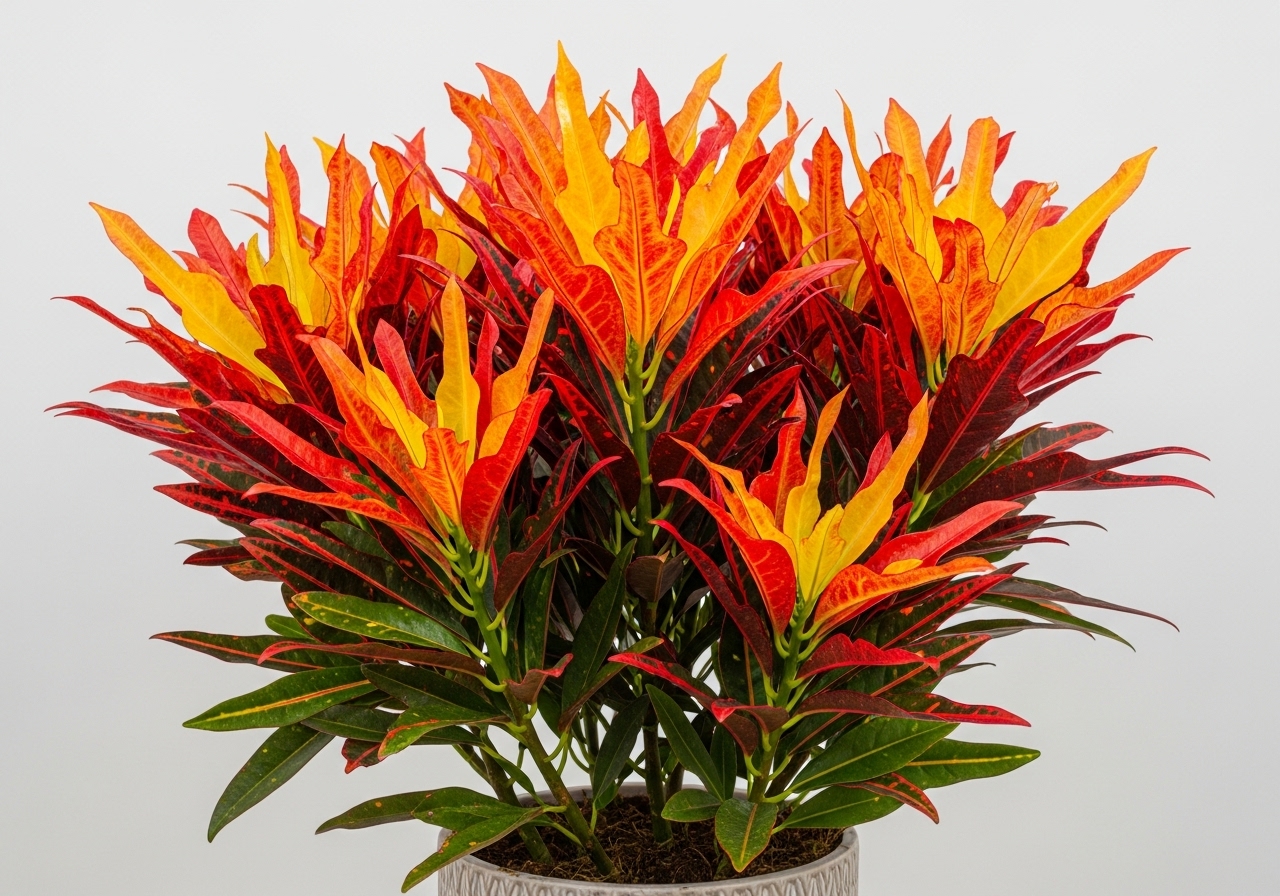
Leathery leaves shifting from pink and green to red, orange, and yellow. 3-5 feet tall. Picture flames flickering softly. The North Dakota State University Agriculture notes its rainbow range. I use it to “ignite” boring borders.
The Bush on Fire Croton lives up to its evocative name with leaves that display intense fiery coloration. As you can see in the image, this variety features foliage with striking reds, oranges, and yellows that truly resemble flames, creating the impression of a bush that’s ablaze. The leaves typically start with green at the base and transition to vibrant reds and oranges toward the tips, creating a dramatic color gradient.
This particular croton variety is prized for:
- Its narrow to medium-width leaves with pointed tips
- The intense red, orange, and yellow coloration that mimics flames
- The dramatic color transitions from green to fiery hues
- Its full, bushy growth habit that enhances the “burning bush” effect
Like other croton varieties, the Bush on Fire Croton makes an excellent houseplant and adds a bold tropical statement to indoor spaces. The plant’s fiery foliage provides a dramatic visual impact that makes it a standout in any plant collection.
10. Banana Croton
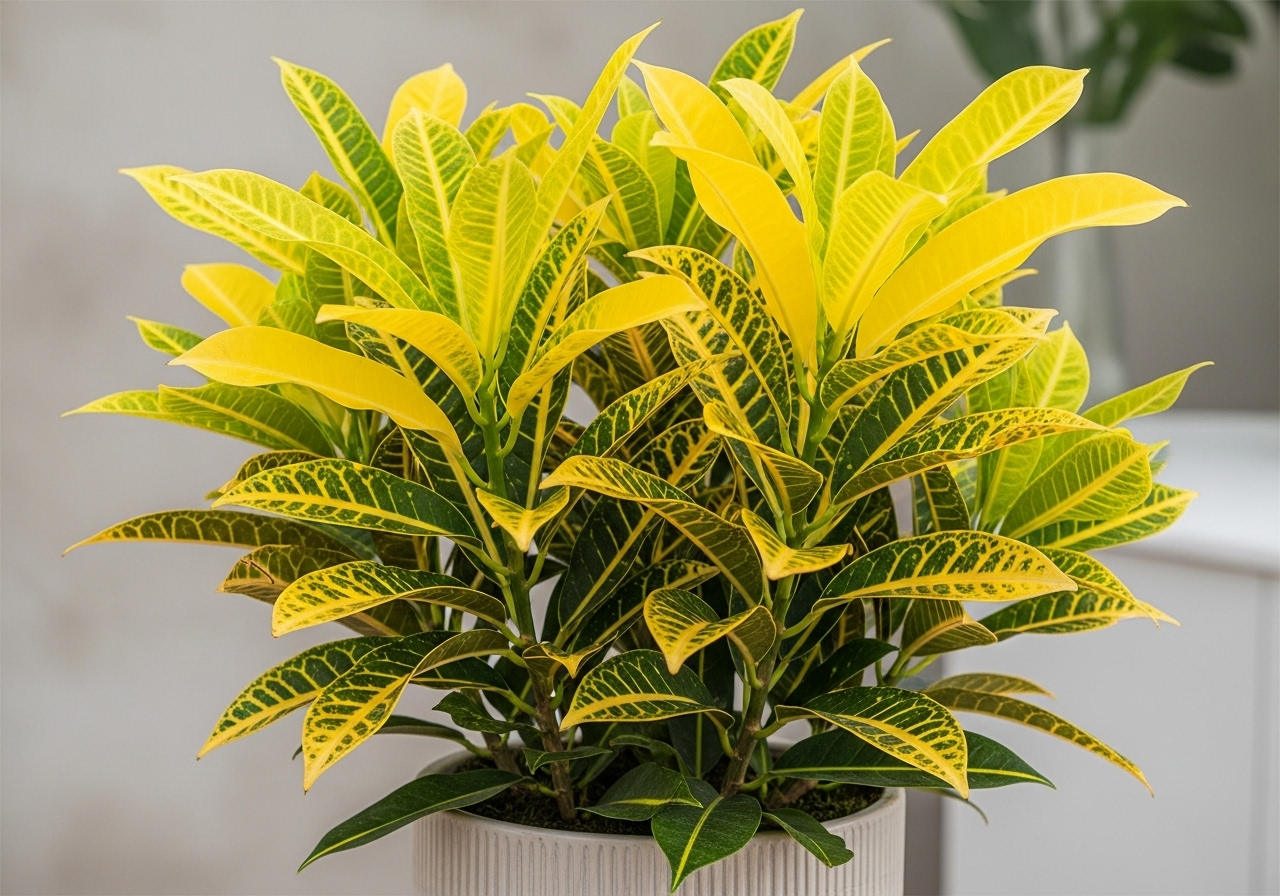
Lance-shaped green leaves splashed with banana-yellow. 3-4 feet tall, great indoors. Imagine sunny stripes on a green banner. Perfect for low light—mine survived a winter indoors without fading.
The Banana Croton is aptly named for its unique leaf shape and coloration. As you can see in the image, this variety features long, narrow leaves that are slightly curved, closely resembling the shape of bananas. The leaves display bright yellow or golden coloration with green edges or veining, further enhancing the banana-like appearance that gives this variety its name.
This particular croton variety is prized for:
- Its elongated, narrow leaves with a distinctive curved shape
- The bright yellow or golden coloration with green accents
- The unique banana-like appearance of the foliage
- Its upright growth habit with gracefully arching leaves
Like other croton varieties, the Banana Croton makes an excellent houseplant and adds a tropical accent to indoor spaces. The plant’s distinctive yellow foliage provides a bright, cheerful visual element that stands out among other houseplants.
11. Gold Star Croton
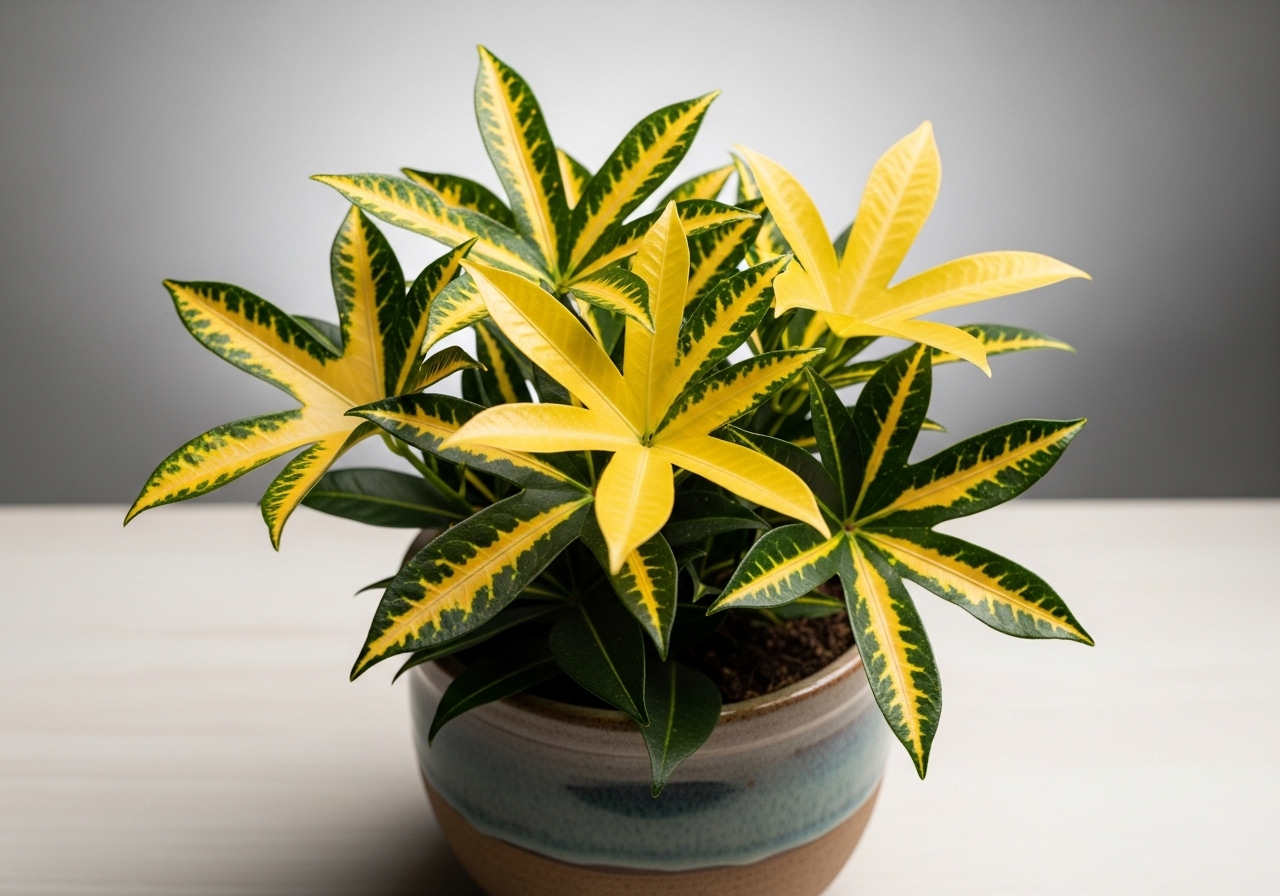
Narrow dark green leaves with shiny yellow splashes. Slow-growing to 3-6 feet. Visualize stars on a night sky. It’s tough; my Gold Star bounced back from a dry spell.
The Gold Star Croton is aptly named for its unique leaf pattern and coloration. As you can see in the image, this variety features leaves with vibrant gold or yellow centers that radiate outward in a star-like pattern, surrounded by green edges. This creates a dramatic contrast between the bright gold center and the green perimeter, forming the distinctive star shape that gives this variety its name.
This particular croton variety is prized for:
- Its star-shaped leaf pattern with gold centers radiating outward
- The bright contrast between the golden yellow centers and green edges
- The unique star-like appearance of each leaf
- Its full, bushy growth habit that showcases the patterned foliage
Like other croton varieties, the Gold Star Croton makes an excellent houseplant and adds a tropical accent to indoor spaces. The plant’s distinctive star-patterned foliage provides a bright, eye-catching visual element that stands out among other houseplants.
12. Dreadlocks Croton
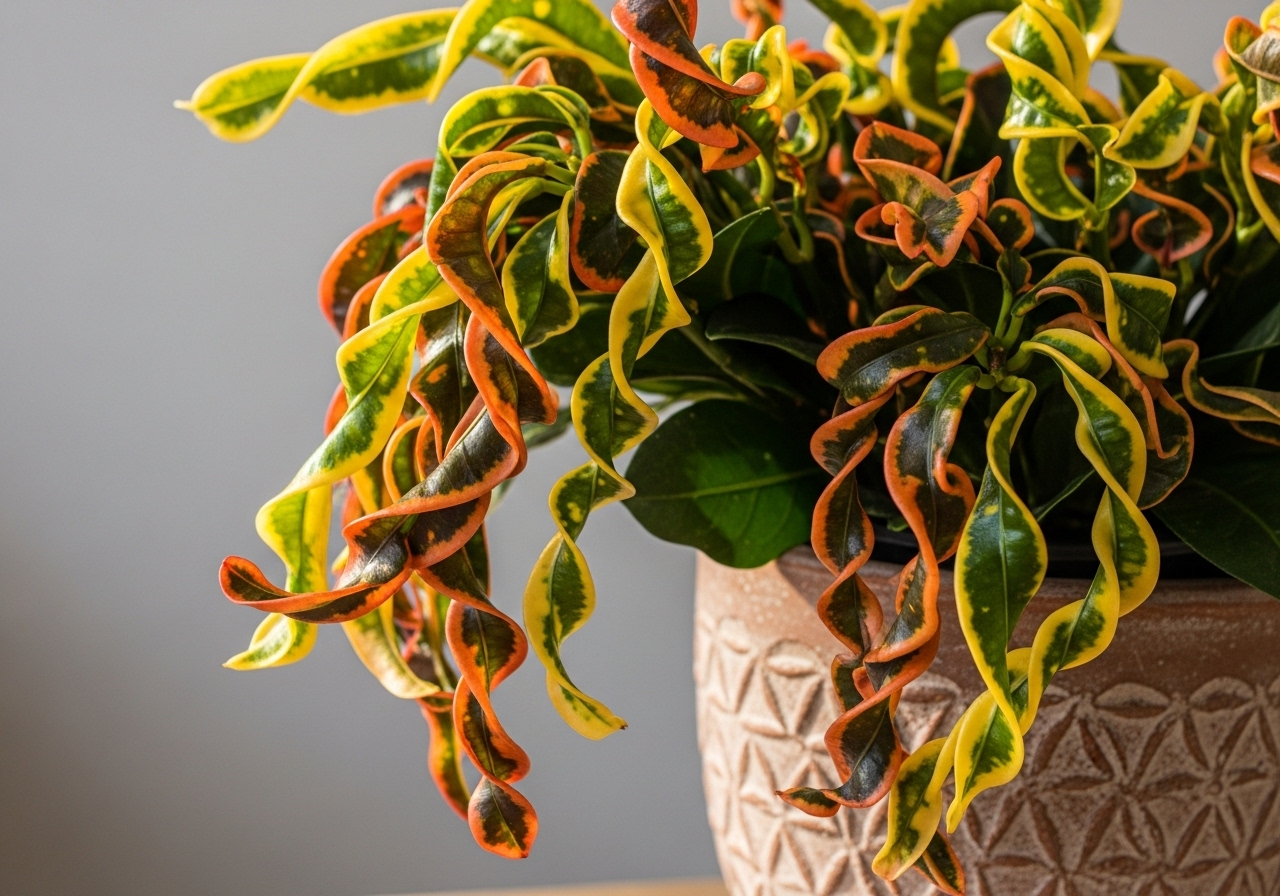
Curled, twisted deep green leaves turning red, orange, and yellow. 3-5 feet tall. Picture rasta braids in fire colors. Fun and unique—my kids love its “hairdo”!
The Dreadlocks Croton is aptly named for its unusual leaf structure and growth habit. As you can see in the image, this variety features long, narrow leaves that twist, spiral, and hang down in a manner that strongly resembles dreadlocks. The leaves are thin and create a unique, cascading appearance as they grow and twist, making this one of the most distinctive and easily recognizable croton varieties.
The foliage displays vibrant colors including green, yellow, orange, and red, with interesting color variations along the twisted leaves. This creates a striking visual effect that enhances the plant’s unique character.
This particular croton variety is prized for:
- Its unusual long, thin, twisted leaves that hang down
- The distinctive dreadlock-like appearance of the foliage
- The vibrant multi-colored patterns on the twisted leaves
- Its unique cascading growth habit that stands out from other crotons
Like other croton varieties, the Dreadlocks Croton makes an excellent houseplant and adds a tropical accent to indoor spaces. The plant’s extraordinary form provides a dramatic visual element that makes it a true conversation piece in any plant collection.
For visual inspo, search these names online. Want propagation secrets? See my post on easy plant propagation methods at USA Garden Hub.
Best Croton Varieties in USA
In the USA, croton plant varieties in USA shine in warm spots like Florida or California (zones 9-11). Petra and Mammy handle heat well, while Gold Dust suits northern indoors. From my experience in the Southeast, choose based on sun: full for Reds, partial for Yellows. The Illinois Extension suggests mixing varieties for year-round color. Pro tip: Buy from local nurseries for hardy stock adapted to your region.
Explore more USA-friendly picks in my article on colorful shrubs for American gardens at USA Garden Hub.
Croton Plant Indoor or Outdoor?
Can you grow croton plant indoor or outdoor? Yes—both! Outdoors in zones 9-11, plant in well-draining soil with morning sun. Protect from frost by mulching roots. Indoors, place near south-facing windows for light. Croton plant outdoor setups need humidity; mist leaves like I do on my porch.
The University of Maryland Extension warns: Drafts fade colors, so keep steady warmth (60-85°F). In my home, indoor crotons get pebble trays for moisture—simple and effective.
For indoor setups, read my tips on houseplant care for beginners at USA Garden Hub.
Croton Plant Benefits
Beyond beauty, croton plant benefits include air purification—removing toxins like benzene, per NASA studies. They add humidity, easing dry skin in winter, and their colors lift spirits (science backs “biophilia” for mood boosts). In gardens, they attract butterflies and deter some pests with strong scents.
From my 10 years: A croton cluster in my office cut stress during busy days. Plus, they’re low-water once established, saving time. The The Spruce agrees—they’re resilient mood enhancers.
Discover wellness perks in my piece on plants that improve home air quality at USA Garden Hub.
Simple Care Tips for Thriving Crotons
Keep croton plant varieties happy with basics:
- Light: Bright indirect; 4+ hours daily.
- Water: Moist soil, dry top inch before rewatering. Avoid soggy roots.
- Soil: Well-draining mix with perlite.
- Fertilizer: Balanced monthly in growing season.
- Pruning: Trim leggy stems for bushiness.
Story time: My first croton drooped from overwatering—lesson learned! Now, I check soil with a finger test. For full guides, visit indoor gardening basics at USA Garden Hub.
Wrapping Up: Bring Home the Rainbow
Croton plant varieties are like living fireworks—vibrant, easy, and full of personality. From Petra’s bold veins to Dreadlocks’ twists, pick one (or five!) to match your style. After a decade gardening, I promise: They’ll reward you with color and calm. Got a favorite? Share in the comments! Head to USA Garden Hub for more tips, and happy planting.