
Discover 7 stunning flowers that look like eyes. I guide you through their unique features, growing tips, and how to add these captivating blooms to your own garden.
Have you ever been in your garden and done a double take? You see a flower that seems to be looking right back at you. It is a surprising and delightful experience. I have been gardening for over ten years, and these “eye-like” flowers always capture my attention and spark conversations with visitors.
Many gardeners ask me about these unique blooms. They want to know their names and how to grow them. If you are curious too, you have come to the right place. This guide will show you seven flowers that look like eyes, with practical advice for adding them to your landscape.
Let us explore these captivating plants.
What Makes a Flower Look Like an Eye?
An eye-like flower typically has a distinct center and outer ring. The center acts as the pupil. The surrounding ring of color resembles the iris. Some flowers even have markings that mimic eyelashes or a shadowed socket. This contrast in color and pattern creates the illusion of a watchful eye.
Nature uses these patterns for a reason. They often guide pollinators like bees and butterflies to the flower’s nectar and pollen. For us, they simply create a beautiful and intriguing focal point in any garden bed or container.
7 Flowers That Look Like Eyes
Here are my top picks for eye-catching flowers, based on my experience growing them in my own garden.
1. Black-Eyed Susan (Rudbeckia hirta)
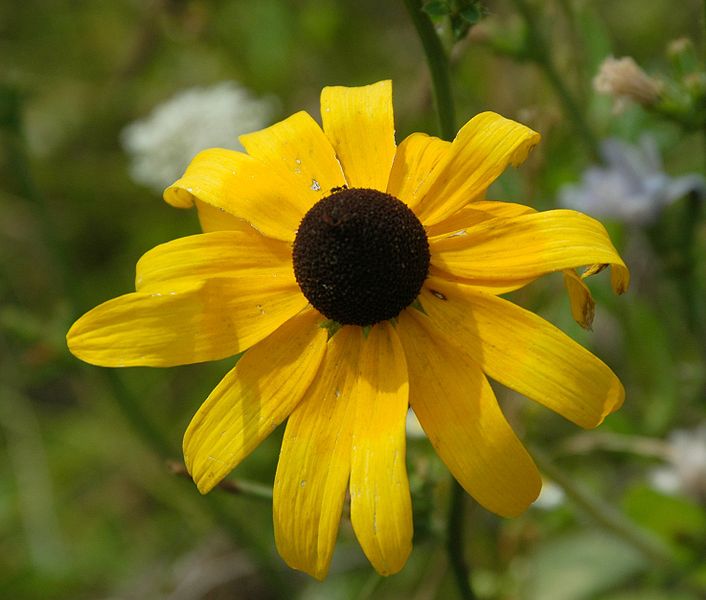
The Black-Eyed Susan is a classic American garden flower. It is a hardy perennial that blooms profusely from summer to fall. The flower features bright golden-yellow petals surrounding a dark brown, almost black, conical center. This high-contrast look is the perfect example of a floral “eye.”
Growing Tips:
- Sunlight: Full sun.
- Water: Average water needs; drought tolerant once established.
- Soil: Well-draining soil.
- Maintenance: Deadhead spent flowers to encourage more blooms. You can learn more about this and other techniques in my guide on how to keep your garden blooming all summer long.
Why it looks like an eye: The dark central cone acts as a pupil against the vibrant yellow “iris.”
2. Doll’s Eye (Actaea pachypoda)
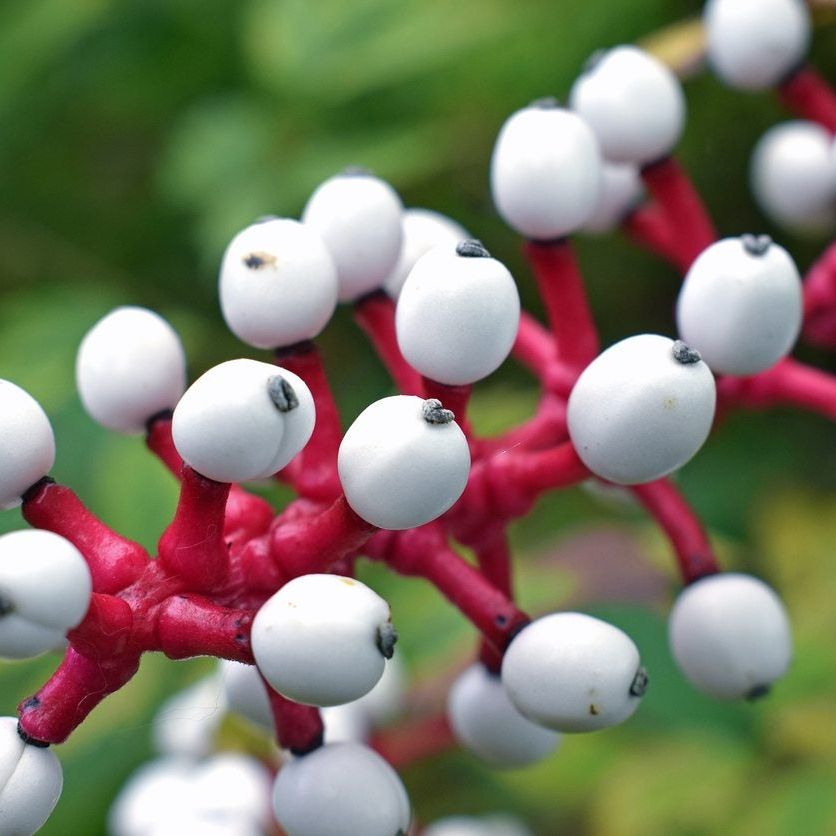
This one is fascinating but be warned: it is not for edible gardens. Doll’s Eye is a native woodland plant known for its unique berries. In late summer, it produces white berries with a single black spot at the end. They eerily resemble a doll’s eyes staring out from the shade.
Growing Tips:
- Sunlight: Full to partial shade.
- Water: Prefers consistently moist soil.
- Soil: Rich, organic, well-draining soil.
- Caution: All parts of this plant, especially the berries, are poisonous to humans and pets.
Why it looks like an eye: The white berry with a single black spot creates a stark, pupil-like effect.
3. Love-in-a-Mist (Nigella damascena)
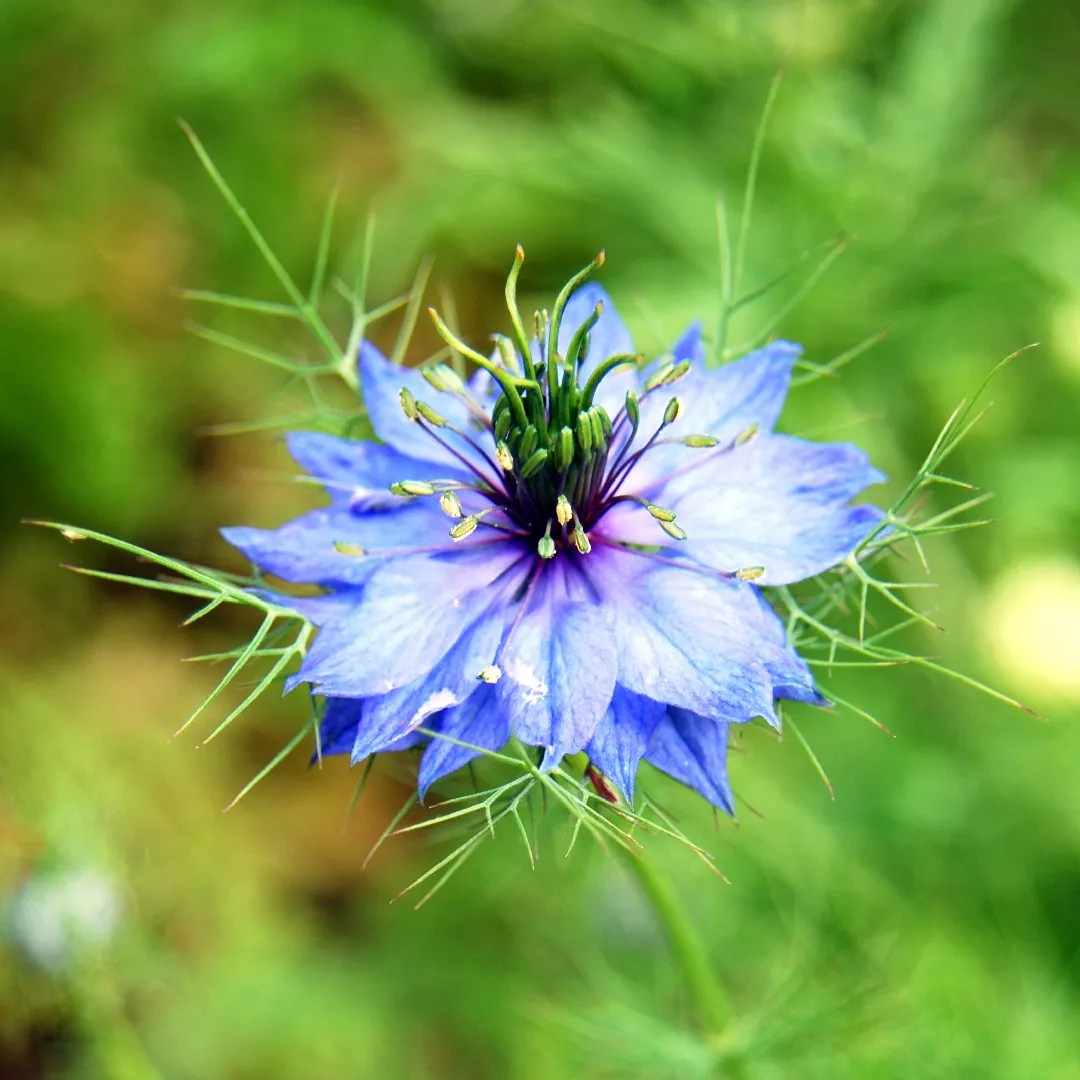
Love-in-a-Mist is one of my favorite annuals for adding texture. Its delicate, fern-like foliage surrounds a unique flower. The bloom, often in blue, white, or pink, is nestled within this “mist” of green. The center is a cluster of stamens that can look like a small, dark eye peering out.
Growing Tips:
- Sunlight: Full sun to partial shade.
- Water: Moderate watering.
- Soil: Average, well-draining soil.
- Bonus: It self-seeds easily, so you often get new plants the following year.
Why it looks like an eye: The central cluster of dark stamens against the lighter petals creates a pupil, framed by the misty green bracts.
4. German Chamomile (Matricaria chamomilla)
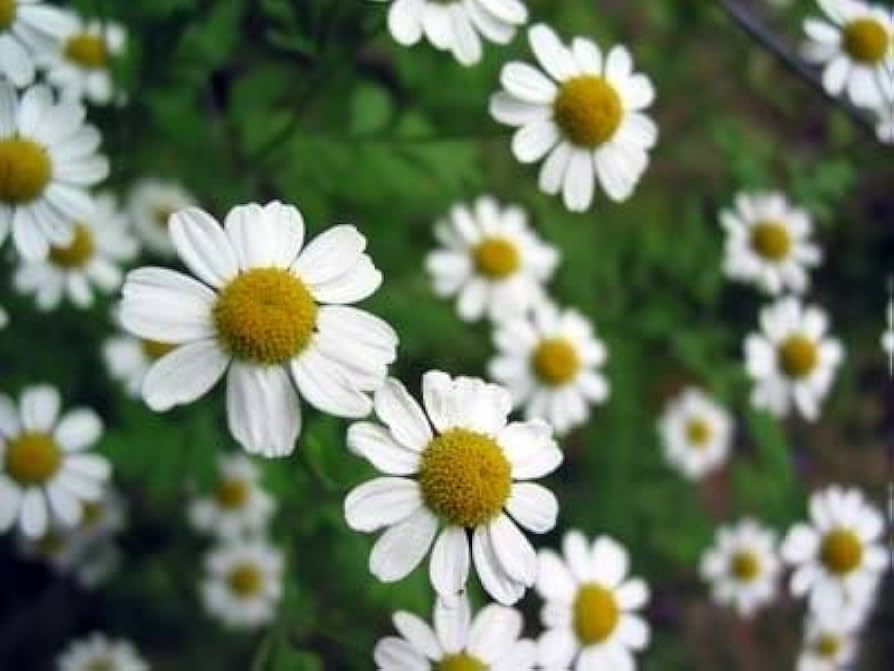
You might know chamomile for its soothing tea, but take a closer look at the flower. It has a bright yellow, dome-shaped center that is surrounded by delicate white petals. The center is made of hundreds of tiny disc florets, which gives it a textured, pupil-like appearance.
Growing Tips:
- Sunlight: Full sun.
- Water: Keep soil moderately moist.
- Soil: Prefers light, well-draining soil.
- Use: Harvest the flowers for a calming homemade tea.
Why it looks like an eye: The raised yellow center acts as a pupil, and the drooping white rays form the iris.
5. Bird’s Eye (Gilia tricolor)
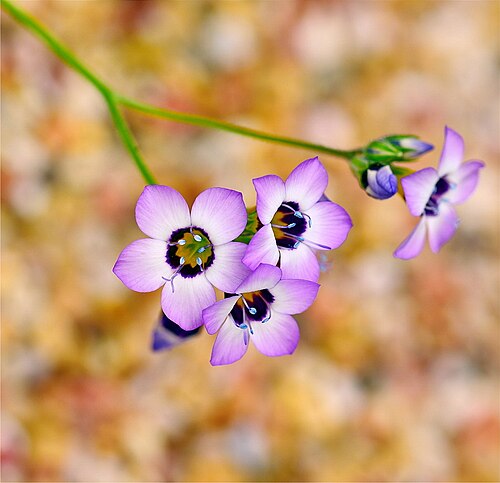
This charming annual wildflower has a delicate and intricate pattern. Its small, light blue or violet flowers feature a dark purple ring around a bright yellow center. This creates a striking, multi-colored “eye” effect that pollinators adore.
Growing Tips:
- Sunlight: Full sun.
- Water: Low to moderate water needs; it is quite drought-tolerant.
- Soil:
- Habitat: Excellent for wildflower meadows or rock gardens.
Why it looks like an eye: The concentric rings of color—yellow center, dark purple ring, light blue petals—mimic an iris and pupil.
6. False Shamrock (Oxalis triangularis)
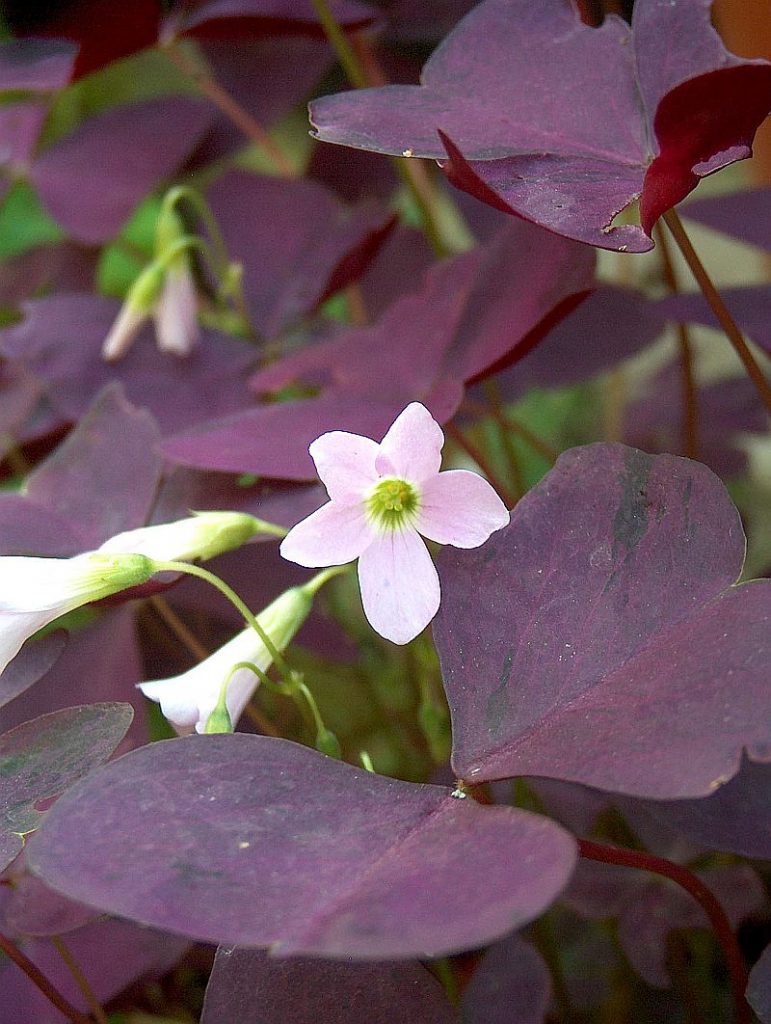
While known for its striking purple leaves, the flowers of the False Shamrock are equally eye-catching. The small, bell-shaped white or pale pink flowers have a beautiful greenish-yellow center. Against the dark foliage, these centers seem to glow like little eyes.
Growing Tips:
- Sunlight: Bright, indirect light indoors; partial shade outdoors.
- Water: Water when the top inch of soil is dry.
- Soil: Well-draining potting mix.
- Note: This plant is often grown as a houseplant but can summer outdoors.
Why it looks like an eye: The vibrant central spot on each delicate flower serves as a focal point, much like a pupil.
7. Blue-Eyed Grass (Sisyrinchium angustifolium)
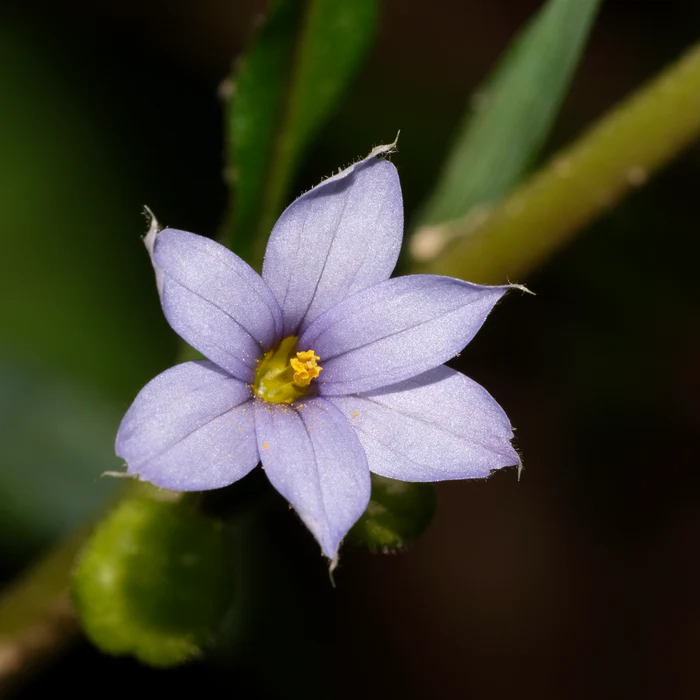
Do not let the name fool you; this is not a true grass. It is a member of the iris family. Blue-Eyed Grass produces small, star-shaped blue flowers with a perfect bright yellow center. These “eyes” dot the landscape in late spring and early summer, creating a charming display.
Growing Tips:
- Sunlight: Full sun to partial shade.
- Water: Medium moisture needs.
- Soil: Moist, well-draining soil.
- Habitat: Works well in borders, rock gardens, or naturalized areas.
Why it looks like an eye: The classic yellow center against the blue petals forms a simple and beautiful eye-like flower.
How to Use These Flowers in Your Garden Design
Incorporating these unique blooms can add a layer of intrigue to your garden.
- Create a Focal Point: Plant a cluster of Black-Eyed Susans or a pot of Oxalis where they can draw the eye.
- Add Whimsy: Scatter Love-in-a-Mist or Bird’s Eye seeds in a cottage garden for surprise elements.
- Shade Gardens: Use the striking Doll’s Eye plant in a shaded woodland garden for unexpected fall interest.
- Edible and Ornamental: Include German Chamomile in an herb garden for both beauty and function.
For more design ideas, explore my tips on designing a small garden space for maximum impact.
Frequently Asked Questions
Why do some flowers have eye-like patterns? These patterns are primarily for pollination. The contrasting colors and concentric circles act as nectar guides, directing insects to the center of the flower where the pollen and nectar are located. This increases the plant’s chances of successful reproduction.
Are any of these flowers poisonous? Yes, Doll’s Eye (Actaea pachypoda) is highly toxic if ingested. Always research plant toxicity, especially if you have children or pets. I recommend consulting the ASPCA’s plant database for pet safety.
What is the easiest eye-like flower to grow from seed? Black-Eyed Susan and Love-in-a-Mist are very easy to grow from seed. They germinate reliably and can often be sown directly in the garden after the last frost. Check out my seed starting guide for beginners for more help.
Can I grow these in containers? Absolutely. Many of these, like False Shamrock, German Chamomile, and Love-in-a-Mist, thrive in containers. Ensure your pots have good drainage and are sized appropriately for the plant.
Where can I find more information on native wildflowers? Excellent resources include the Lady Bird Johnson Wildflower Center and your local university’s cooperative extension service, such as the University of Florida IFAS Extension.
Final Thoughts
Adding flowers that look like eyes to your garden is a simple way to create a talking point. These blooms connect us to the clever and beautiful strategies of the natural world. I have found that they bring a sense of wonder and curiosity to my garden, and I hope they do the same for yours.
For more inspiration on unique plants, see my article on unusual perennials for your garden.