
Learn how to grow asparagus in your garden. This guide covers planting crowns, care tips, and when to harvest for a perennial crop that produces for 20+ years.
I’ll never forget the first time I harvested asparagus from my own garden. After waiting two long years for the plants to establish, that first crisp, sweet spear snapped off in my hand with a satisfying freshness that store-bought asparagus can never match. While asparagus requires patience, it rewards you with one of the earliest spring harvests and a perennial crop that can produce for 20 years or more.
Asparagus (Asparagus officinalis) is a perennial vegetable that produces edible spears each spring from an underground crown. Unlike annual vegetables that you replant each year, a well-established asparagus bed becomes a permanent feature of your garden, producing abundant harvests with minimal maintenance.
Why Grow Asparagus?
You should grow asparagus because it’s one of the first fresh vegetables ready to harvest in spring. Once established, it’s a low-maintenance perennial that comes back year after year. Homegrown asparagus has a sweet, tender flavor that far surpasses store-bought spears. A well-maintained bed can produce for 15-20 years, making it an incredible long-term investment for your garden.
Asparagus at a Glance
FeatureDescriptionPlant TypePerennial vegetableHardiness ZonesUSDA 3-8Sun ExposureFull sun (6-8 hours daily)Soil TypeWell-draining, sandy loamSoil pH6.5-7.5 (slightly acidic to neutral)Time to First Harvest2-3 years after plantingProductive Life15-20 years or more
How to Plant Asparagus
Getting your asparagus bed started correctly is crucial for long-term success. You have two main options for planting.
Planting Asparagus Crowns (Recommended for Beginners)
This is the fastest way to establish your bed. Purchase one-year-old crowns from a reputable nursery in early spring.
- Prepare the Bed: Asparagus needs deep, well-draining soil. Dig a trench 12-18 inches wide and 6-8 inches deep. The University of Minnesota Extension recommends working compost or well-rotted manure into the bottom of the trench.
- Create Mounds: Form small mounds of soil every 18 inches along the bottom of the trench.
- Plant the Crowns: Place the crowns on top of the mounds, spreading the roots outward and downward. Space crowns 12-18 inches apart in the trench.
- Cover Gradually: Initially, cover the crowns with only 2-3 inches of soil. As the spears grow, gradually fill in the trench with more soil over several weeks.
Growing from Seed
This method is more economical but adds an extra year to your wait for harvest.
- Start Indoors: Sow seeds indoors 12-14 weeks before your last frost date. Seeds can take 3-8 weeks to germinate.
- Transplant: Move seedlings to the garden after danger of frost has passed, spacing them 12-18 inches apart.
- Be Patient: Plants grown from seed typically need an additional year of establishment before harvesting.
Caring for Your Asparagus Bed
Proper care during the establishment years ensures a productive bed for decades.
Watering
Water newly planted crowns deeply once or twice per week. Established plants have deep roots but still need consistent moisture, especially during spear production in spring. Provide about 1-2 inches of water per week during dry periods.
Fertilizing
Asparagus are heavy feeders. Apply a balanced fertilizer in early spring as spears emerge. After the harvest season ends in early summer, side-dress with compost or a nitrogen fertilizer to support fern growth.
Weed Control
Keep the bed weed-free, especially during the first two years. Hand-pull weeds carefully to avoid damaging the shallow roots. Mulching with straw or compost helps suppress weeds and retain moisture.
Winter Care
After the first frost kills the ferns, cut them back to 2-inch stubs. The University of Illinois Extension recommends applying a layer of mulch after the ground freezes to protect crowns from winter temperature fluctuations.
When and How to Harvest Asparagus
The most common mistake with asparagus is harvesting too soon. Patience is essential for establishing strong plants.
- Year 1: No harvesting. Let all spears grow into ferns to build strong roots.
- Year 2: Harvest lightly for 2-3 weeks if plants are vigorous.
- Year 3+: Harvest for 6-8 weeks each spring.
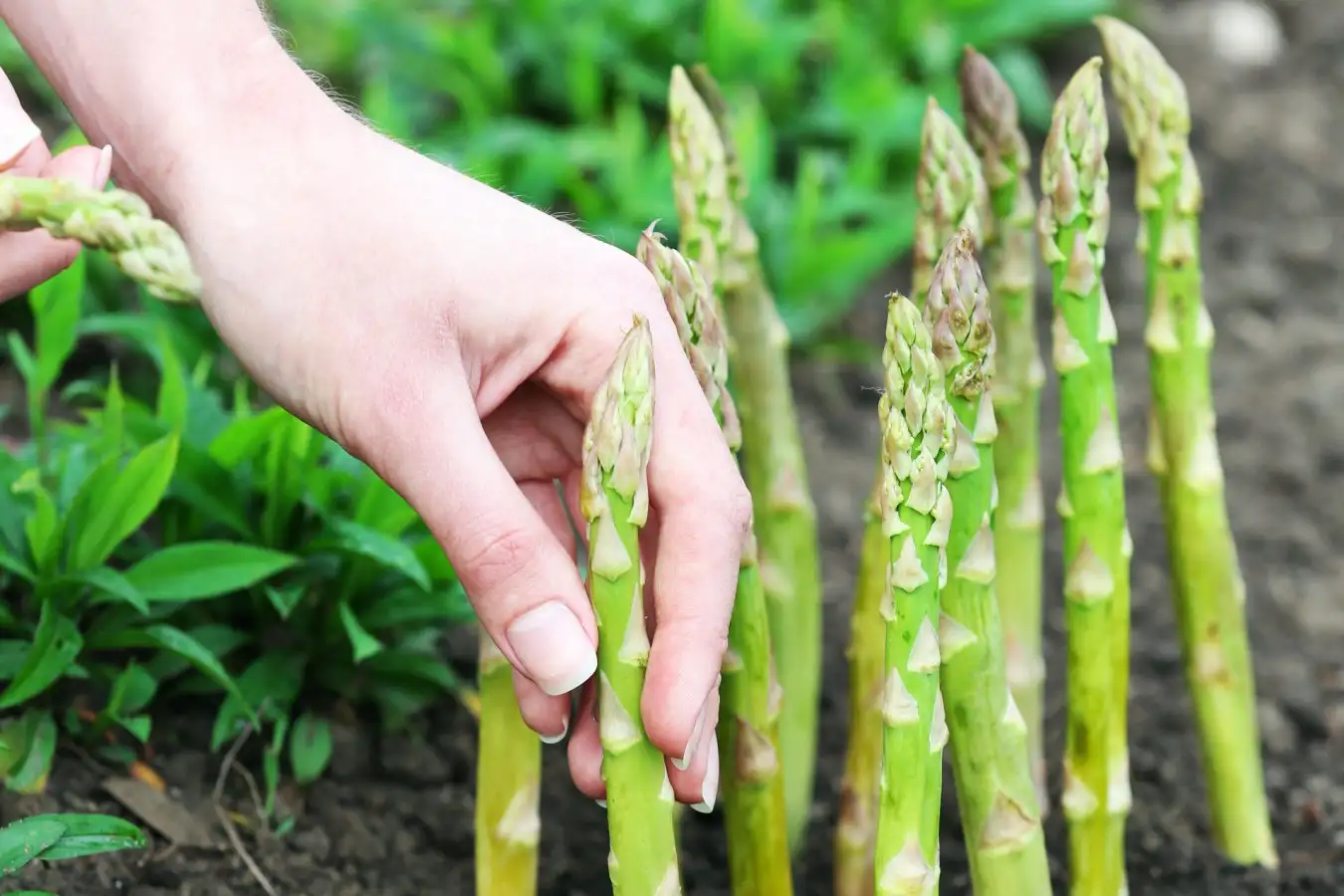
To harvest, snap or cut spears at ground level when they reach 6-8 inches tall and are still tight at the tip. Stop harvesting when spear diameter decreases to pencil-size.
Common Problems and Solutions
Asparagus is relatively trouble-free, but you might encounter these issues.
- Asparagus Beetles: These black and red beetles chew on spears and ferns. Hand-pick them or use organic insecticides like neem oil. The UMass Amherst Center for Agriculture provides detailed pest management strategies.
- Fusarium Root Rot: This fungal disease causes wilting and stunted growth. Prevent it by planting resistant varieties like ‘Jersey Knight’ and ensuring good drainage.
- Rust: Orange spots on ferns indicate rust. Plant resistant varieties and ensure good air circulation.
Recommended Varieties
- Jersey Series (‘Jersey Knight’, ‘Jersey Giant’): All-male hybrids that produce more spears and are resistant to fusarium wilt.
- Purple Passion: Produces sweet, purple spears that turn green when cooked.
- Mary Washington: A traditional heirloom variety with good disease resistance.
A Final Tip for Success
The key to successful asparagus is patience and proper bed preparation. Don’t be tempted to harvest early those first two years of waiting will pay off with decades of abundant harvests. For more information on preparing your garden for perennial crops, see our guide to garden soil preparation.
Have you tried growing asparagus in your garden? How long have you been maintaining your bed? Share your experiences and tips in the comments below!