
Ashley Scott shares 7 tips to grow blueberries in containers: variety, soil, watering, more. Easy guide for juicy berries in any US zone!
Hey garden friends! I’m Ashley Scott, and after a decade of growing plants in my California backyard, I’ve mastered the art of growing blueberries in containers—perfect for small spaces or patios. Blueberries are tasty, antioxidant-rich, and surprisingly easy to grow in pots with the right care. I’ve had my share of juicy harvests (and a few sour mistakes!), so I’m sharing 7 practical tips for growing blueberries in containers, tailored for US gardeners in USDA zones 3-10. Packed with specific advice, personal stories, and data, this guide will help you enjoy homegrown berries. Let’s get your blueberry pots thriving!
Why Grow Blueberries in Containers?
Container gardening gives you control over soil acidity, drainage, and placement—ideal for blueberries, which need specific conditions. My potted ‘Bluecrop’ bush produced 5 pounds of berries last summer on my patio. Containers work in any climate, from chilly Zone 3 winters to sunny Zone 10 summers, and they’re mobile for frost protection or sunlight needs. For more container tips, check our container gardening guide on USA Garden Hub.
1. Choose the Right Blueberry Variety
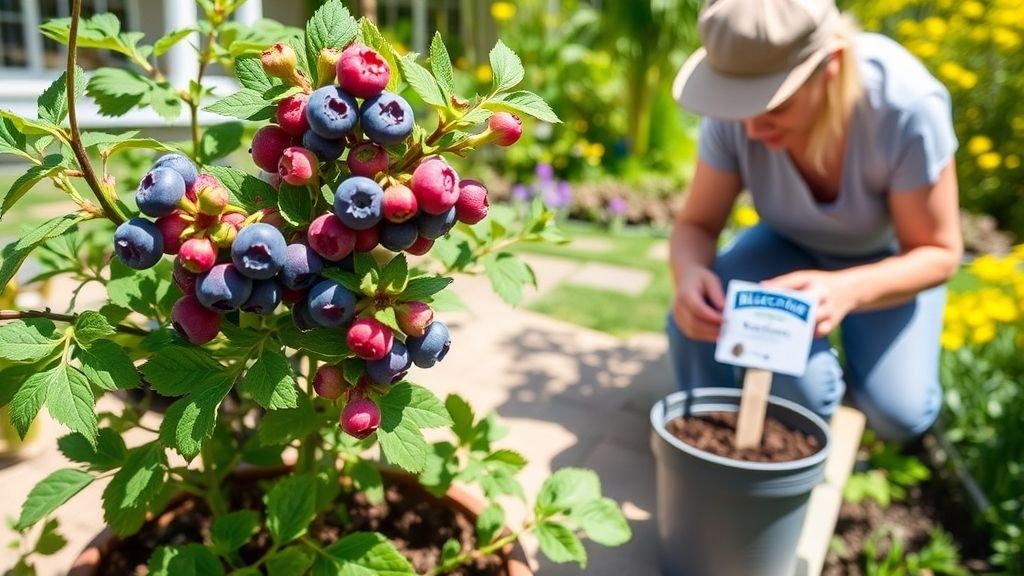
Pick a variety suited to your USDA zone and container size. My ‘Top Hat’ dwarf bush fits perfectly in a small pot.
- Varieties: Select lowbush (e.g., ‘Top Hat’, 1-2 feet, Zones 3-7), highbush (e.g., ‘Bluecrop’, 4-6 feet, Zones 4-8), or rabbiteye (e.g., ‘Brightwell’, 5-8 feet, Zones 7-9).
- Zone Tip: In colder zones (3-5), choose hardy varieties like ‘Patriot’; in warmer zones (8-10), try ‘Sunshine Blue’.
- Action: Buy 2-year-old plants from a nursery for faster fruiting (1-2 years).
Resource: The Old Farmer’s Almanac on blueberry varieties.
2. Select the Proper Container
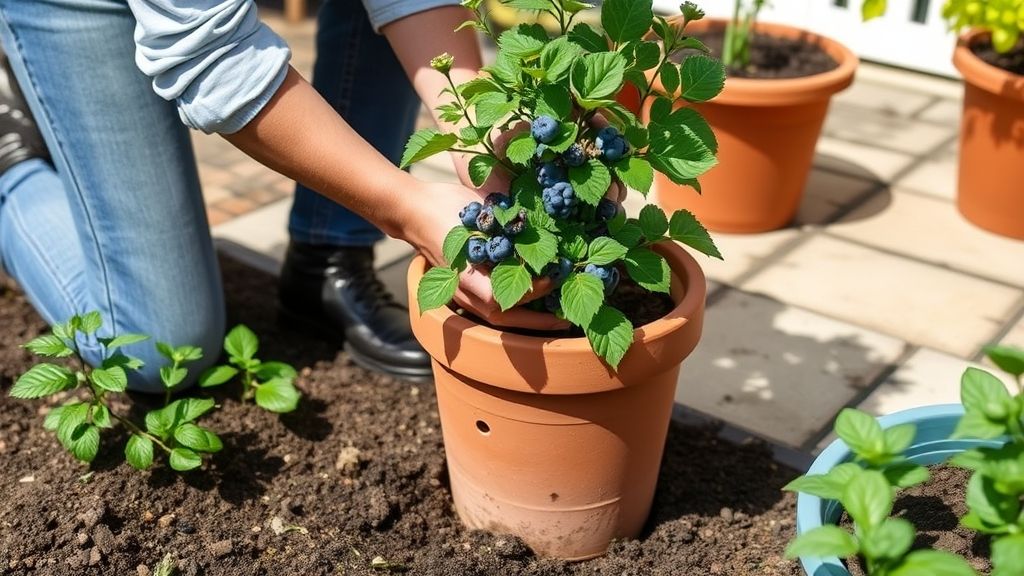
A good pot ensures drainage and root space. I used a too-small pot once, and my plant struggled to fruit.
- Size It: Use a 5-10 gallon pot (18-24 inches wide, 12-18 inches deep) for one bush. Larger pots suit highbush varieties.
- Material: Choose terracotta or plastic with drainage holes to prevent root rot. Avoid dark pots in hot climates; they overheat.
- Tip: Add a saucer to catch water but empty it after 30 minutes.
Resource: Cornell University on container selection.
3. Use Acidic, Well-Drained Soil Mix
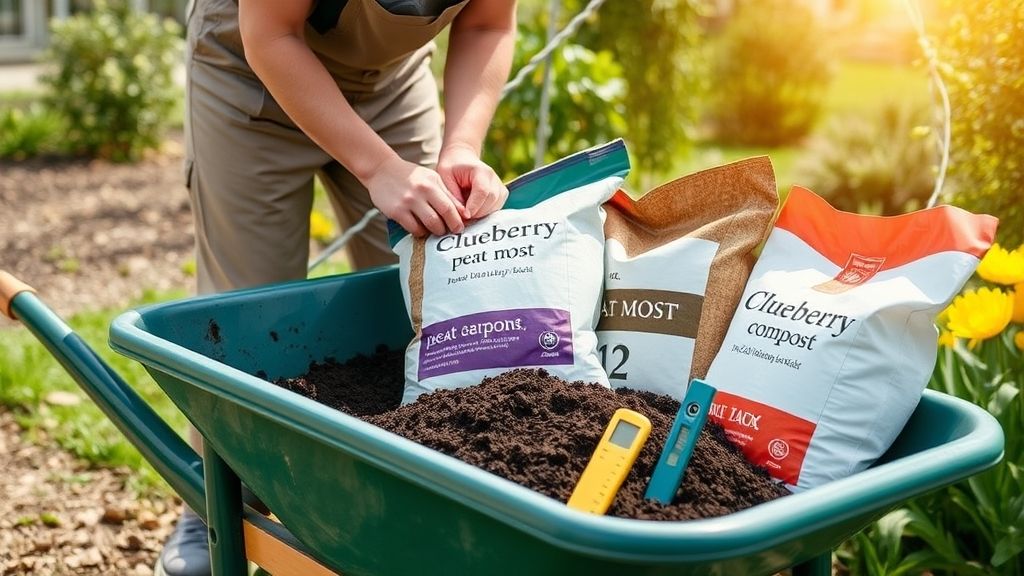
Blueberries need acidic soil (pH 4.5-5.5). My first batch failed in neutral soil until I adjusted the pH.
- Mix It: Combine 50% peat moss, 30% pine bark, and 20% compost or acidic potting mix. Avoid regular garden soil.
- Test It: Use a pH kit to check; add sulfur (1/4 cup per pot) to lower pH if above 5.5.
- Zone Tip: In Zone 5-7, retest pH yearly as rain can raise it.
My trick: I add a handful of used coffee grounds to maintain acidity. Check our soil care tips.
4. Plant Correctly and Provide Sunlight
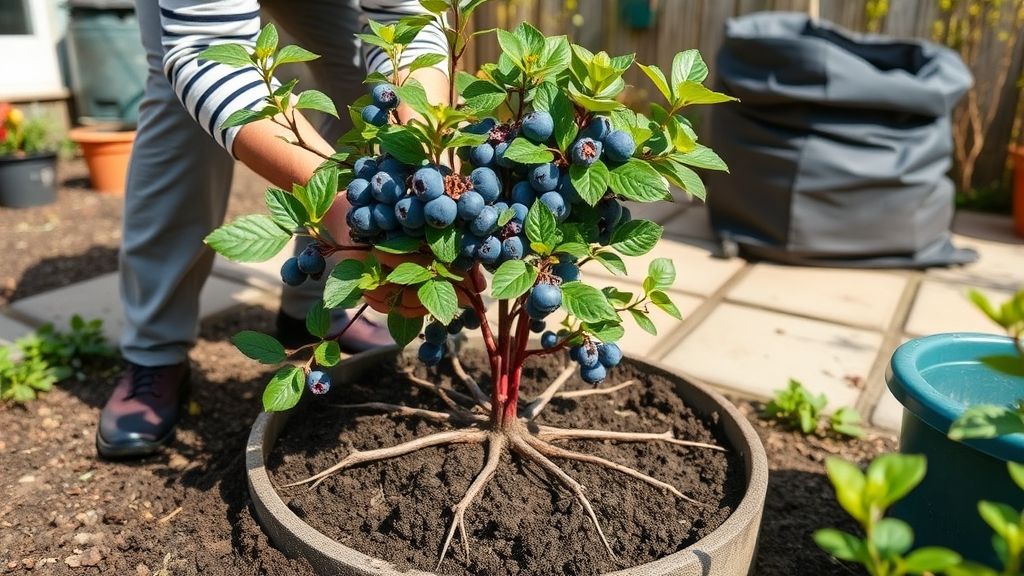
Proper planting sets your blueberry up for success. I planted one too deep, and it took months to recover.
- Plant It: Set the root ball 1 inch below the soil surface in spring. Cover with 2 inches of pine bark mulch.
- Sunlight: Place in full sun (6-8 hours daily). In hot zones (8-10), provide afternoon shade to prevent leaf scorch.
- Action: Rotate pots every few months for even light exposure.
5. Water Consistently but Don’t Overdo It
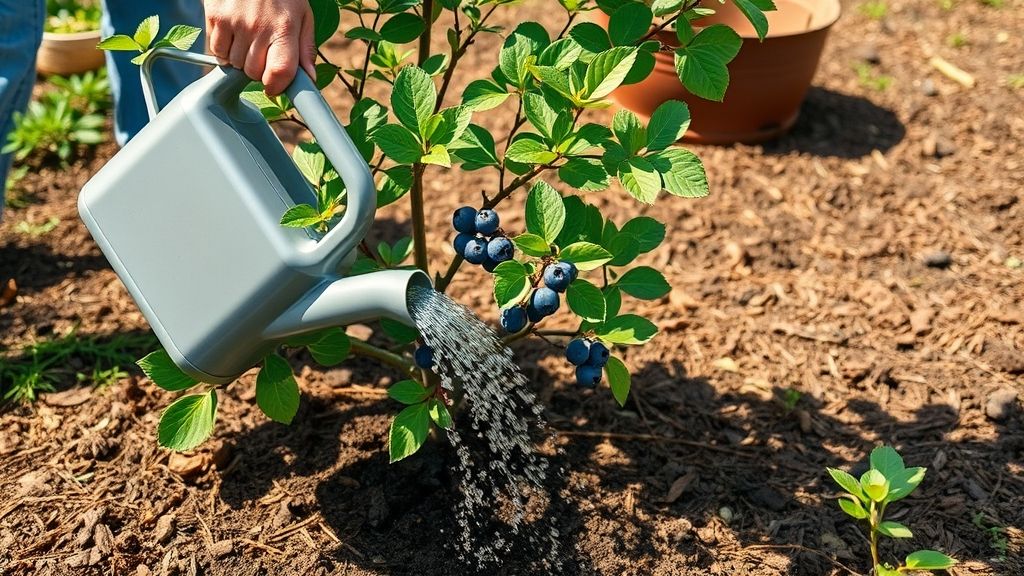
Blueberries need moist but not soggy soil. I overwatered once, and my roots rotted.
- Water It: Provide 1 inch of water weekly (about 1-2 gallons per pot), more in summer heat (80°F+). Use rainwater to maintain acidity.
- Check It: Ensure soil stays moist 2 inches deep but dries slightly between waterings.
- Zone Tip: In Zones 3-5, reduce watering in winter when dormant; cover pots to protect roots.
My hack: I water in the morning to reduce evaporation. See our watering tips.
6. Fertilize and Prune for Healthy Growth
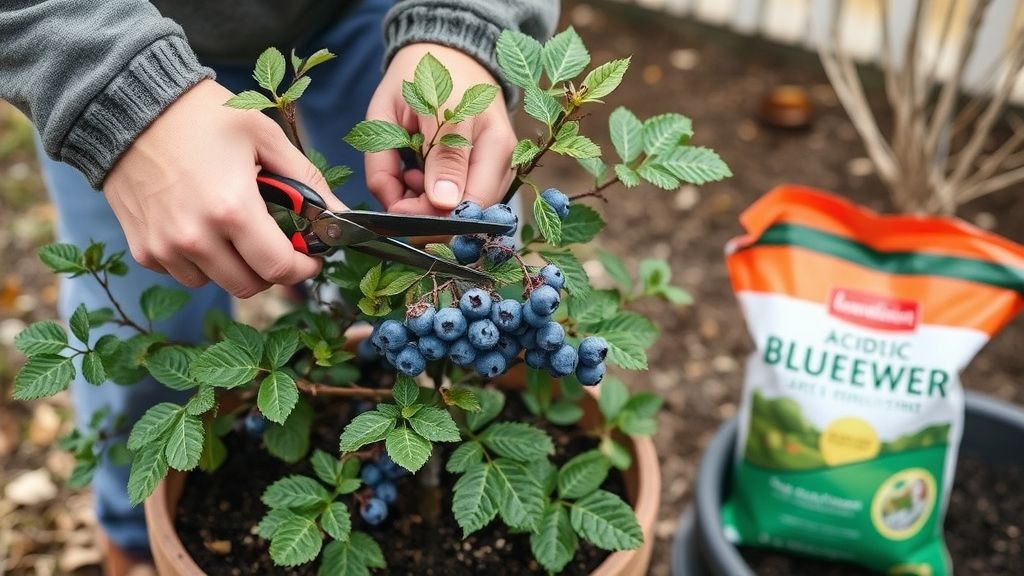
Fertilizing and pruning boost fruit production. My unpruned bush grew leggy with few berries.
- Fertilize: Apply an acidic fertilizer (e.g., for azaleas, 10-10-10) in early spring and mid-summer, 1 tablespoon per pot. Avoid over-fertilizing.
- Prune: In late winter (February-March), remove dead or crossing branches and 1/3 of oldest canes on mature plants.
- Tip: Use cottonseed meal for organic feeding.
Resource: University of Minnesota on blueberry care.
7. Protect from Pests and Winter Cold
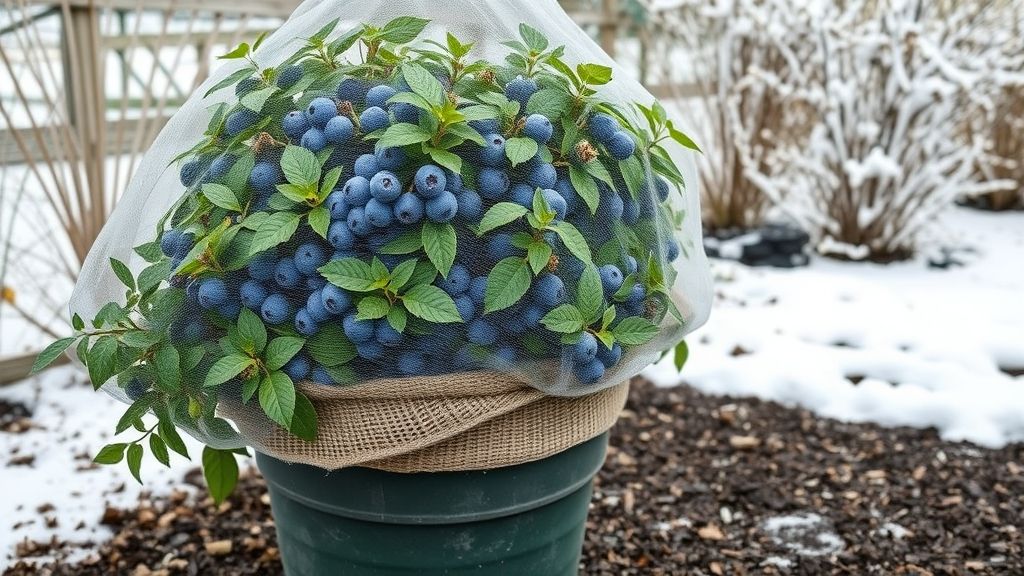
Pests and cold can harm blueberries. Birds ate half my berries until I added netting.
- Pest Control: Use bird netting in summer when berries ripen. Check for aphids weekly; spray with neem oil at dusk if needed.
- Winter Protection: In Zones 3-6, wrap pots with burlap and add 4 inches of mulch in November to insulate roots from -20°F freezes.
- Tip: Move pots to a garage or sheltered area in harsh winters.
My lesson: Net early to save your harvest. Check our Haskap Berries: The Ultimate Guide to This Superfood Berry.
Mistakes to Avoid
I’ve messed up; don’t you:
- Using neutral soil; blueberries need pH 4.5-5.5 or they yellow.
- Overwatering; soggy soil kills roots.
- Skipping pruning; unpruned bushes produce fewer berries.
Check our Japanese Blueberry Tree for more.
Enjoy Sweet Blueberries from Your Containers
These 7 tips for growing blueberries in containers will help you harvest juicy berries with minimal fuss. Choose the right variety, use acidic soil, water wisely, and protect from pests and cold. Whether in Zone 3 or 10, your potted blueberries can thrive. Which variety are you trying? Share in the comments; I’d love to hear! For more ideas, visit our full gardening blog or Fall Blueberry Planting Guide on USA Garden Hub. Happy growing!