
Learn how to care for Hoya kentiana. This guide covers light, water, and soil needs to help you grow both green and variegated types, and encourage its fragrant flowers.
I’ll admit it; I’m a Hoya collector. The moment I saw the Hoya kentiana with its long, slender leaves that look like green beans, I had to have it. Then I discovered the Hoya kentiana variegata, with its beautiful pink and cream edges, and I was completely hooked. This plant is a stunning addition to any indoor jungle, but its real showstopper is the flower.
Caring for a Hoya kentiana is surprisingly straightforward once you understand its needs as an epiphytic plant. It’s all about mimicking its natural tropical habitat. With the right conditions, you’ll be rewarded with a vigorous vine and clusters of unique, fragrant blooms.
What is a Hoya Kentiana?
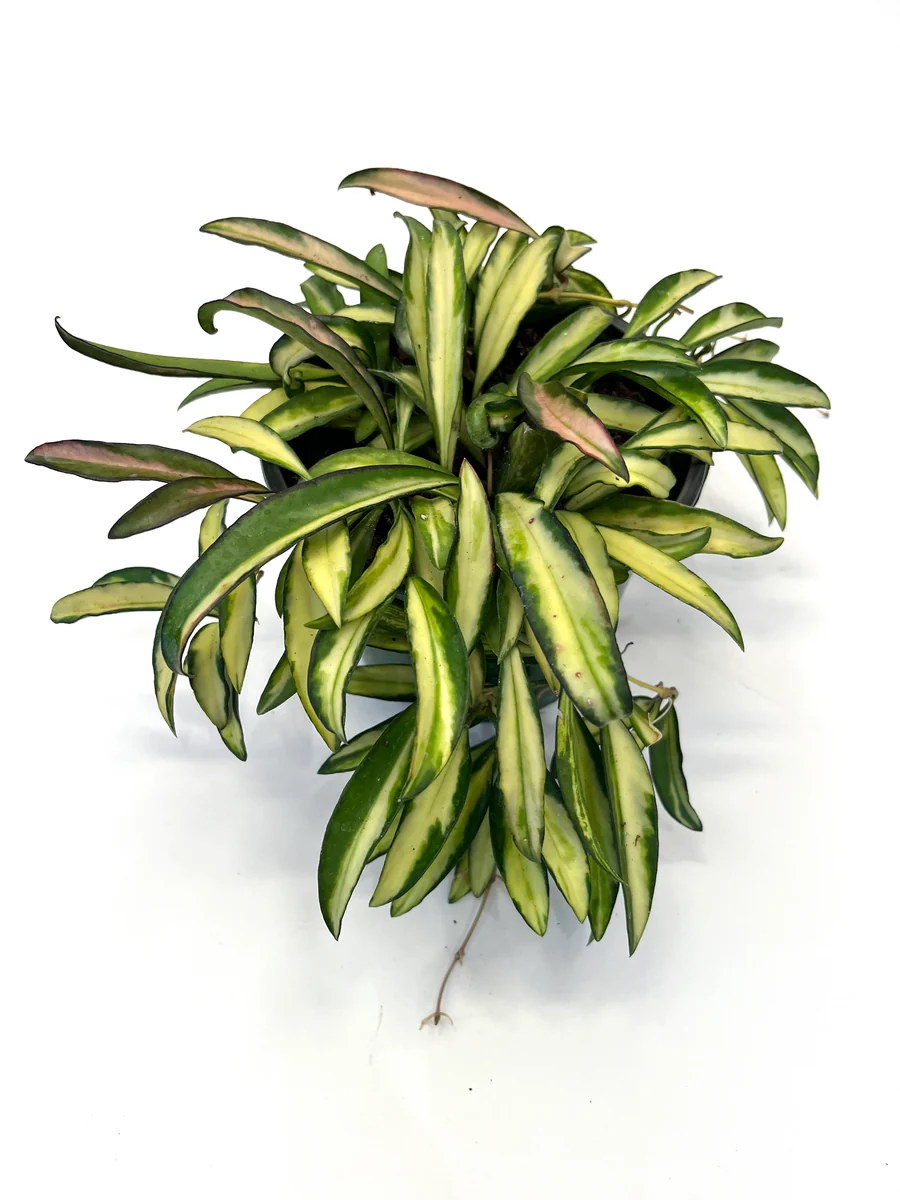
Hoya kentiana is a tropical succulent vine known for its long, slender leaves. It’s often confused with Hoya wayetii, but Kentiana’s leaves are typically longer and less curved. Like other Hoyas, it’s an epiphyte, meaning it grows on other plants in nature rather than in the ground. This is key to understanding how to care for it.
The Hoya kentiana variegata is a sought-after variety. Its leaves are edged in creamy white or yellow, which can blush a beautiful pink with enough light. It grows a bit slower than the all-green version but follows the same care routine.
Essential Hoya Kentiana Care Guide
Getting the basics right will set your Hoya up for long-term success and even encourage it to flower.
Light Needs for Healthy Growth
Bright, indirect light is essential. A few hours of gentle morning sun is beneficial, but harsh afternoon rays can scorch the leaves, especially on the variegated plants.
The Hoya kentiana variegata needs even more light than its all-green cousin to maintain its beautiful colors. Without sufficient light, the variegation may fade, and the plant will grow very slowly. An east-facing window is often perfect. If you’re using grow lights, they are a great option to provide consistent energy.
Watering and Humidity
As a succulent, this Hoya stores water in its leaves. You must let the soil dry out almost completely between waterings. I stick my finger in the soil; if the top two inches are dry, it’s time to water. Overwatering is the fastest way to cause root rot.
Average household humidity is usually fine, but it will appreciate a boost. I keep mine on a pebble tray to increase moisture around the leaves. Misting is okay, but avoid getting water on the emerging flower buds.
Soil and Potting
A well-draining, airy mix is non-negotiable. I use a standard potting mix and add plenty of perlite and orchid bark. This creates a chunky blend that allows water to flow through quickly and provides oxygen to the roots.
Hoyas prefer to be a bit root-bound and don’t need frequent repotting. You should only repot every 2-3 years, or when you see roots growing from the drainage hole. For more on creating the perfect home for your plants, see our guide to container gardening.
Feeding Your Hoya
During the growing season (spring and summer), feed your Hoya with a balanced, water-soluble fertilizer diluted to half-strength once a month. You can also use a fertilizer with a higher phosphorus content to encourage blooming.
The Star of the Show: The Hoya Kentiana Flower
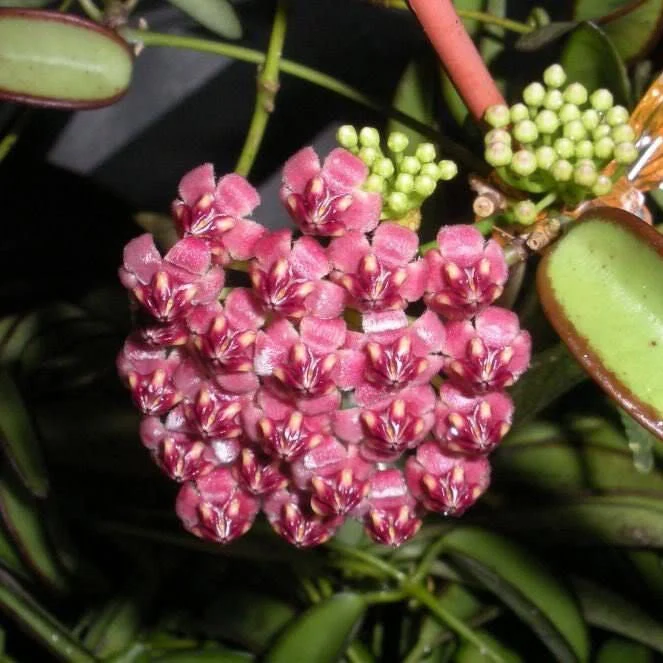
The Hoya kentiana flower is a beautiful sight. It forms in a perfect, spherical cluster of small, star-shaped blooms. Each tiny flower has a fuzzy texture and is a lovely shade of pinkish-red with a yellow center. But the real magic is in the scent.
So, what does a Hoya kentiana flower smell like? The fragrance is powerful and sweet, often described as a classic, honey-like scent with a hint of chocolate or butterscotch. The smell is most intense in the evenings, as it’s designed to attract night-flying pollinators. It’s a truly delightful experience to have a blooming Hoya perfuming your room.
How to Encourage Flowering
To get your Hoya to bloom, you need to provide plenty of bright, indirect light. Maturity is also a factor; most Hoyas won’t flower until they are 2-3 years old. Never remove the old flower stalks (peduncles), as the plant will bloom from the same spot year after year.
A Quick Care Reference Table
Care AspectRequirementLightBright, indirect light. Morning sun is good.WaterLet soil dry completely between waterings.SoilVery well-draining, chunky mix (potting soil + perlite + bark).HumidityAverage to high (40-60%).FeedingHalf-strength balanced fertilizer monthly in spring/summer.
Common Problems and Solutions
- Yellowing Leaves: This is usually a sign of overwatering. Check your soil and adjust your watering schedule.
- Leaf Drop: Can be caused by a sudden change in temperature or a draft. Keep your Hoya in a stable environment.
- Pests: Watch for mealybugs and aphids. Wipe them off with a cotton swab dipped in rubbing alcohol or use an insecticidal soap. For reliable pest identification, the Missouri Botanical Garden’s plant finder is a great resource.
- No Flowers: The most common cause is not enough light. Move your plant to a brighter location and be patient.
Propagation: How to Multiply Your Plant
The easiest way to propagate Hoya kentiana is through stem cuttings. Take a cutting with at least two nodes, let the cut end callous over for a day, and then place it in water or damp sphagnum moss. Keep it in a warm, bright spot, and you should see roots in a few weeks. For more tips, check out our guide on propagating houseplants.
Is Hoya Kentiana the Plant for You?
If you’re looking for a low-maintenance, drought-tolerant vine with unique foliage and incredibly fragrant flowers, then yes. It’s a perfect plant for a hanging basket, where its long vines can cascade beautifully. Just remember to give it enough light, go easy on the water, and be patient for those stunning blooms.
For more information on the diverse Hoya genus, the Royal Horticultural Society offers a helpful overview. If you enjoy unique flowering plants like this, you might also like our guide to flower gardening indoors and out.
Have you experienced the sweet smell of a Hoya kentiana flower? Share your blooming stories in the comments below