
Compare rhododendron and magnolia for your garden. This guide covers their differences in care, blooms, and landscape use to help you choose the right flowering shrub.
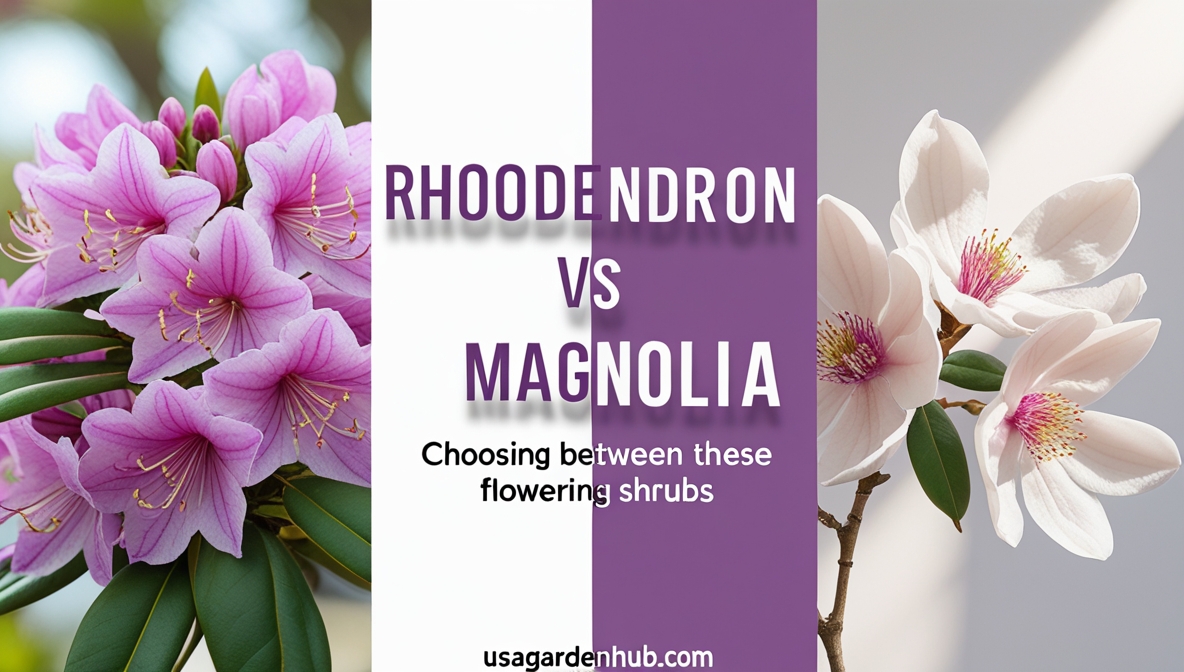
I’ll never forget the challenge I faced when choosing between these two magnificent flowering shrubs for a client’s garden. The homeowner wanted dramatic blooms but couldn’t decide between the massive flower clusters of a rhododendron or the elegant, saucer-sized blossoms of a magnolia. After carefully considering their specific conditions, we found the perfect fit.
Both rhododendrons and magnolias are prized for their spectacular flowers, but they have different growing requirements and landscape uses. Understanding these differences will help you choose the right shrub for your garden conditions and design goals.
Why Consider Both Rhododendron and Magnolia?
You should consider both of these shrubs because they offer some of the most dramatic floral displays in the gardening world. They provide year-round structure and evergreen foliage (in most varieties). Both can serve as magnificent focal points in your landscape design. They also represent investments in long-lived, perennial beauty that can last for decades with proper care.
Quick Comparison Guide
FeatureRhododendronMagnoliaBloom TimeSpring (some reblooming varieties)Spring to summer (varies by type)Flower FormLarge clusters (trusses) of smaller flowersLarge, solitary, cup-shaped flowersFoliageMostly evergreen, large leathery leavesEvergreen or deciduous, often largeSize Range2-30 feet (dwarf to tree-sized)8-80 feet (shrubs to large trees)Soil NeedsAcidic, well-draining, high organic matterAcidic to neutral, well-drainingLight NeedsPartial shade (some sun-tolerant varieties)Full sun to partial shade
Rhododendron Overview and Care
 Rhododendron
Rhododendrons are broadleaf evergreens prized for their spectacular spring flower displays. They belong to the Ericaceae family, which includes other acid-loving plants like blueberries and azaleas.
Growing Requirements:
- Soil: Must have acidic soil (pH 4.5-6.0). Amend with peat moss or composted pine bark when planting.
- Light: Prefer dappled shade or morning sun with afternoon protection. Some varieties tolerate more sun.
- Water: Need consistent moisture but excellent drainage. Mulch heavily to retain moisture.
- Fertilizer: Use an acid-forming fertilizer in spring after flowering.
Popular Varieties:
- ‘Nova Zembla’: Red flowers, sun and cold tolerant
- ‘PJM’: Lavender flowers, very cold hardy
- ‘English Roseum’: Pink flowers, robust grower
Magnolia Overview and Care
 Magnolia
Magnolias are ancient flowering plants that can range from small shrubs to massive trees. They’re known for their large, often fragrant flowers that appear before or with the leaves.
Growing Requirements:
- Soil: Prefer slightly acidic to neutral pH (5.5-7.0). Well-draining soil is essential.
- Light: Most need full sun for best flowering, though some tolerate partial shade.
- Water: Regular watering during establishment, then moderately drought tolerant.
- Fertilizer: Balanced fertilizer in early spring.
Popular Varieties:
- Southern Magnolia (M. grandiflora): Large evergreen with fragrant white flowers
- Saucer Magnolia (M. x soulangeana): Deciduous, pink-purple flowers in early spring
- Star Magnolia (M. stellata): Small tree/shrub with star-shaped white flowers
Key Differences in Landscape Use
Understanding how these plants work in your landscape will help you make the best choice.
Choose Rhododendron When:
- You have partial shade conditions
- Your soil is naturally acidic
- You want reliable evergreen structure
- You’re looking for mass color impact
- Space is limited (dwarf varieties available)
Choose Magnolia When:
- You have full sun exposure
- You want a dramatic focal point or specimen tree
- You prefer large, architectural flowers
- You have space for a larger plant
- You want early spring blooms (deciduous types)
5 Essential Tips for Success with Both Plants
- Test Your Soil pH: Both plants prefer acidic conditions. Test your soil and amend accordingly. The University of Massachusetts Amherst Soil Testing Lab provides reliable testing services.
- Plant Properly: Dig a wide, shallow hole—twice as wide as the root ball but no deeper. Plant high, with the top of the root ball slightly above soil level.
- Mulch Generously: Apply 2-4 inches of organic mulch like pine needles or shredded bark to conserve moisture and protect roots.
- Water Deeply: Water thoroughly but infrequently, allowing the soil to dry slightly between waterings. Avoid frequent shallow watering.
- Prune Minimally: Both plants need little pruning. Remove dead wood and shape lightly after flowering if necessary.
Common Problems and Solutions
Even with good care, you might encounter these issues:
- Yellowing Leaves: Often indicates soil pH is too high. Apply soil sulfur or acid-forming fertilizer.
- Poor Flowering: Usually caused by too much shade, improper pruning, or late frosts.
- Leaf Spot: Improve air circulation and avoid overhead watering.
- Winter Damage: Protect with anti-desiccant spray in northern climates.
According to the American Rhododendron Society, proper site selection is the most important factor in growing healthy rhododendrons.
A Final Thought
The choice between rhododendron and magnolia ultimately depends on your specific garden conditions and what you want from a flowering shrub. Rhododendrons offer incredible flower clusters and year-round evergreen structure for shaded gardens, while magnolias provide dramatic, architectural blooms that make stunning focal points in sunny locations.
For more information on preparing the ideal planting site, see our guide to garden soil preparation. If you’re planning a shade garden, explore our article on shade-loving plants.
Have you grown either of these magnificent shrubs? I’d love to hear about your experiences and which one has performed better in your garden in the comments below!