
Discover 16 small trees safe to plant near your house, like Japanese Maple and Crabapple, with growing tips from Ashley Scott, a 10-year gardening pro. Perfect for USA yards!

Hey there, tree enthusiasts! I’m Ashley Scott, a gardening enthusiast with 10 years of experience planting small trees in my USA backyard. If you’re looking to add height and charm without risking your home’s foundation, choosing small trees safe to plant near your house is key. These compact beauties have non-invasive roots, limited spread, and mature heights under 25 feet, making them ideal for 5 to 10 feet from structures. They thrive in USDA Zones 3 to 9, offer spring blooms or fall color, and attract pollinators, fitting perfectly with my 8 blooming plants that bees love. Below, I’ve curated 16 small trees safe near houses, with why they’re foundation-friendly, growing tips, and my personal stories, plus ties to projects like DIY compost bins at USA Garden Hub. Let’s find the perfect tree for your yard!
Why Plant Small Trees Near Your House?
Small trees enhance curb appeal, provide shade without overwhelming spaces, and avoid root damage to foundations, pipes, or sidewalks. They’re low-maintenance, drought-tolerant once established, and grow well in well-drained soil, much like my succulent propagation projects. Plant 5 to 10 feet from your home for safety, and use mulch to retain moisture. These picks suit urban lots or suburban borders, boosting biodiversity with bees and birds.
16 Small Trees Safe to Plant Near Your House
Here’s a handpicked list of 16 foundation-safe small trees, with their mature size, zones, and why they’re a smart choice. Each is non-invasive and easy to grow in USA climates.
1. Eastern Redbud (Cercis canadensis)
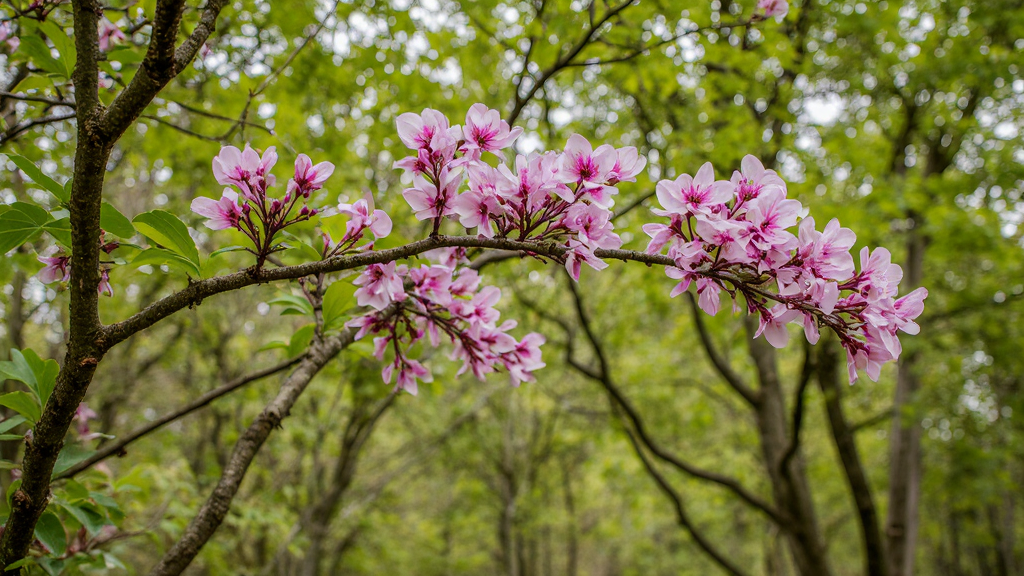
This native understory tree has heart-shaped leaves and pink-purple spring blooms covering bare branches.
- Why Safe: Shallow, fibrous roots won’t invade foundations.
- Care Tips: Full sun to partial shade, loamy soil (pH 6.0 to 7.0). Water weekly until established; prune lightly after bloom.
- Size: 20 to 30 feet tall, 15 to 25 feet wide.
- Zones: 4 to 9.
- My Tip: My redbud near the patio blooms early spring, pairing with marigolds for pollinators.
- Fun Fact: Pods attract birds in fall.
2. Flowering Dogwood (Cornus florida)
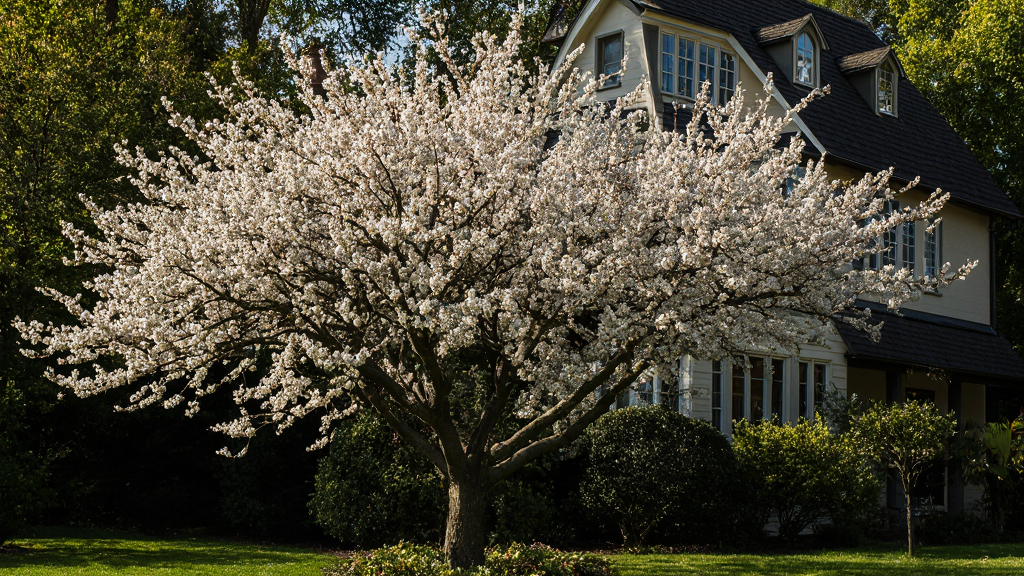
A classic with white or pink bracts (not true flowers) in spring and red berries in fall.
- Why Safe: Non-aggressive roots, ideal 8 to 10 feet from houses.
- Care Tips: Partial shade, acidic soil (pH 5.5 to 6.5). Water 1 inch weekly; mulch to keep cool.
- Size: 15 to 30 feet tall, 15 to 20 feet wide.
- Zones: 5 to 9.
- My Tip: My dogwood shades a window without crowding, like my Dalmatian Bellflower for low borders.
- Fun Fact: State tree of Virginia.
3. Japanese Maple (Acer palmatum)
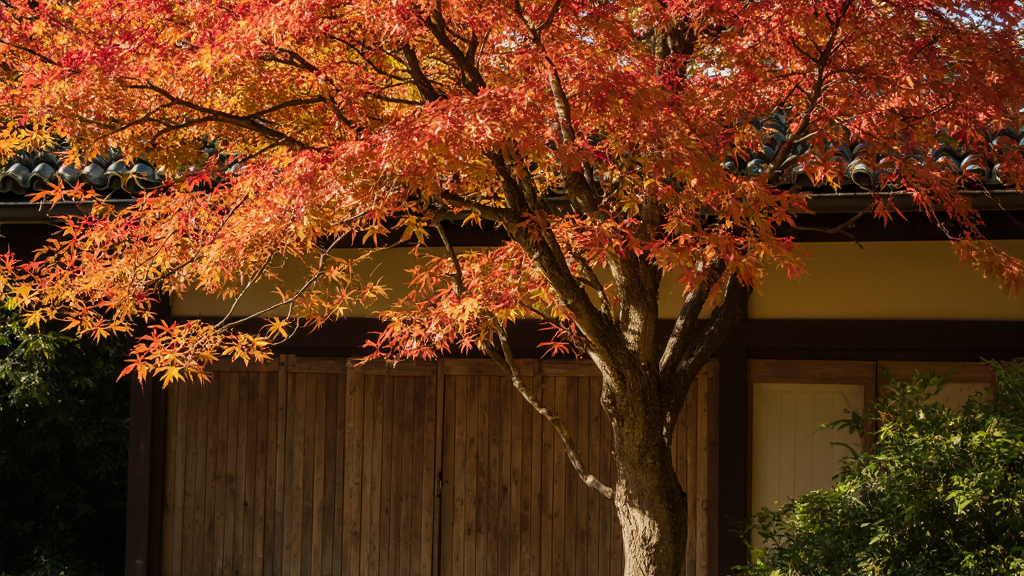
Elegant with finely cut, red or green leaves turning fiery in fall.
- Why Safe: Shallow roots, plant 5 to 8 feet from foundations.
- Care Tips: Partial shade, moist soil (pH 5.5 to 6.5). Water regularly; protect from wind.
- Size: 10 to 25 feet tall, 10 to 20 feet wide.
- Zones: 5 to 8.
- My Tip: My Japanese maple adds fall color near the house, mulched with DIY compost.
- Fun Fact: Over 1,000 cultivars exist.
4. Crabapple (Malus spp.)
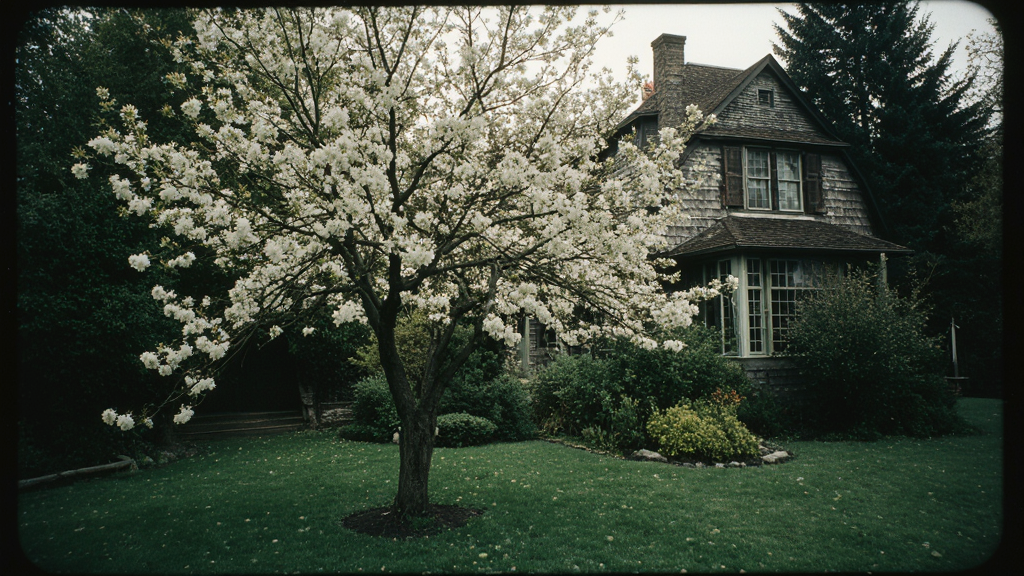
Compact with white-pink spring flowers, red fruits, and colorful fall leaves.
- Why Safe: Fibrous roots, safe 8 to 10 feet from homes.
- Care Tips: Full sun, fertile soil (pH 6.0 to 7.0). Water weekly; prune for shape.
- Size: 15 to 25 feet tall, 10 to 20 feet wide.
- Zones: 4 to 8.
- My Tip: My crabapple draws birds, like my pollinator plants.
- Fun Fact: Fruits make jelly.
5. Crepe Myrtle (Lagerstroemia indica)
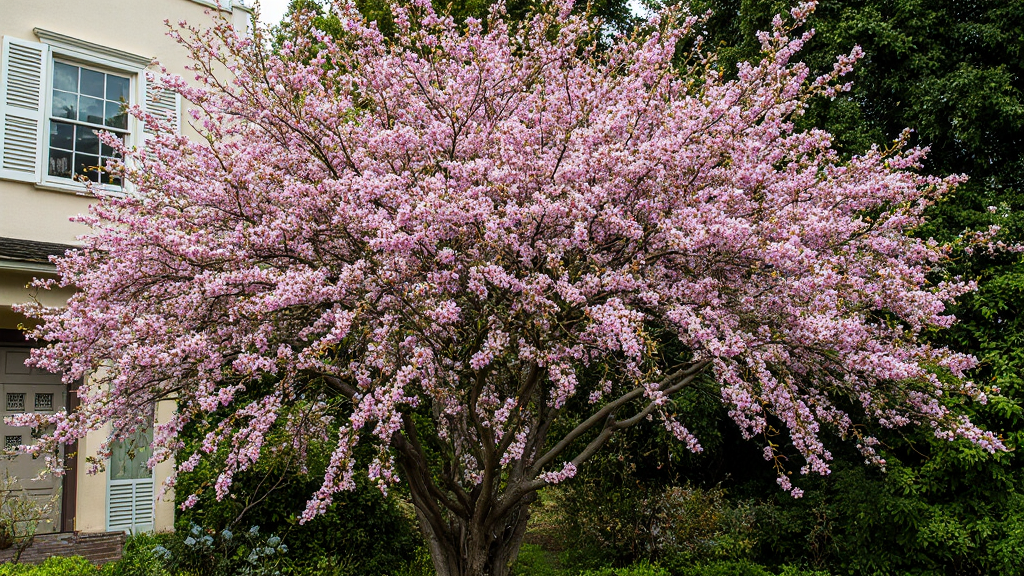
Multi-trunked with summer flowers in pink, red, or white, plus peeling bark.
- Why Safe: Non-invasive roots, plant 6 to 10 feet away.
- Care Tips: Full sun, well-drained soil (pH 5.0 to 6.5). Water moderately; prune in late winter.
- Size: 10 to 20 feet tall, 8 to 15 feet wide (dwarf varieties smaller).
- Zones: 7 to 9.
- My Tip: My crepe myrtle blooms all summer, like my Nerine flowers.
- Fun Fact: Heat-tolerant for southern gardens.
6. Serviceberry (Amelanchier spp.)
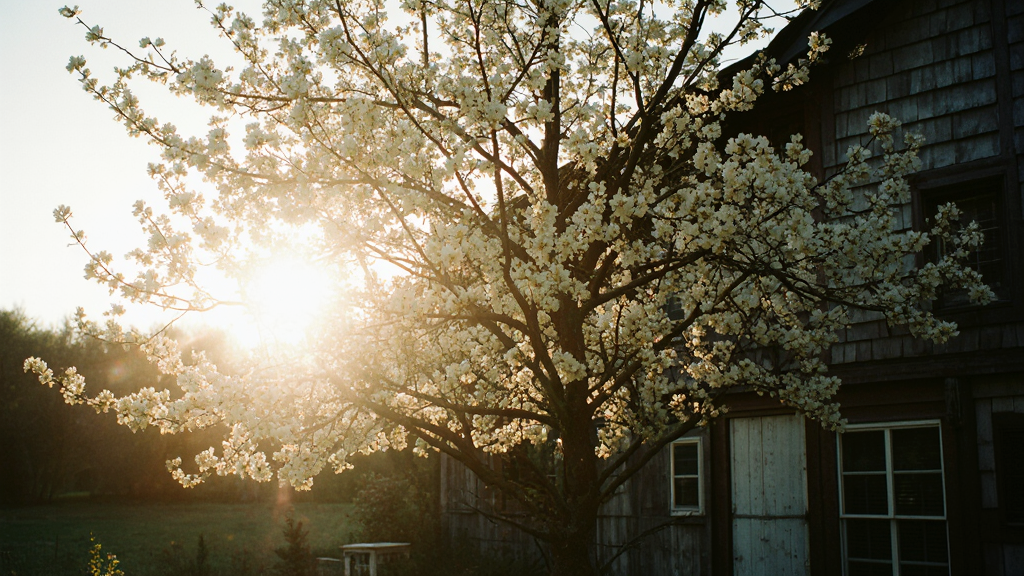
White spring flowers, edible berries, and orange-red fall foliage.
- Why Safe: Shallow roots, safe 5 to 8 feet from foundations.
- Care Tips: Full sun to partial shade, moist soil (pH 5.5 to 7.0). Water regularly; minimal pruning.
- Size: 15 to 25 feet tall, 10 to 15 feet wide.
- Zones: 4 to 9.
- My Tip: My serviceberry berries are bird magnets, enriched with DIY compost.
- Fun Fact: Native to North America.
7. Sweetbay Magnolia (Magnolia virginiana)
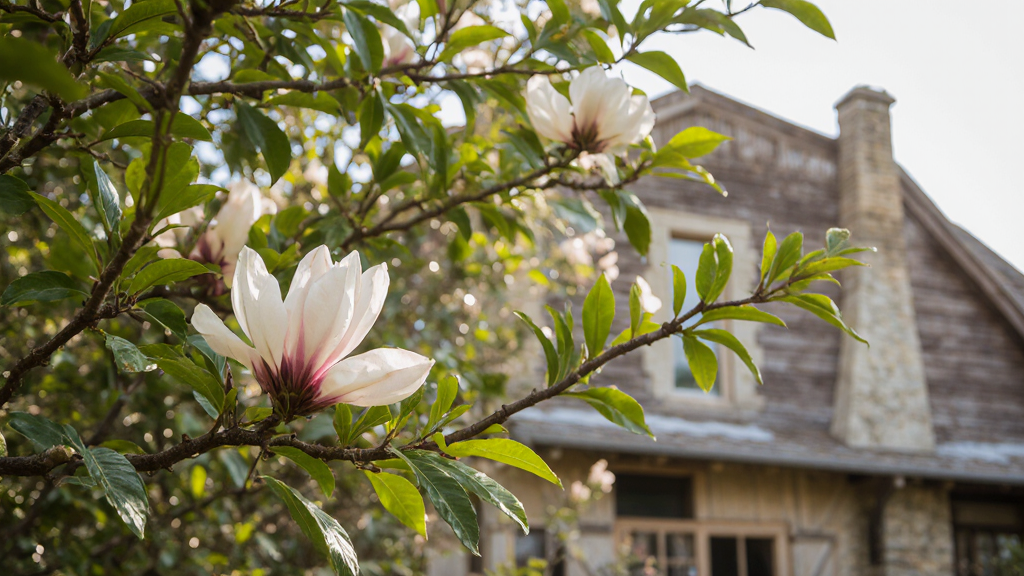
Semi-evergreen with creamy white, lemon-scented flowers in summer.
- Why Safe: Non-aggressive roots, plant 8 to 10 feet away.
- Care Tips: Full sun to partial shade, acidic soil (pH 5.0 to 6.5). Water weekly; prune lightly.
- Size: 10 to 20 feet tall, 10 to 15 feet wide.
- Zones: 5 to 9.
- My Tip: My sweetbay’s scent rivals lilac, great near patios.
- Fun Fact: Tolerates wet soils.
8. Dwarf Hinoki Cypress (Chamaecyparis obtusa ‘Nana Gracilis’)
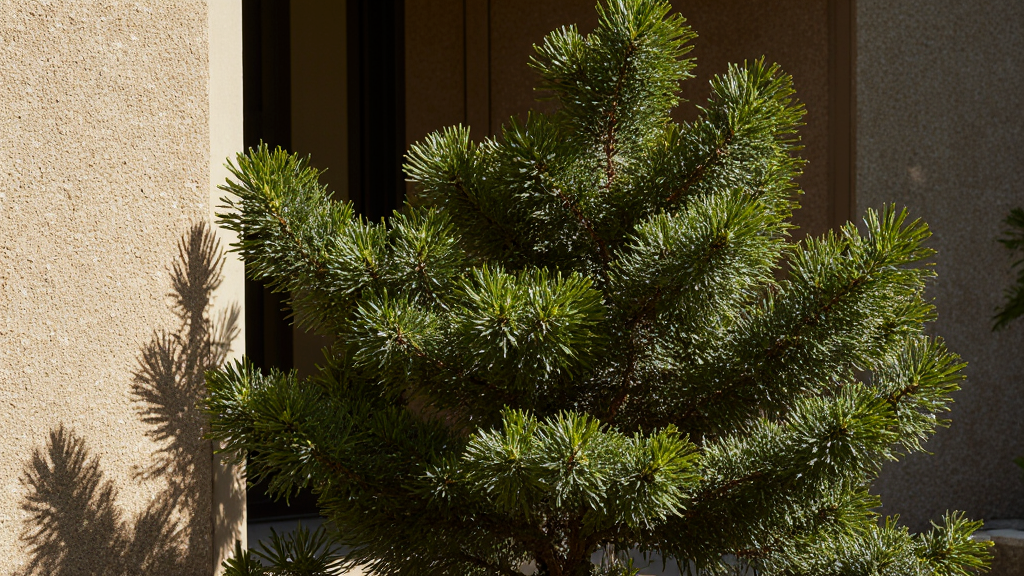
Evergreen with fan-like, dark green foliage and compact form.
- Why Safe: Shallow roots, safe 5 to 7 feet from houses.
- Care Tips: Full sun to partial shade, well-drained soil (pH 5.5 to 6.5). Water moderately; no pruning needed.
- Size: 3 to 6 feet tall, 3 to 5 feet wide.
- Zones: 5 to 8.
- My Tip: My dwarf hinoki adds year-round structure, like my spooky plants.
- Fun Fact: Japanese origin, slow-growing.
9. Japanese Cherry Tree (Prunus serrulata ‘Snow Goose’)
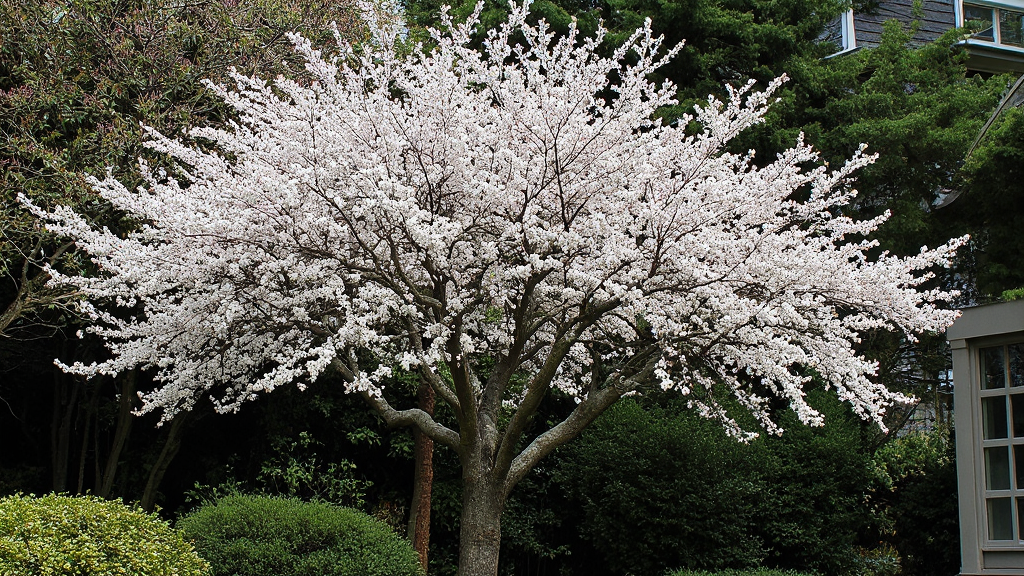
White spring flowers on a compact form, with red fall leaves.
- Why Safe: Fibrous roots, plant 8 to 10 feet away.
- Care Tips: Full sun, loamy soil (pH 6.0 to 7.0). Water weekly; prune after bloom.
- Size: 15 to 20 feet tall, 10 to 15 feet wide.
- Zones: 5 to 8.
- My Tip: My cherry tree blooms like spring confetti, pollinated by my bees.
- Fun Fact: Disease-resistant variety.
10. Hawthorn (Crataegus spp.)
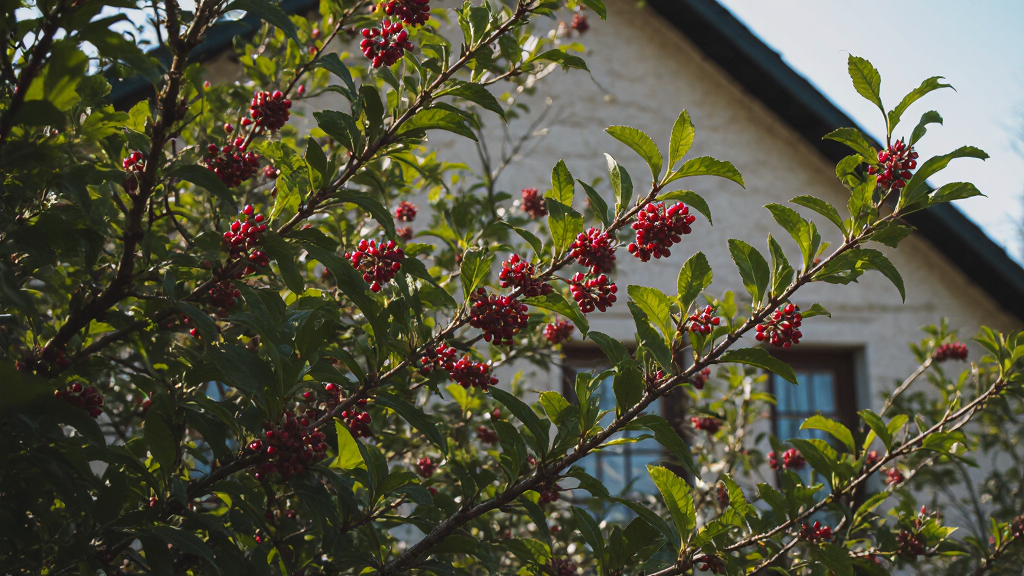
White spring flowers, red berries, and thorny branches for privacy.
- Why Safe: Non-invasive roots, safe 6 to 8 feet from foundations.
- Care Tips: Full sun, fertile soil (pH 6.0 to 7.5). Water moderately; prune for shape.
- Size: 15 to 25 feet tall, 10 to 15 feet wide.
- Zones: 4 to 8.
- My Tip: My hawthorn hedges the yard, berries for birds.
- Fun Fact: Wildlife haven.
11. Flowering Plum (Prunus spp.)
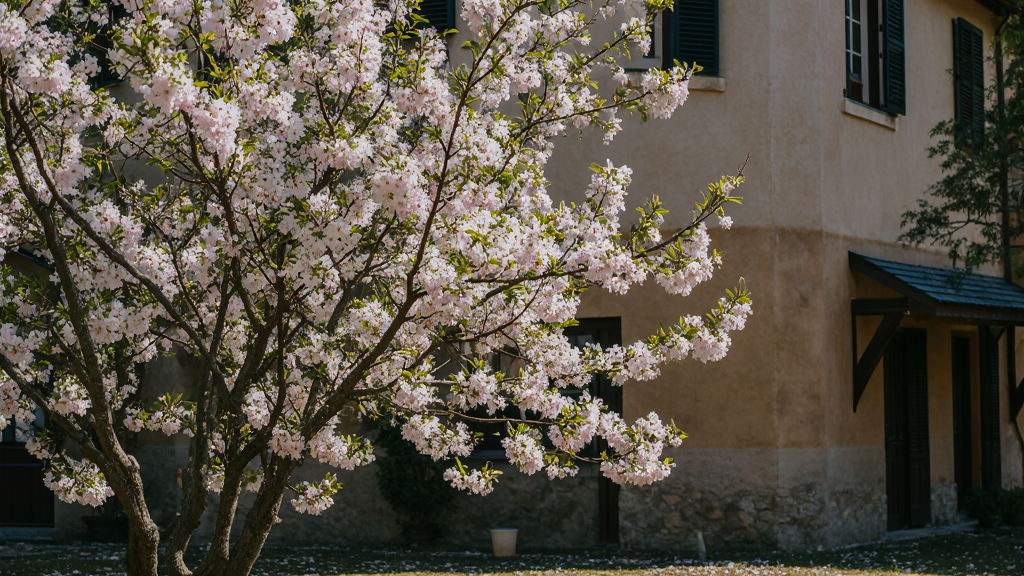
Pink or white spring flowers, purple foliage on some varieties.
- Why Safe: Shallow roots, plant 5 to 8 feet away.
- Care Tips: Full sun, well-drained soil (pH 6.0 to 7.0). Water weekly; prune after bloom.
- Size: 10 to 20 feet tall, 8 to 12 feet wide.
- Zones: 5 to 9.
- My Tip: My flowering plum adds color near the house, like my Nerine flowers.
- Fun Fact: Edible fruit on some.
12. Fringe Tree (Chionanthus virginicus)
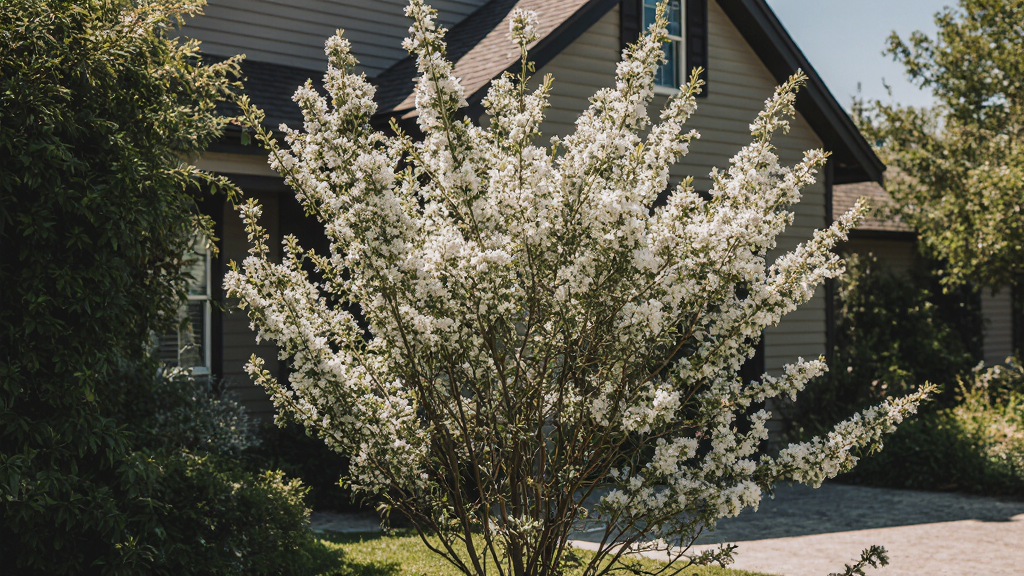
White, fringe-like spring flowers and blue berries.
- Why Safe: Fibrous roots, safe 8 to 10 feet from homes.
- Care Tips: Full sun to partial shade, moist soil (pH 6.0 to 7.5). Water regularly; minimal pruning.
- Size: 12 to 20 feet tall, 10 to 15 feet wide.
- Zones: 4 to 9.
- My Tip: My fringe tree’s blooms are showy, like my pollinators.
- Fun Fact: Native to eastern USA.
13. Smoke Tree (Cotinus coggygria)
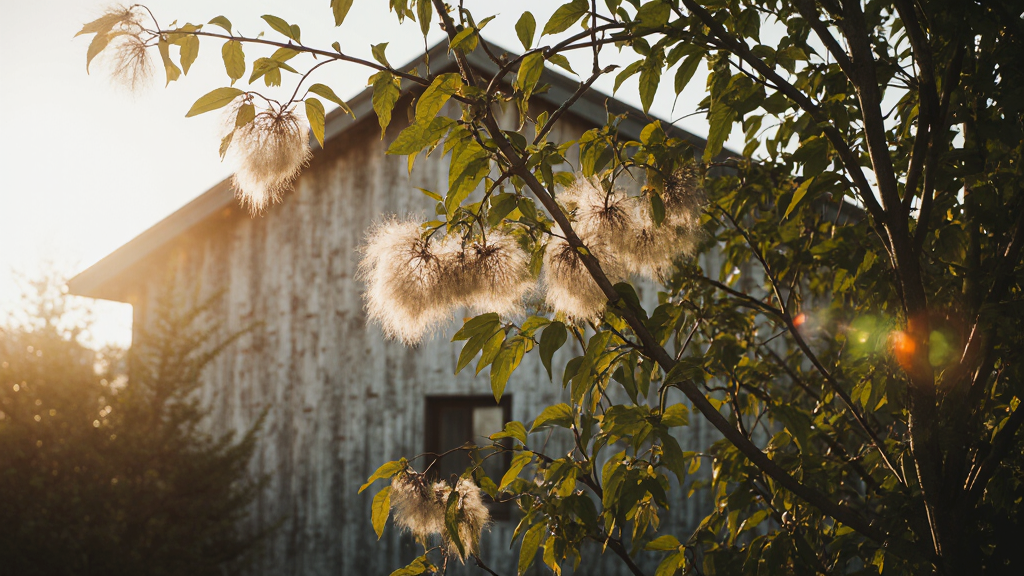
Puffy, smoky pink flowers in summer and purple fall leaves.
- Why Safe: Non-aggressive roots, plant 6 to 8 feet away.
- Care Tips: Full sun, well-drained soil (pH 6.0 to 7.5). Water moderately; prune for color.
- Size: 10 to 15 feet tall, 10 to 15 feet wide.
- Zones: 5 to 8.
- My Tip: My smoke tree’s haze is ethereal, like my spooky plants.
- Fun Fact: “Smoke” from hairy flower stalks.
14. Harry Lauder’s Walking Stick (Corylus avellana ‘Contorta’)
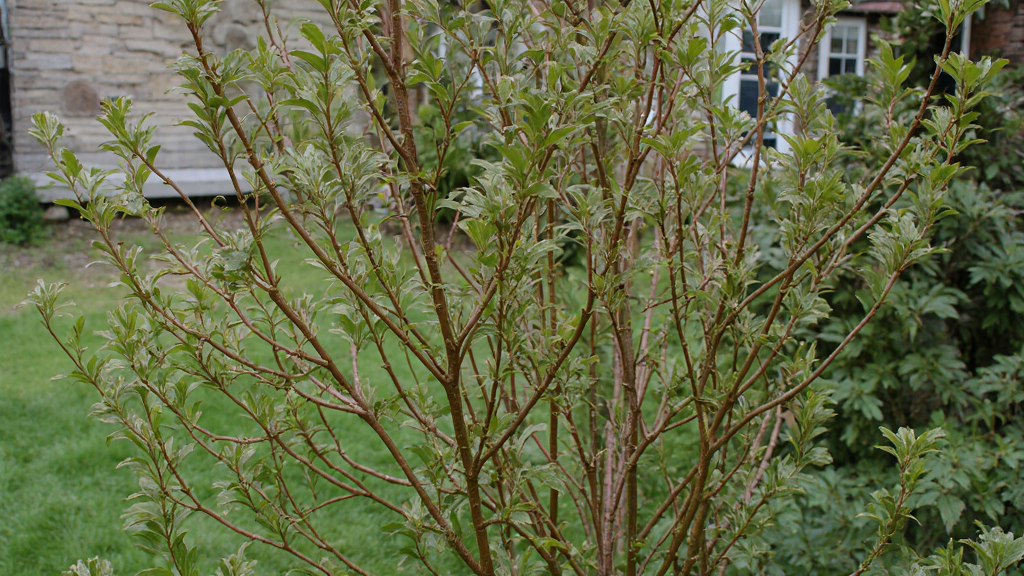
Twisted branches with yellow catkins in spring.
- Why Safe: Shallow roots, safe 5 to 7 feet from foundations.
- Care Tips: Full sun to partial shade, loamy soil (pH 6.0 to 7.0). Water weekly; prune lightly.
- Size: 8 to 10 feet tall, 6 to 8 feet wide.
- Zones: 4 to 8.
- My Tip: My twisted branches add winter interest, mulched with DIY compost.
- Fun Fact: Named after a Scottish comedian’s cane.
15. Kousa Dogwood (Cornus kousa)
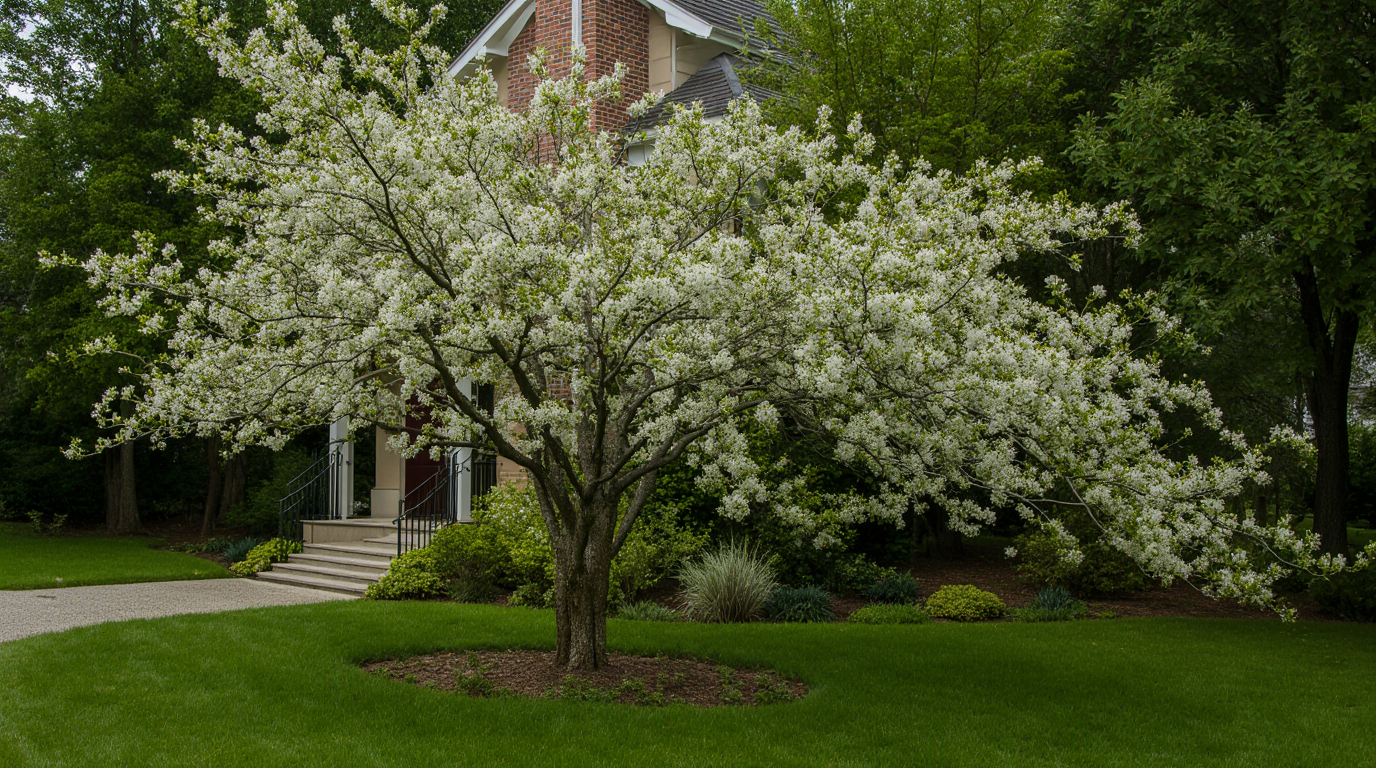
White bracts in early summer, red berries, and exfoliating bark.
- Why Safe: Fibrous roots, plant 8 to 10 feet away.
- Care Tips: Full sun to partial shade, acidic soil (pH 5.5 to 6.5). Water regularly; prune after fruit.
- Size: 15 to 25 feet tall, 12 to 20 feet wide.
- Zones: 5 to 8.
- My Tip: My kousa berries are bird food, like my serviceberry.
- Fun Fact: Disease-resistant alternative to flowering dogwood.
16. Saucer Magnolia (Magnolia x soulangeana)
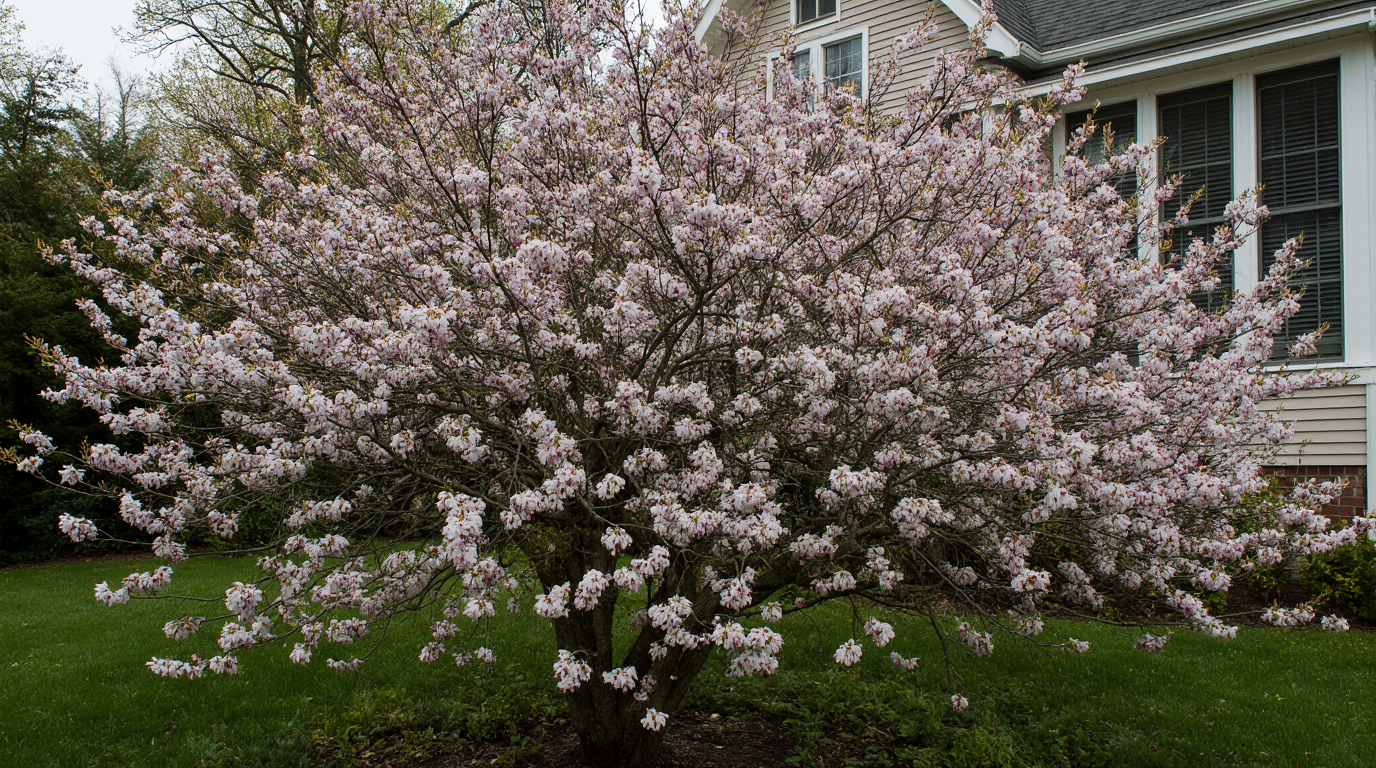
Large, tulip-shaped pink-purple flowers in early spring.
- Why Safe: Non-invasive roots, safe 10 feet from homes.
- Care Tips: Full sun to partial shade, moist soil (pH 5.5 to 6.5). Water weekly; prune after bloom.
- Size: 15 to 25 feet tall, 10 to 15 feet wide.
- Zones: 4 to 9.
- My Tip: My saucer magnolia blooms before leaves, a spring spectacle.
- Fun Fact: Hybrid of Asian and American magnolias.
Tips for Planting Small Trees Near Your House
- Distance Rule: Plant 5 to 10 feet from foundations, scaling with mature size. Use raised beds if soil is poor.
- Soil Prep: Enrich with compost from my DIY compost bin for healthy roots.
- Watering: Water deeply weekly until established, then reduce to promote deep roots.
- Pruning: Prune in late winter for shape, avoiding major cuts near houses.
- Pests: Watch for aphids, use neem oil as in my guide.
Wrapping Up
These 16 small trees safe near your house, from Eastern Redbud to Saucer Magnolia, bring beauty and function without foundation risks. My Japanese Maple adds fall flair just 8 feet from the patio, a favorite. Whether you’ve got a cozy cottage or modern home, these picks are easy and rewarding. Which tree calls to you? Share your planting plans in the comments on USA Garden Hub!