
Explore 15 common trees that start with S. Learn their identification tips, growing zones, and care needs for your American garden.

If you’re looking for trees that start with S for your garden, you have many excellent choices. As a gardener with over ten years of experience, I have planted and cared for many of these species myself. This list will help you identify the right “S” tree for your landscape, whether you need shade, flowers, or fruit.
I will cover ornamental, shade, fruit, and evergreen trees starting with S. Each entry includes key details to help you choose and grow them successfully.
Understanding Tree Types for Your Garden
Before we list the trees, it helps to know what you are looking for. Trees fit into a few main categories.
Ornamental trees are prized for their flowers, foliage, or bark. They are often smaller and make great focal points. Shade trees are larger, providing cooling cover for your yard. Fruit trees offer a edible harvest. Evergreen trees keep their leaves year-round, providing constant structure and privacy.
Consider your USDA Hardiness Zone when selecting any tree. This is the most important factor for its survival. You should also think about the tree’s mature size. Make sure you have enough space for it to grow to its full width and height.
15 Trees That Start With S
Here is my curated list of 15 trees, all starting with the letter S. I have included native American trees and popular cultivated varieties.
1. Sycamore (Platanus occidentalis)
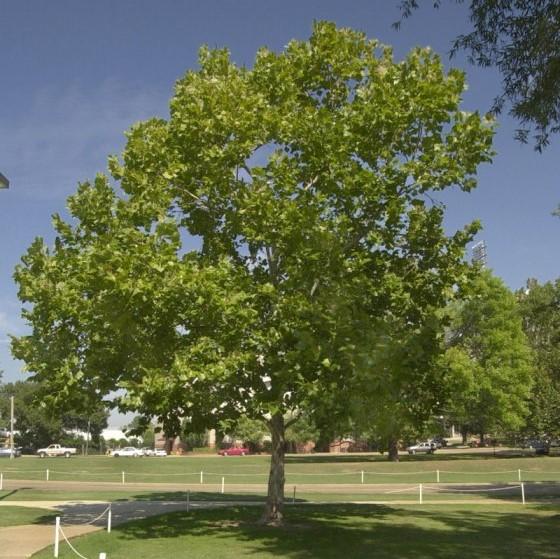
The American Sycamore is a classic native shade tree. It is known for its fast growth and distinctive bark that peels away in patches. I often see it along riverbanks in the wild.
- Key Features: Massive size, mottled white and brown bark, large maple-like leaves.
- Growing Zones: 4-9
- Mature Size: 75-100 feet tall and wide.
- Care Tips: It needs full sun and plenty of space. It is tolerant of wet soils and pollution.
2. Spruce (Picea species)
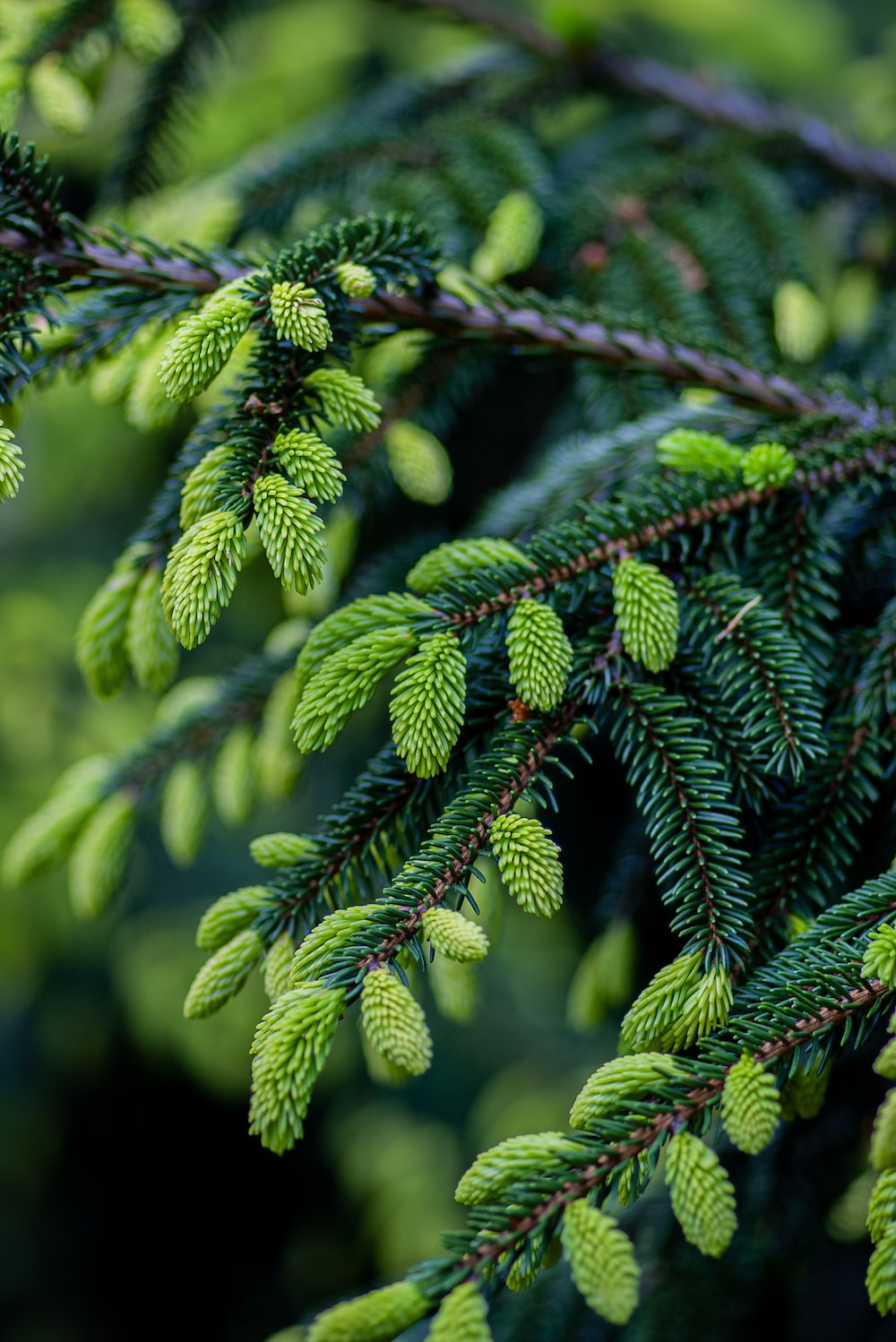
Spruces are a group of coniferous evergreen trees. They have sharp, single needles and hanging cones. The Colorado Blue Spruce is a popular landscape choice for its silvery-blue color.
- Key Features: Pyramidal shape, sharp needles, hanging cones.
- Growing Zones: Varies by species, generally 2-8.
- Mature Size: Varies from 30 to 60 feet for many landscape varieties.
- Care Tips: Plant in full sun with well-drained soil. They are cold-hardy but can struggle in hot, humid summers.
3. Sweetgum (Liquidambar styraciflua)
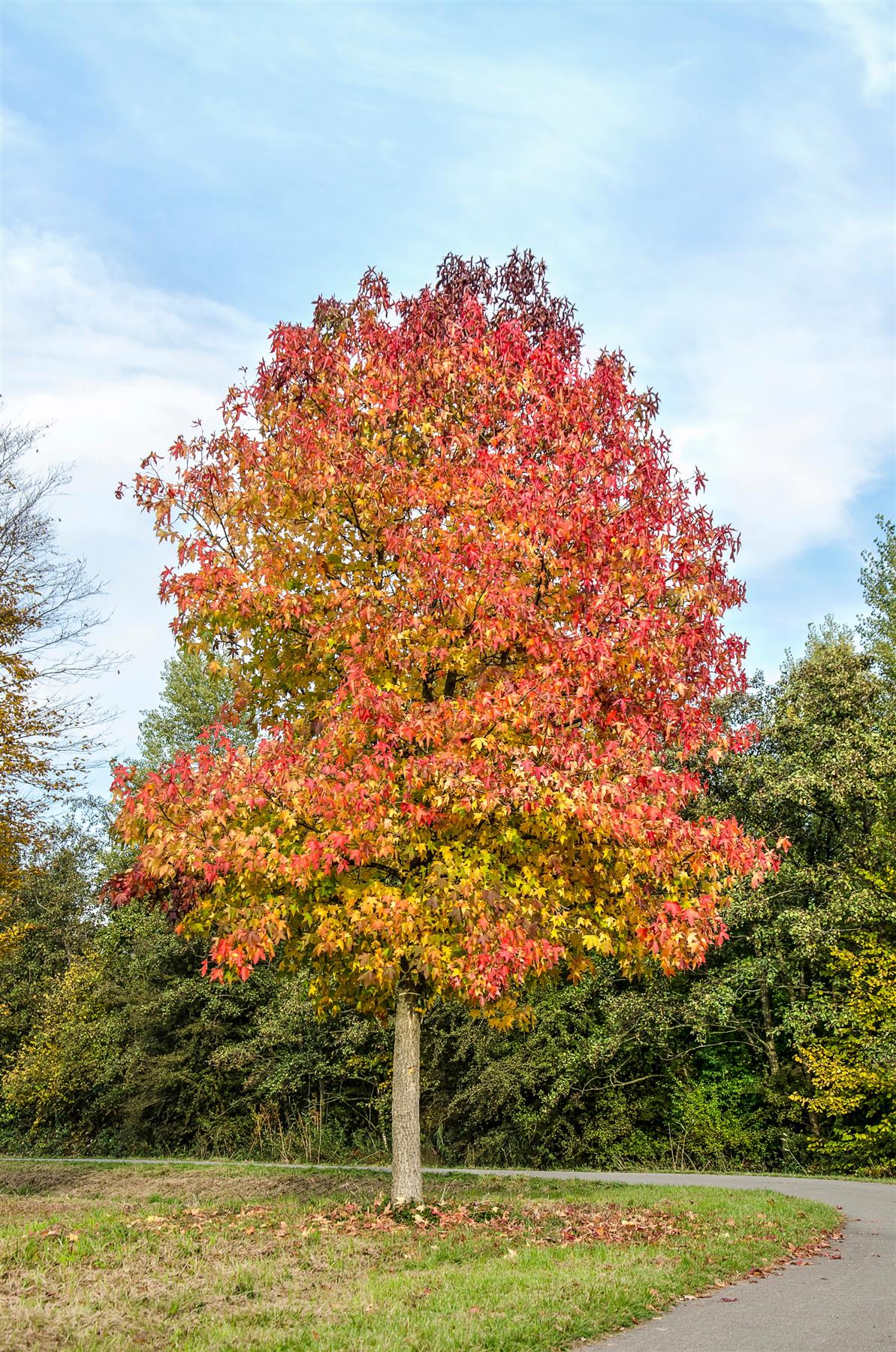
Sweetgum is a common shade tree, easily recognized by its star-shaped leaves and spiky “gumball” seed pods. Its fall color is spectacular, with leaves turning shades of red, purple, and yellow.
- Key Features: Star-shaped leaves, brilliant fall color, spiky seed balls.
- Growing Zones: 5-9
- Mature Size: 60-75 feet tall.
- Care Tips: Grows in full sun to partial shade. The seed pods can be messy, so consider a seedless variety like ‘Rotundiloba’.
4. Serviceberry (Amelanchier)
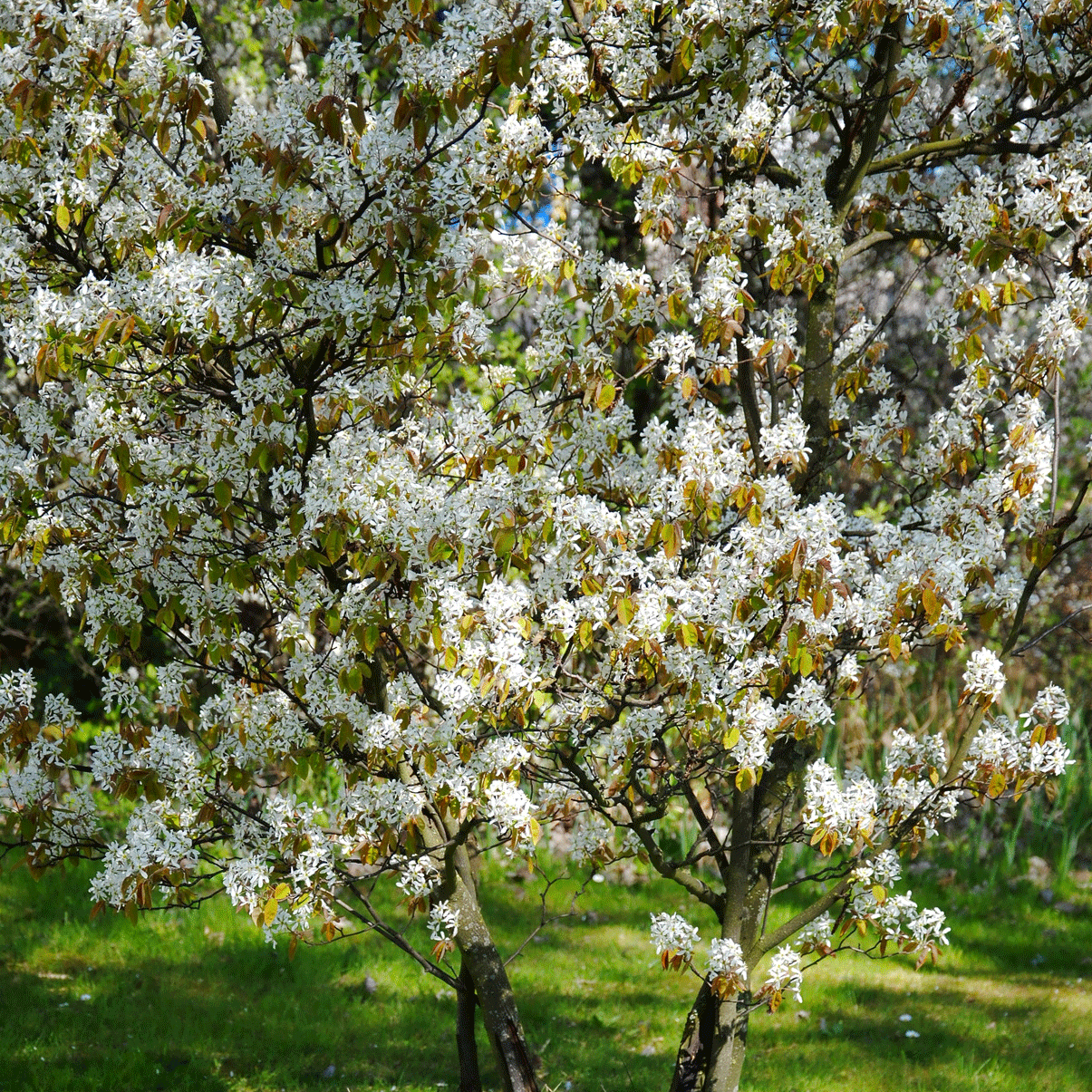
Also known as Juneberry or Saskatoon, Serviceberry is a fantastic native small tree. It offers three seasons of interest: white spring flowers, edible summer berries, and excellent fall color. The berries are a favorite for jams and for attracting birds to my garden.
- Key Features: White spring flowers, edible purple berries, orange-red fall foliage.
- Growing Zones: 4-9
- Mature Size: 15-25 feet tall.
- Care Tips: Adaptable to sun or part shade. It prefers well-drained soil. For more on fruiting plants, see my guide on small garden trees.
5. Sourwood (Oxydendrum arboreum)
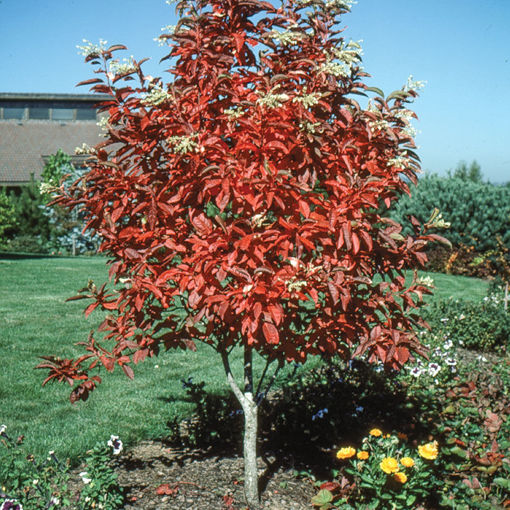
Sourwood is an underused native tree that deserves more attention. In mid-summer, it produces graceful strands of white, bell-shaped flowers. Its fall color is a deep, brilliant red that persists for weeks.
- Key Features: Pendulous white flowers in summer, exceptional red fall color.
- Growing Zones: 5-9
- Mature Size: 25-30 feet tall.
- Care Tips: It requires acidic, well-drained soil and does not tolerate pollution or compacted soil well.
6. Sassafras (Sassafras albidum)
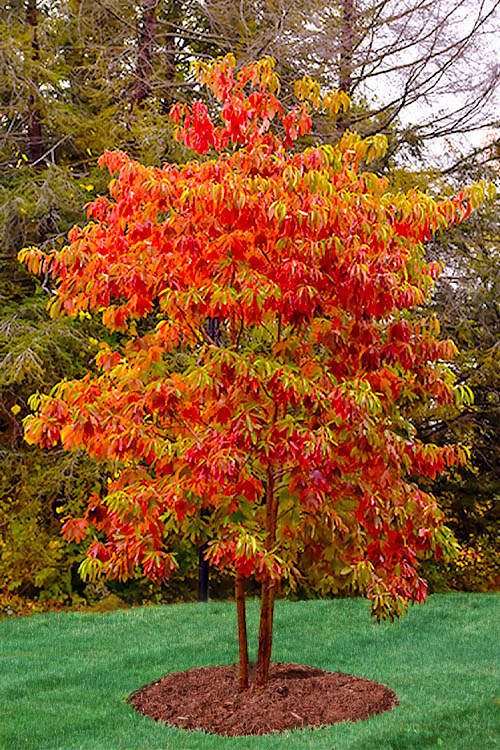
Sassafras is a fascinating native tree. A single tree can have three different leaf shapes: oval, mitten-shaped, and three-lobed. The leaves turn a beautiful orange-red in fall, and the roots have a distinct scent.
- Key Features: Three leaf shapes on one tree, brilliant fall color, aromatic roots.
- Growing Zones: 4-9
- Mature Size: 30-60 feet tall.
- Care Tips: It spreads by root suckers, forming thickets if not managed. Grows well in full sun to part shade.
7. Silver Maple (Acer saccharinum)
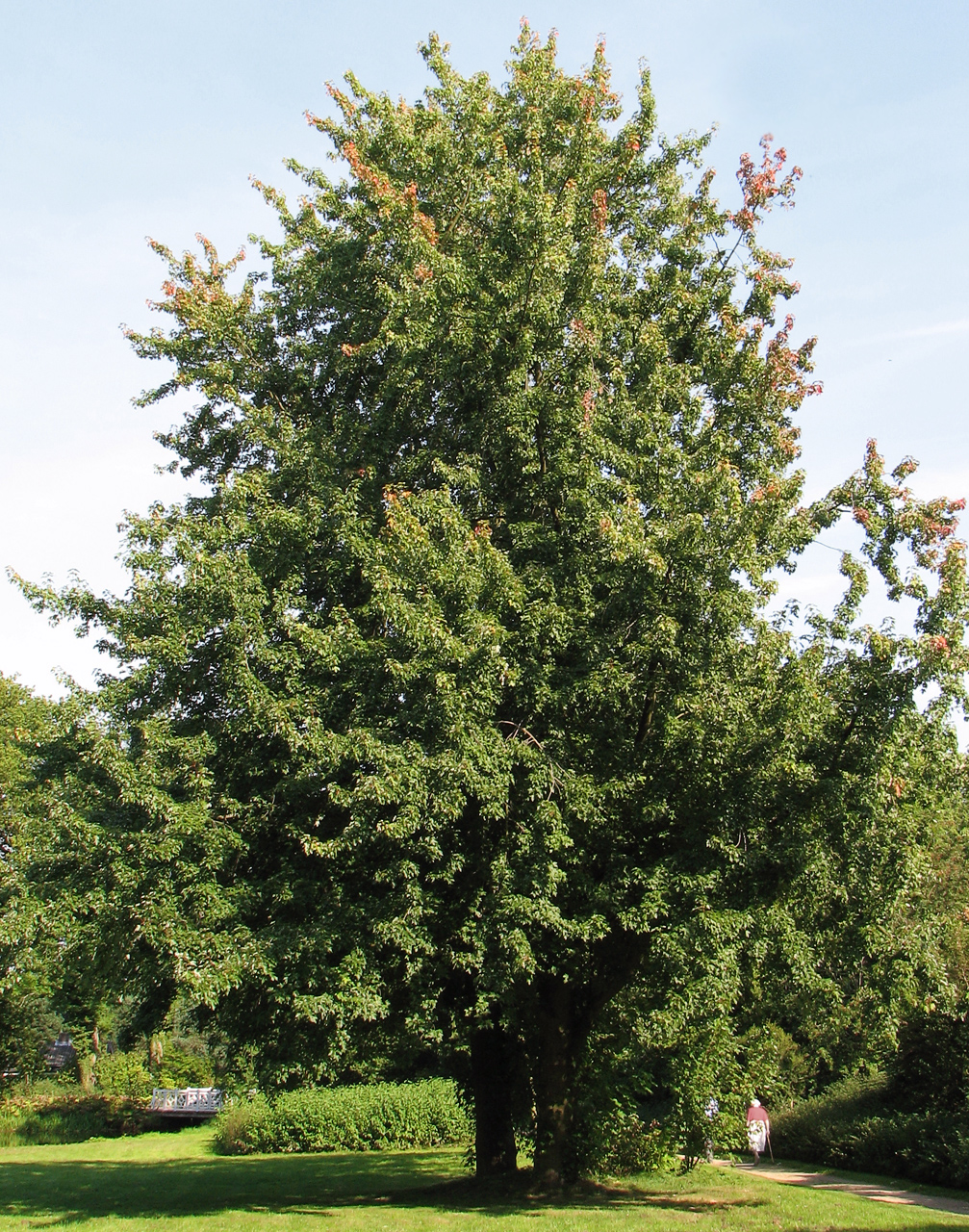
Silver Maple is a fast-growing shade tree, named for the silvery underside of its leaves. It is often used for quick coverage, but it has brittle wood that can be damaged in storms.
- Key Features: Fast growth, leaves with silver undersides.
- Growing Zones: 3-9
- Mature Size: 50-80 feet tall.
- Care Tips: It grows in almost any soil condition. Avoid planting it near structures due to its invasive roots and weak branches. For a stronger alternative, consider other types of maple trees.
8. Smoke Tree (Cotinus coggygria)
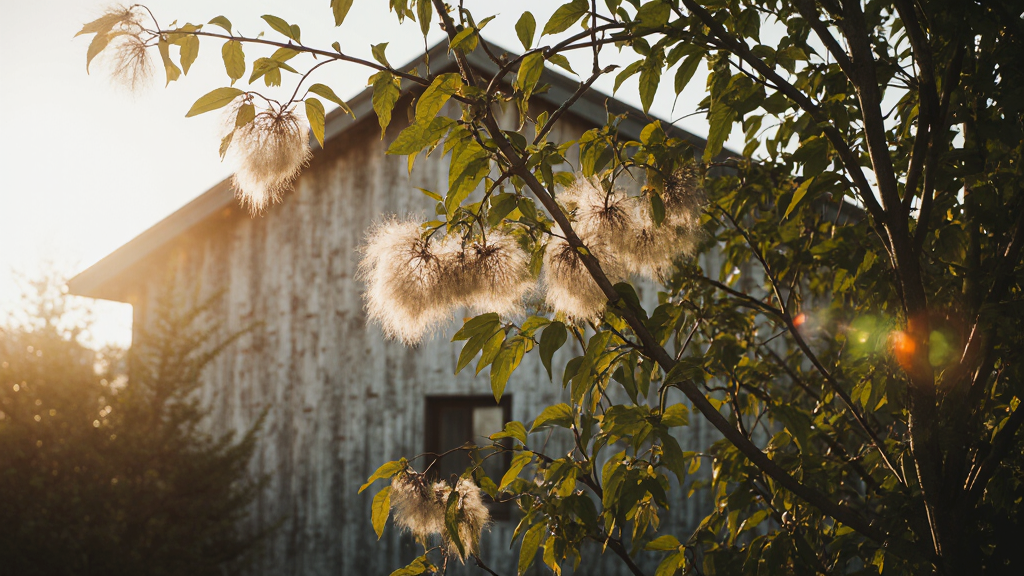
The Smoke Tree is a standout ornamental tree. It gets its name from the airy, smoke-like plumes of pinkish-gray flowers that cover it in summer. Cultivars like ‘Royal Purple’ have deep burgundy foliage.
- Key Features: Wispy, smoke-like flower clusters, often purple foliage.
- Growing Zones: 4-8
- Mature Size: 10-15 feet tall and wide.
- Care Tips: Prefers full sun. It can be cut back hard in early spring to encourage larger leaves and new growth.
9. Strawberry Tree (Arbutus unedo)
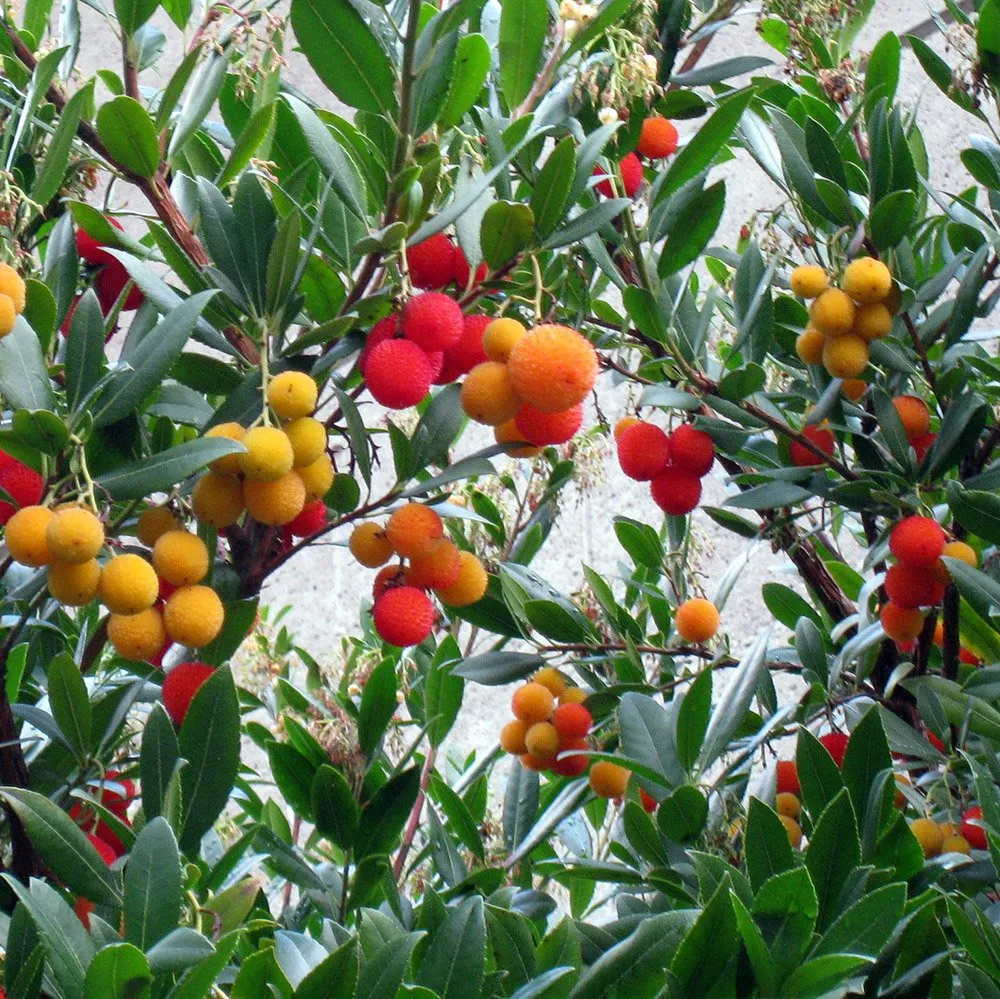
This is a broadleaf evergreen with unique features. It produces strawberry-like fruits and small white flowers at the same time in the fall. The bark is attractive, shredding in strips.
- Key Features: Evergreen, strawberry-like fruit, exfoliating bark.
- Growing Zones: 7-10
- Mature Size: 8-12 feet tall as a shrub, up to 35 feet as a tree.
- Care Tips: Drought-tolerant once established. It needs well-drained soil and can be grown in coastal areas.
10. Sumac (Rhus genus)
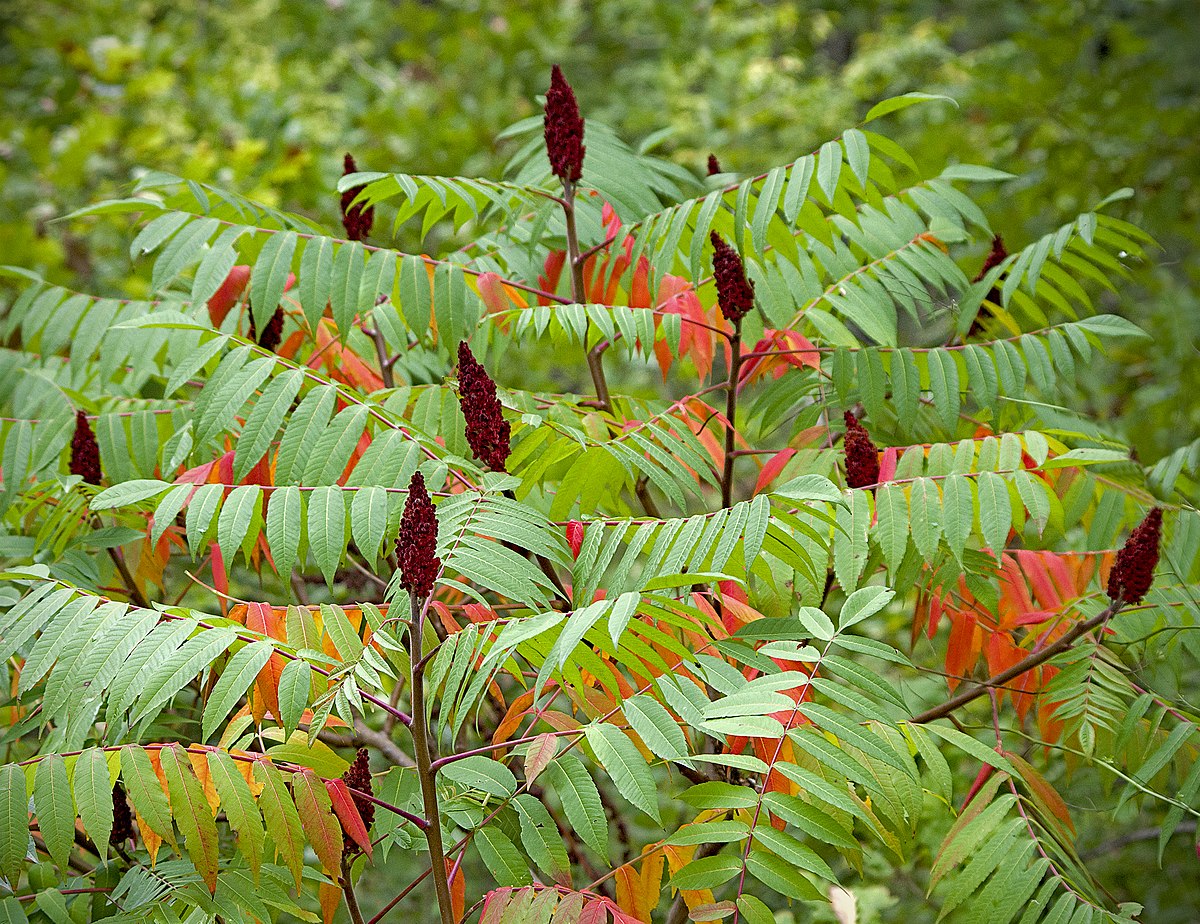
Smooth Sumac and Staghorn Sumac are native large shrubs or small trees. They form colonies and are famous for their brilliant red fall foliage and upright, cone-shaped clusters of red berries.
- Key Features: Brilliant red fall color, fuzzy red fruit clusters.
- Growing Zones: 3-8
- Mature Size: 10-20 feet tall.
- Care Tips: They are extremely tough and drought-tolerant. Best for naturalized areas where they can spread freely.
11. Sawtooth Oak (Quercus acutissima)
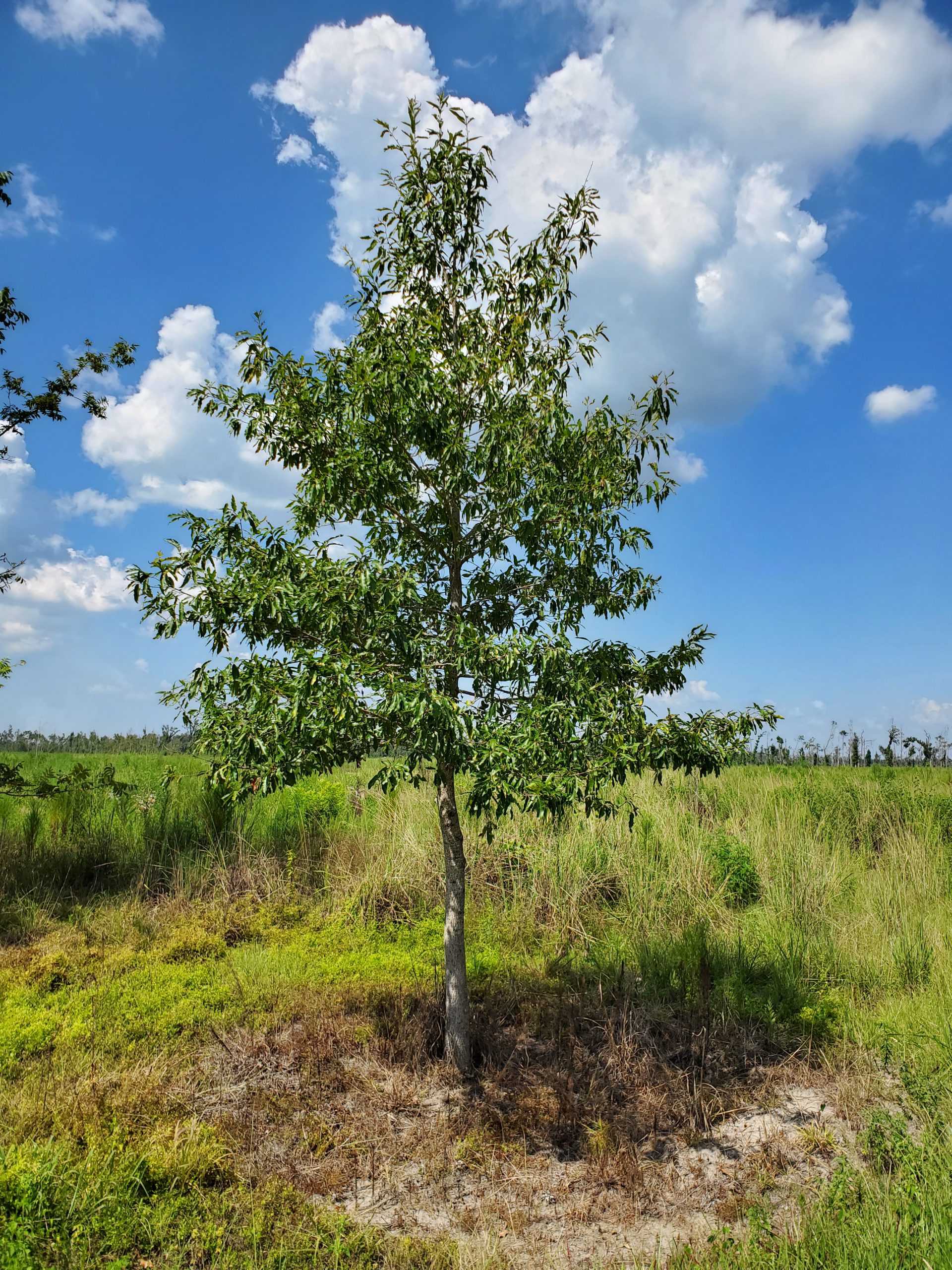
Sawtooth Oak is a fast-growing oak tree, introduced from Asia. It is named for its leaves, which have serrated edges resembling a saw blade. It produces abundant acorns at a young age, which wildlife love.
- Key Features: Fringed acorn caps, leaves with serrated edges.
- Growing Zones: 5-9
- Mature Size: 40-60 feet tall.
- Care Tips: Adapts to a wide range of soils. It can be invasive in some areas, so check with your local extension service before planting.
12. Silk Tree (Albizia julibrissin)
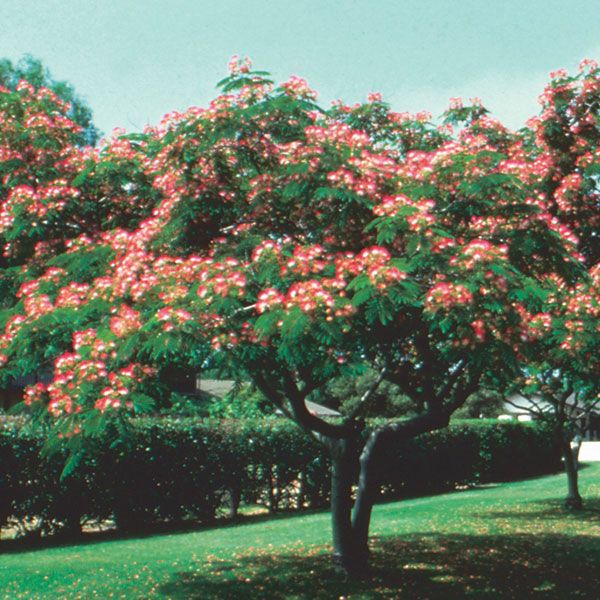
Commonly known as Mimosa, the Silk Tree has delicate, fern-like leaves and fluffy, pink, powder-puff flowers. It has a tropical appearance but is quite cold-hardy.
- Key Features: Fern-like leaves, silky pink flowers.
- Growing Zones: 6-9
- Mature Size: 20-40 feet tall.
- Care Tips: Prefers full sun. It is short-lived and can be invasive in the southeastern US, where it reseeds aggressively.
13. Southern Magnolia (Magnolia grandiflora)
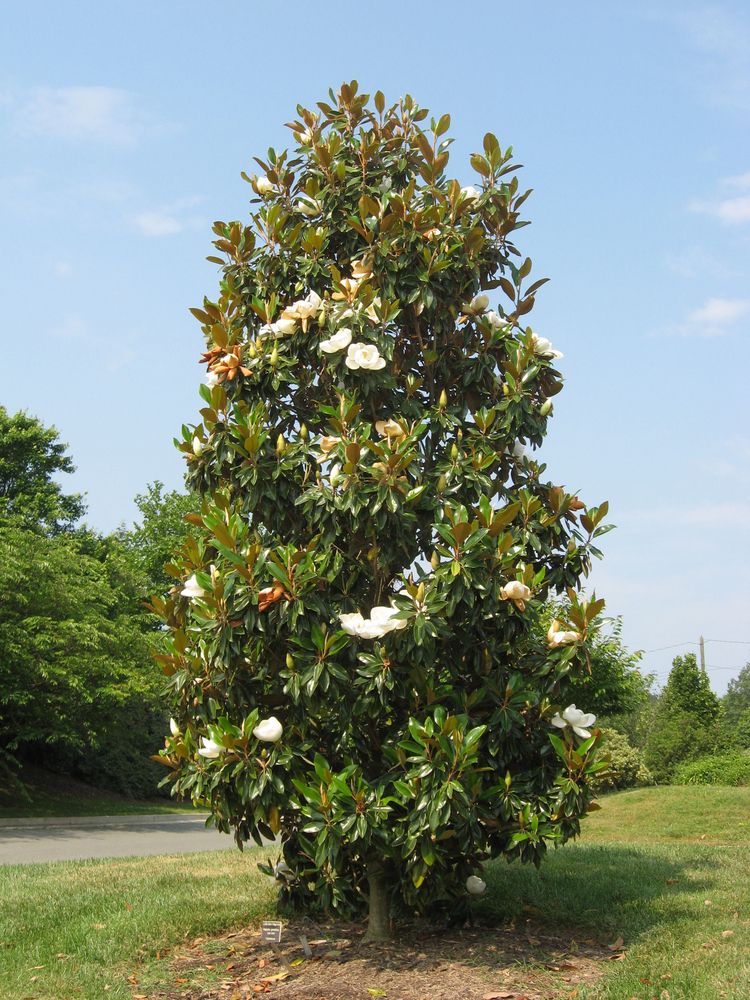
This is a classic Southern evergreen tree. It has large, glossy green leaves and huge, fragrant white flowers in early summer. It makes a stunning specimen tree.
- Key Features: Large, fragrant white flowers, evergreen glossy leaves.
- Growing Zones: 6-10
- Mature Size: 60-80 feet tall.
- Care Tips: It needs full sun and acidic, well-drained soil. The large leaves drop year-round, creating some litter. Learn more about flowering trees for your yard.
14. Sugar Maple (Acer saccharum)
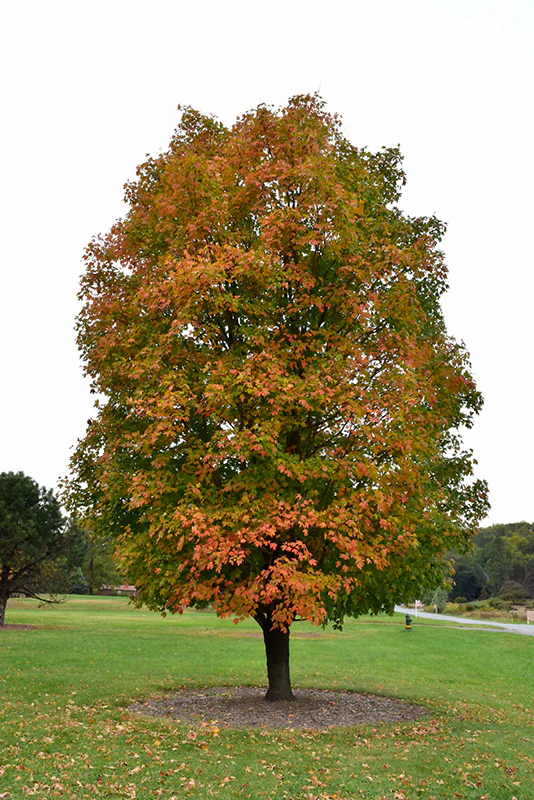
The Sugar Maple is the star of the fall season in the Northeast. It is also the primary source of maple syrup. This tree is a valuable and beautiful shade tree for large properties.
- Key Features: Brilliant orange and red fall color, source of maple syrup.
- Growing Zones: 3-8
- Mature Size: 60-75 feet tall.
- Care Tips: It needs deep, well-drained soil and does not tolerate road salt or compacted soil.
15. Satsuma (Citrus unshiu)
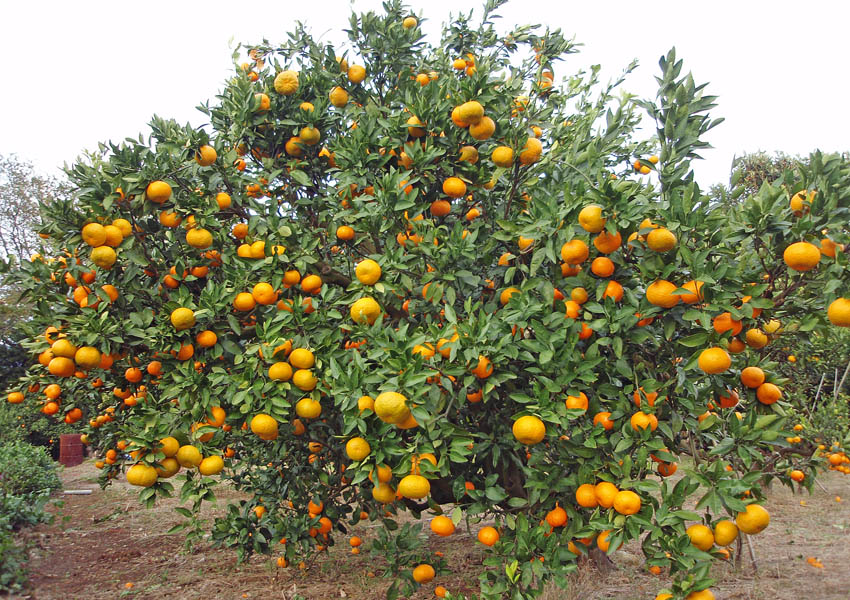
Satsuma is a type of mandarin orange, and it is one of the most cold-hardy citrus trees. I grow one in a container that I move to a sheltered spot in winter. The fruit is seedless, sweet, and easy to peel.
- Key Features: Cold-tolerant citrus, sweet, easy-peel fruit.
- Growing Zones: 8-11 (can be grown in containers in colder zones)
- Mature Size: 10-15 feet tall in the ground; smaller in containers.
- Care Tips: Needs full sun and well-drained, acidic soil. Protect from hard freezes. For more, read my guide on growing fruit trees in pots.
How to Choose the Right Tree for You
Selecting a tree is a long-term decision. Start with your goal. Do you want shade, flowers, fruit, or privacy? Then, check your USDA Hardiness Zone. This determines which trees will survive your winters.
Next, assess your space. Look up. Are there power lines? Look down. Will the roots interfere with a driveway or patio? Always plan for the tree’s mature size, not its size at the nursery.
Finally, consider maintenance. Some trees drop messy fruit, have brittle branches, or are prone to pests. Choose a tree whose care needs match the time you have.
Common Questions About Trees That Start With S
What are some small trees that start with S? Excellent small trees include Serviceberry, Smoke Tree, and Satsuma (when managed). These are perfect for smaller yards or planting under power lines.
Are there any fast-growing trees that start with S? Yes, Silver Maple and Sycamore are very fast-growing. However, their speed often comes with weaker wood. A better option might be a Sawtooth Oak, which grows quickly but is stronger.
What is a good flowering tree that starts with S? The Southern Magnolia has spectacular flowers. Serviceberry and Sourwood also have beautiful and unique blooms. The Silk Tree offers tropical-looking pink flowers.
Which of these trees are native to North America? Many on this list are natives, including Sycamore, Sweetgum, Serviceberry, Sourwood, Sassafras, Silver Maple, Sumac, and Sugar Maple. Planting native trees supports local ecosystems.
Final Thoughts on Selecting an S Tree
This list of trees that start with S offers options for every garden style and function. From the massive Sycamore to the compact Serviceberry, you can find a tree that fits your space and needs. Always research a tree’s specific requirements before planting to ensure it will thrive for years to come. For further tree identification, a resource like the USDA Plants Database is invaluable. The Arbor Day Foundation also has an excellent tree guide. You can also consult your local cooperative extension service for advice tailored to your area. If you’re exploring other options, you might also look into trees that start with C, like the classic Crabapple or Cypress.