
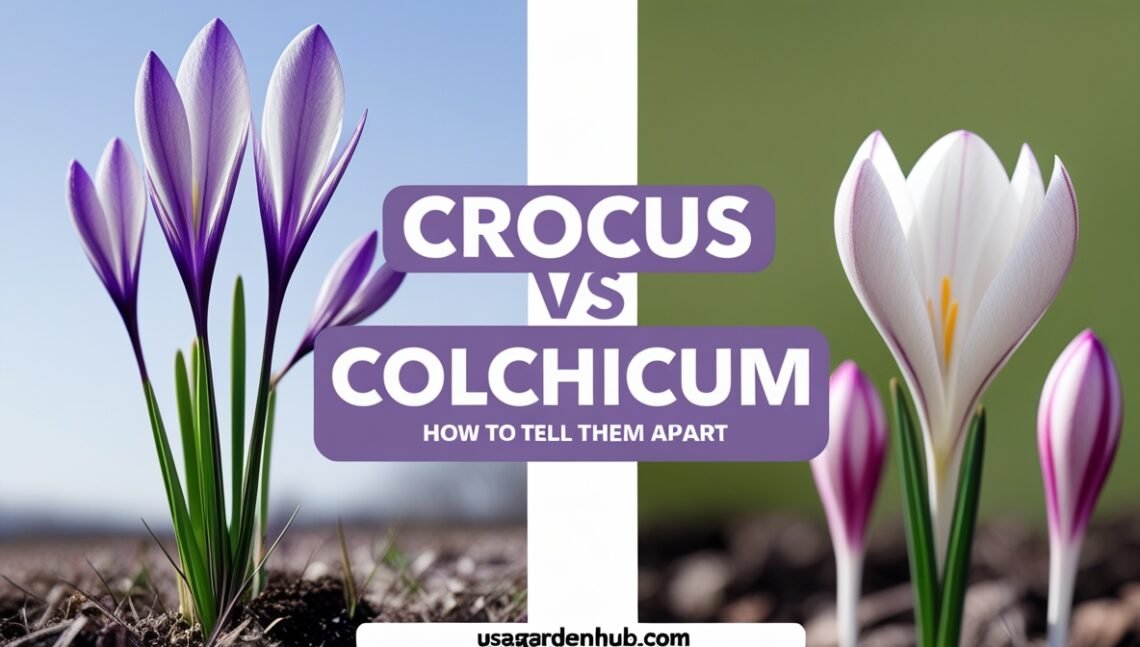
Confused by Crocus and Colchicum? (Crocus vs. Colchicum) Learn the key differences in taxonomy, toxicity, and flowering time to safely identify these similar-looking autumn blooms.

I’ll never forget my first autumn in my garden when a cluster of lovely purple flowers I didn’t remember planting appeared. I excitedly thought my spring crocuses had confused the seasons. A more experienced gardener quickly corrected me: I was looking at Colchicum, a beautiful but deceptive plant that looks nearly identical to a crocus but is dangerously poisonous. Understanding the difference is crucial for both garden design and safety.
While they look strikingly similar, Crocus and Colchicum are completely different plants from different families. Knowing how to distinguish them will help you plant the right bulb, care for it properly, and stay safe.
Key Differences at a Glance ( Crocus vs. Colchicum )
| Feature | Crocus | Colchicum (Autumn “Crocus”) |
|---|---|---|
| Plant Family | Iridaceae (Iris family) | Colchicaceae (Lily family) |
| Toxicity | Non-toxic (some are edible) | Highly toxic to humans and animals |
| Flowering Time | Spring OR Autumn (species-dependent) | Autumn (leaves appear in spring) |
| Number of Stamens | 3 | 6 |
| Foliage | Grass-like, with a white stripe; appears with flowers | Wider, darker green; appears in spring, dies back by summer |
| Corm Size | Small | Large, often irregularly shaped |
Detailed Comparison: How to Tell Them Apart
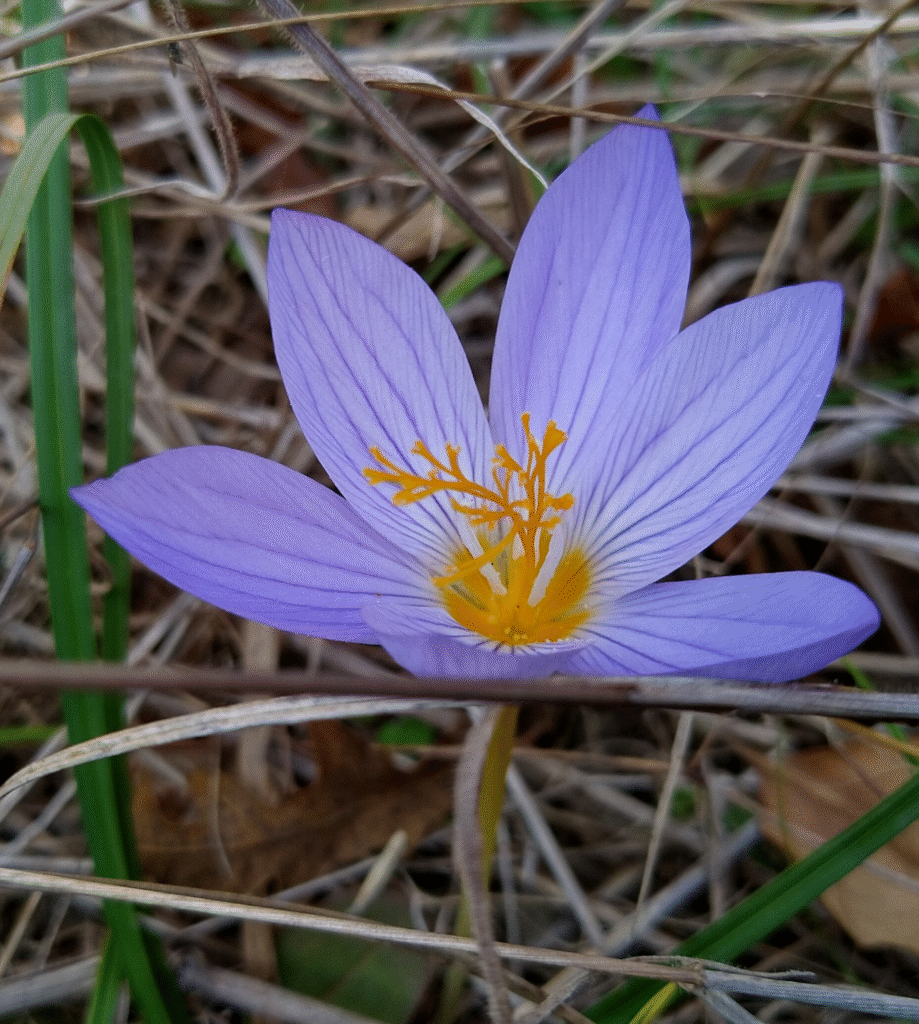
Here’s a closer look at the critical differences that will help you become an expert at identifying these two plants.
Taxonomy and Toxicity: The Most Important Difference
This is the non-negotiable distinction. Crocus is a member of the Iridaceae (Iris) family. The renowned spice saffron comes from the stigmas of Crocus sativus, and while not all crocuses are edible, they are generally non-toxic.
Colchicum, on the other hand, belongs to the Colchicaceae family and is sometimes called “Meadow Saffron.” This is a dangerous misnomer. Every part of the Colchicum plant is highly poisonous and contains colchicine, a toxic compound that can be fatal if ingested. The University of California Statewide IPM Program notes the importance of proper plant identification to avoid accidental poisoning.
Flower Structure: The Tell-Tale Sign
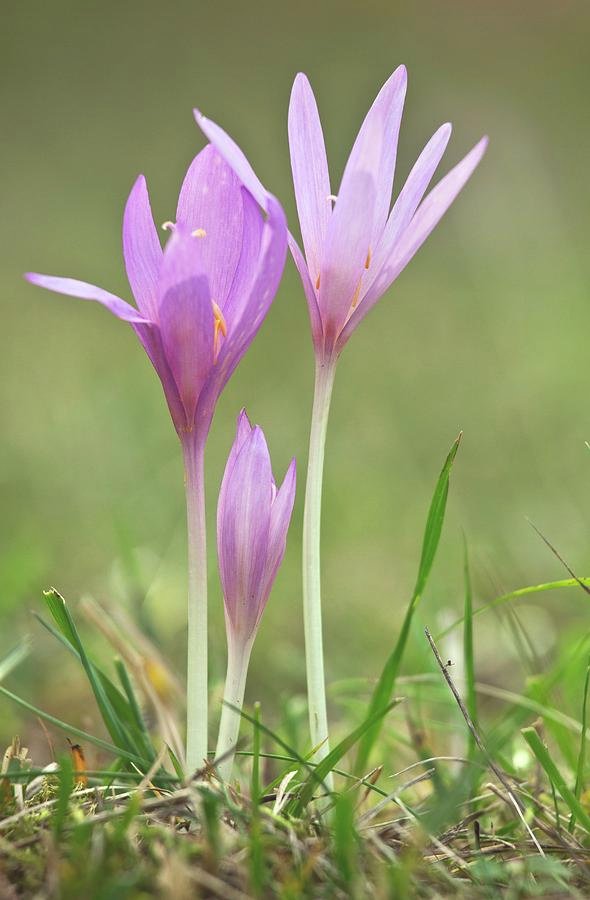
When in bloom, the easiest way to identify them is to look inside the flower.
- Stamens: Gently open a flower and count the yellow, pollen-covered stamens.
- Crocus always has 3 stamens.
- Colchicum always has 6 stamens.
- Style: Look at the central female part (the style).
- Crocus has a single, prominently branched style that is often a different color (like the famous red saffron stigmas).
- Colchicum has three separate, slender, and un-branched styles.
Growth Cycle and Foliage: A Matter of Timing
Their life cycles are completely different, which is a major clue.
- Spring-Flowering Crocus: These are the most common. They send up grass-like leaves with the flowers in spring. The foliage has a characteristic pale white stripe down the center.
- Autumn-Flowering Crocus: These bloom in fall, and their narrow, grass-like leaves appear either with the flowers or shortly after.
- Colchicum: This plant has a “naked” flowering habit. The large, goblet-shaped flowers magically appear in fall without any leaves. The broad, glossy green leaves emerge in spring and then die back completely by early summer, long before the flowers bloom.
A Simple Identification Guide
When you see a suspicious “crocus” in the fall, run through this checklist:
- Count the Stamens: 3 = Crocus. 6 = Colchicum. (This is the most reliable method).
- Look for Leaves: Are there grass-like leaves with the flower? It’s likely a true Crocus. Are the flowers emerging bare from the soil? It’s almost certainly Colchicum.
- Consider the Flower Source: If you bought it from a reputable bulb supplier, it should be labeled correctly. If it’s a surprise volunteer, be very cautious and use the identification tips above.
Which One Should You Plant?
- Plant Crocus if: You want a safe, cheerful, early-season bloomer that naturalizes easily. They are perfect for lawns, rock gardens, and containers. Both spring and autumn-blooming species are available.
- Plant Colchicum if: You understand its toxicity and have a pet-free and child-free garden. They provide a stunning, unexpected splash of color in the fall and can be planted under deciduous trees where they will get sun after the leaves drop.
A Final Tip for Safety and Enjoyment
The key to safely enjoying these beautiful autumn blooms is positive identification. When in doubt, remember the stamen count: three is friendly, six is dangerous. By understanding these differences, you can confidently cultivate the right plant for your garden and avoid a potentially serious mistake.
For more information on planting and caring for true spring bulbs, explore our guide to November Garden Checklist.
Have you ever encountered a surprise Colchicum in your garden? Share your story in the comments below


